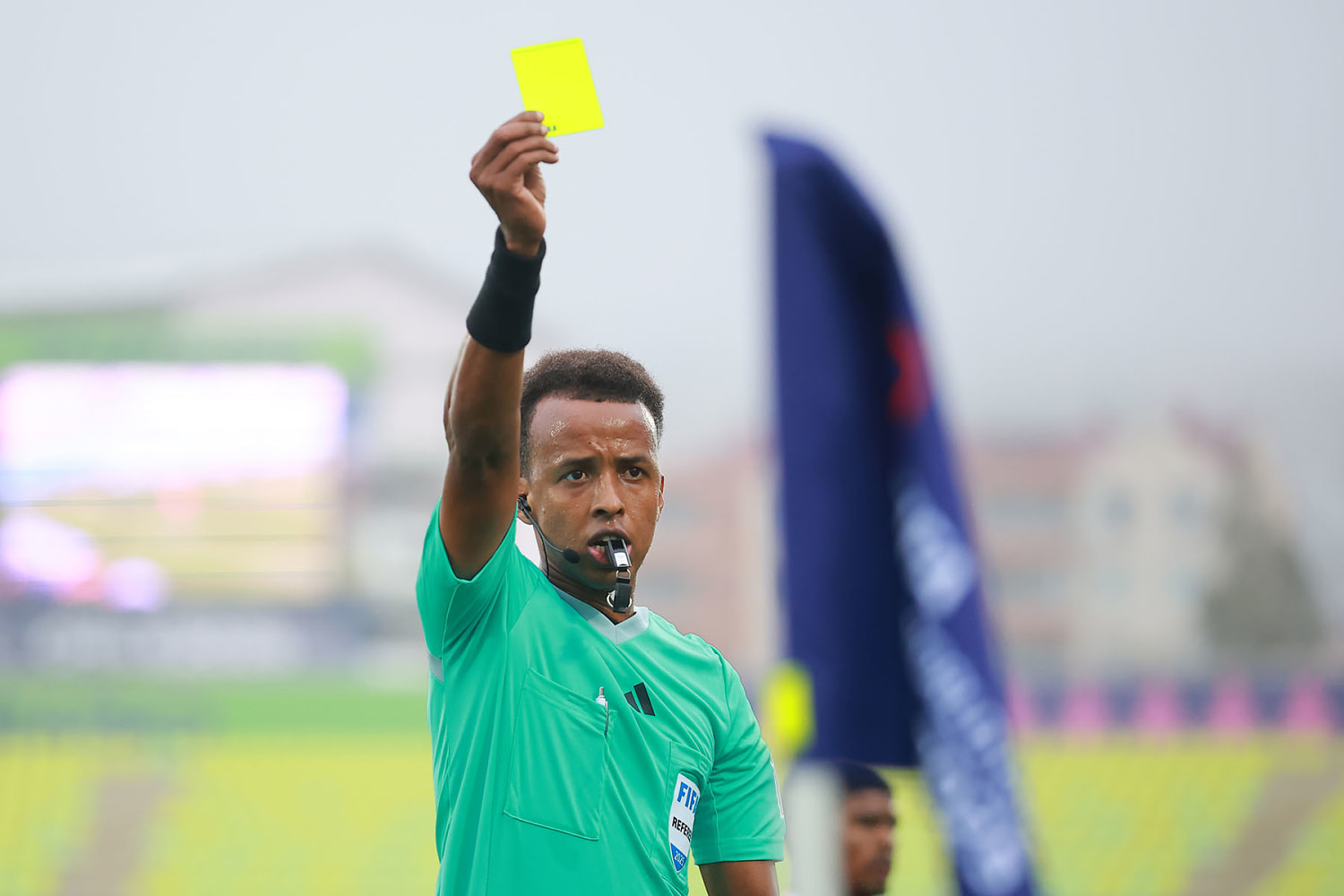
The media loves a predictable David and Goliath story. When a sports official from a developing nation gets blocked from entering a Western country for a major tournament, the editorial scripts write themselves. The Western superpower is painted as a bureaucratic villain. The returning official is showered with ticker tape and labeled a national hero. Everyone gets to feel a rush of righteous indignation, and absolutely nothing changes.
This exact script just played out with the Somali referee barred from entering the United States for the World Cup. The conventional coverage framed his return to Mogadishu as a triumphant middle finger to American isolationism. It is a heartwarming sentiment. It is also completely wrong.
By treating these administrative roadblocks as individual tragedies followed by nationalist triumphs, we are missing the real institutional rot. This is not a story about one referee's bad luck or a single nation's hostile immigration policy. It is about how the governing bodies of global sport have outsourced their logistics to geopolitics, and why the current system of sports diplomacy is fundamentally bankrupt.
The Myth of the Neutral Playing Field
International sports federations like to pretend they operate in a vacuum above global politics. They do not. Every time a major tournament is awarded to a country with strict, politically motivated visa regimes, the organizers are actively deciding who gets to participate.
When the U.S. denies entry to an official from a nation on its geopolitical watchlist, it is not an anomaly. It is the predictable outcome of an immigration system designed to screen for risk, not athletic merit. The lazy consensus blames the U.S. State Department for being heartless. But why are we expecting a sovereign nation’s border enforcement agency to prioritize the integrity of a soccer tournament over its own statutory guidelines?
The blame belongs squarely to the sports governing bodies. They demand billions in tax breaks, stadium construction, and broadcasting rights from host nations. Yet, they consistently fail to secure binding, ironclad guarantees that every qualified athlete and official will actually be allowed to enter the country. If a host nation cannot guarantee entry for all participants, it should not be allowed to host. Period.
Why the Hero’s Welcome is a Consolidation Prize
When this referee landed back in Somalia to a crowd of cheering officials and fans, the media framed it as a victory. Let’s be brutally honest: it was a consolation prize disguised as a triumph.
A referee’s career is defined by the matches they officiate on the biggest stage. Missing a World Cup is a career-defining blow that cannot be compensated for by a photo-op at the airport. By celebrating this denial as a moment of national pride, local sports authorities are letting the international system off the hook.
Imagine a scenario where a corporate executive is denied a visa to attend a global summit. The company does not throw a party at headquarters to celebrate the exclusion; they sue, they lobby, and they demand answers. In sports, we settle for a parade. This performative outrage satisfies the public's desire for defiance, but it ensures that the next time a major tournament comes around, the exact same thing will happen to another official from the global South.
The Real Power Mechanics of Sports Visas
To understand why this happens, you have to look at how sports visas actually work. There is no special "World Cup Pass" that bypasses standard immigration law. Officials must apply for standard business or visitor visas, subjecting them to the same scrutiny as any civilian.
Immigration officers look at factors like ties to the home country, economic stability, and the likelihood of return. When an applicant comes from a region experiencing economic or political instability, the baseline assumption of the visa software and the interviewing officer is often tilted toward rejection.
I have seen sports organizations spend hundreds of thousands of dollars on public relations campaigns to protest these decisions after the fact, while spending next to nothing on proactive legal counsel during the application process. They treat visas as a formality rather than a high-stakes legal hurdle.
- The Fallacy: Assuming sports achievement supersedes immigration law.
- The Reality: A FIFA badge means nothing to a consular officer working under a strict quota system.
- The Consequence: Smaller nations bear the brunt of the exclusions while global bodies offer thoughts and prayers.
Stop Demanding Fairness, Start Demanding Clauses
If the sports world actually wanted to fix this, the solution is remarkably simple but politically painful. It requires moving past the emotional rhetoric and changing the legal framework of host city contracts.
Currently, host nations sign agreements promising to "facilitate" entry for participants. This language is intentionally vague. It allows governments to point to their standard visa processing lines and say they fulfilled their obligation, even if half the applicants are rejected.
The contracts must be rewritten to include a mandatory "All-In" clause. If a host nation denies a visa to any accredited athlete, coach, or official without proving a specific, non-political criminal threat, the tournament is automatically moved to a backup venue, or the host nation faces massive financial penalties.
Of course, the global sports syndicates will never do this willingly. The revenue generated by hosting a tournament in a major Western market vastly outweighs the moral discomfort of a few missing referees from developing nations. They have made a cold financial calculation: a few bad headlines about a stranded official is an acceptable cost of doing business.
The Flawed Premise of Sports as a Unifier
We are constantly told that sport transcends borders and unites the world. This situation proves the exact opposite. Sport is entirely subservient to borders.
The public reacts to these stories with shock because they still buy into the romanticized myth of international athletic harmony. Once you accept that international sports tournaments are corporate entertainment products subject to the whims of sovereign border policies, the shock disappears. You stop asking "How could this happen?" and start asking "Why do we keep pretending it wouldn't?"
Stop celebrating the return of excluded officials as if it is a moral victory. It is a institutional defeat. Every cheered rejection normalized the exclusion, making it easier for the next host nation to lock its doors while the rest of the world plays on. Turn off the cameras at the airport, cancel the speeches, and start targeting the executive suites where these hosting contracts are signed. That is where the real barrier stands.