The room smells of old wool, dry paper, and the quiet, heavy tension of a courtroom before the gavel falls. Outside, the morning traffic of Canberra hums against the glass, a distant, indifferent tide. Inside, the air is motionless.
We have spent the last three years watching artificial intelligence escape the laboratory and tumble wildly into the streets. We watched it write poetry, draft code, pass medical board exams, and accidentally hallucinate terrifying untruths with the cheerful confidence of a straight-A student guessing on a final. We treated it like a novelty. We marveled at the magic trick. Learn more on a similar topic: this related article.
Then the trick started driving the car.
Now, the people who built the engine are walking down a quiet corridor to answer for the speed. Additional analysis by TechCrunch highlights comparable views on the subject.
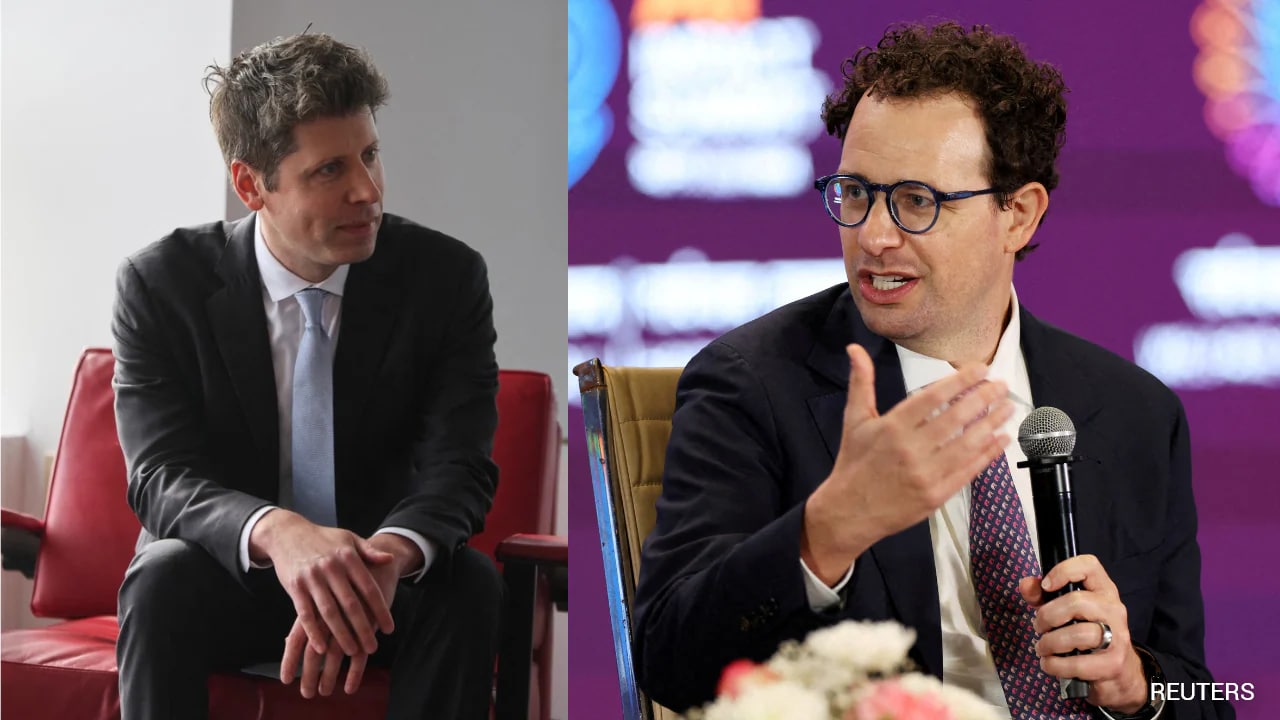
The executives of OpenAI and Anthropic are scheduled to appear before the Australian Senate's Select Committee on Adopting Artificial Intelligence. They will sit under the harsh fluorescent glare of parliamentary inquiry, facing lawmakers who represent a public that feels simultaneously electrified and profoundly uneasy.
Consider the mechanics of power for a moment. A handful of unelected visionaries in Silicon Valley and San Francisco build mathematical architectures that quietly reshape the information diet of billions. They write the rules of the new cognitive commons in code and proprietary weights. Then, thousands of miles away, a senator from a country that had very little to do with building the machinery leans forward over a mahogany desk and asks a simple, terrifying question:
Who authorized this?
It is easy to dismiss parliamentary hearings as political theater. We have seen the clips before—technocrats blinking politely, offering practiced corporate non-answers about safety guardrails, alignment research, and the immense potential of empowering humanity. They speak in smooth, rounded syllables designed to satisfy regulators without actually constraining growth. They offer promises of responsible scaling while their venture capital backers whisper about conquering the next frontier.
Yet there is something different about this specific convergence of forces. Australia is not just another market. It has become a laboratory for regulatory gravity. As a nation that frequently road-tests major technological and social shifts—from strict media bargaining codes to aggressive consumer privacy debates—it operates as a canary in the global coal mine. When Canberra speaks about algorithmic transparency, copyright infringement, and structural liability, the echo reaches Washington, Brussels, and London before the day is out.
Listen to the silence in the committee room just before the first microphone clicks on. That silence is the sound of an old world trying to catch up to a new one.
For decades, the social contract of technology was simple. You build a tool; society figures out how to use it; if it breaks things, lawyers sue, regulators fine, and we adapt. We built automobiles, we had car accidents, we invented seatbelts. We built the internet, we had spam, we invented firewalls.
Generative intelligence breaks that cadence. It is not a tool in the traditional sense. It is an environment. It is an infrastructure of thought. When a system can generate personalized persuasion at scale, automate white-collar labor, and alter the fundamental verifiability of human communication in real time, the old playbook of reactive regulation becomes as useful as a wet paper umbrella in a hurricane.
The senators know this. Or, at the very least, they feel the vertigo.
Behind the dry procedural language of the inquiry—terms like synthetic media risks, market concentration, intellectual property frameworks, and systemic bias—lies a very human fear of obsolescence. Not just job obsolescence, though that ghost haunts every desk from Sydney to Seattle. We are talking about the obsolescence of human authentication. When anyone can summon a hyper-realistic voice, an unctuous essay, or a fabricated historical event in three seconds, the shared baseline of reality starts to fracture.
We are living through the death of the default assumption that what we see and hear is real.
When the summoned executives take their seats, they will talk about alignment. They will talk about guardrails. They will frame themselves as cautious stewards navigating an inevitable, magnificent destiny. They will invoke the specter of geopolitical competition, whispering that if Western democracies slow down to debate ethics, authoritarian regimes will fill the vacuum with unsupervised code.
It is a powerful argument. It plays directly into the ancient human terror of being left behind.
But watch the hands of the people asking the questions. Notice the way the inquiry papers are turned over, read, and marked with red ink. The lawmakers are beginning to realize that the choice between reckless acceleration and total stagnation is a false dichotomy. There is a third option: conscious, deliberate design of the social contract before the market finishes writing it for us.
We are standing on the narrow ridge between the world as it was—slow, messy, stubbornly analog—and a world that is being compiled line by line by algorithms we barely comprehend.
The microphones are live. The senators are looking up from their notes. The executives are adjusting their posture.
And out there, in the quiet hum of millions of glowing screens, the rest of us wait to see what happens when the architects of the future are finally asked where they plan to take us.