Western financial journalism suffers from a chronic lack of imagination. Every few months, an analyst sitting safely behind a Bloomberg terminal in Manhattan or London publishes another mournful obituary for Hong Kong. The script never changes. They point to shifting geopolitical winds, hand-wring over mainland integration, and declare the city a fading ghost town.
It is lazy thinking packaged as geopolitical analysis. And it costs investors millions.
If you judge Hong Kong by the metrics of 1995 or even 2015—surface-level Western IPO volumes, expatriate bar culture in Lan Kwai Fong, or traditional Anglo-American legal dominance—you will miss the entire plot. The city is not dying. It is undergoing a brutal, high-stakes mutation. While the Western press writes elegies, the jurisdiction is quietly engineering a completely new playbook for global capital flows, asset protection, and sovereign liquidity.
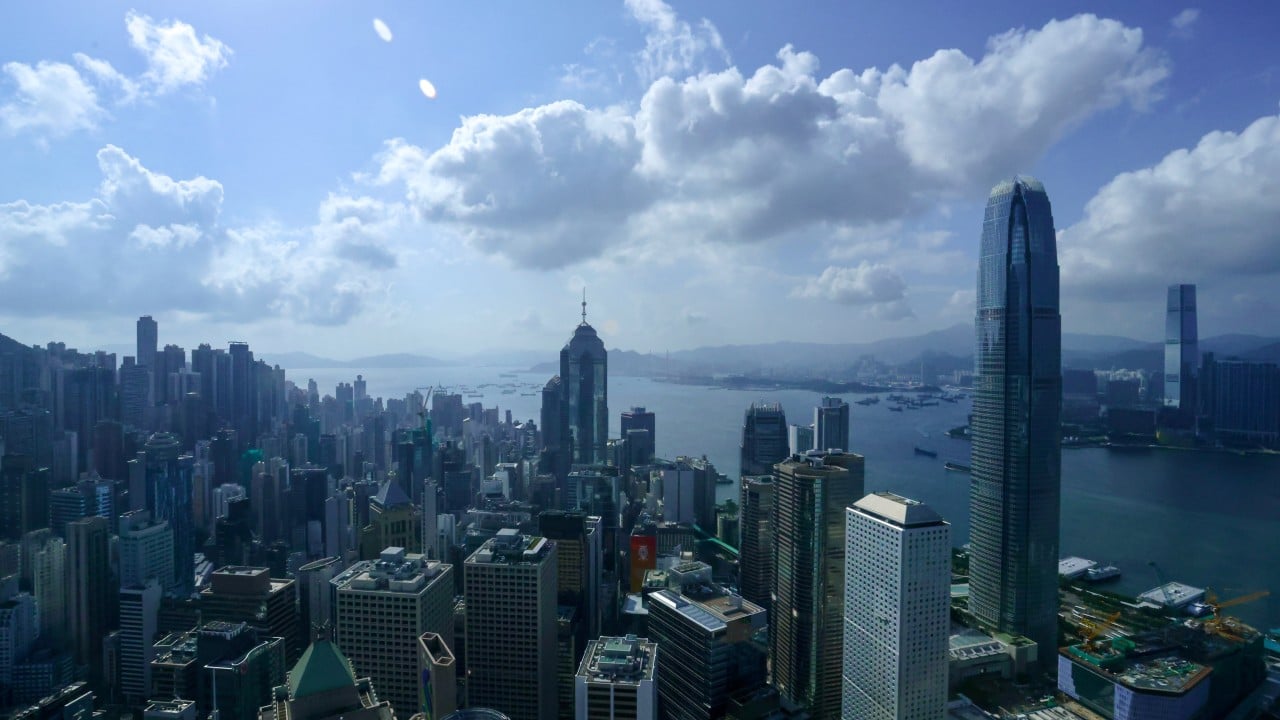
Let us strip away the noise and look at what is actually happening on the ground in Central.
The Myth Of The Empty Office
The favorite trope of the declining-hub narrative is the empty commercial real estate floor. Critics point to vacancy rates in prime office towers as proof of terminal decline. This argument relies on a fundamental misunderstanding of who is moving in and why.
Traditional Western investment banks downsized their sprawling trading floors because their regional strategies changed, not because Hong Kong lost its utility. They over-expanded during the hyper-globalization era of the 2000s. Their contraction is a correction, not a collapse.
At the exact same moment Western desks scaled back, a massive influx of private wealth took their place. Consider the data that the doom-mongers conveniently omit. By the end of 2025, the number of single-family offices operating in Hong Kong surged past 3,380. Over a thousand of these private wealth vehicles belong to ultra-high-net-worth individuals managing fortunes exceeding one hundred million dollars. These entities pump billions of dollars annually into local operating expenditures, high-end professional services, and private equity channels.
I have watched fund managers blow entire quarters trying to short Asian liquidity channels because they listened to headline noise while ignoring the migration patterns of private capital. Wealth does not care about editorial opinions in foreign newspapers. Wealth goes where property rights are legally defensible, tax structures remain competitive, and capital mobility matches its ambitions. Hong Kong delivers on all three fronts, regardless of what the evening news claims.
Redefining The Super Connector
The lazy consensus views Hong Kong as a mere administrative mouthpiece for Beijing—a bridge that has lost its tollbooth. This betrays a total ignorance of how cross-border monetary plumbing actually operates.
Hong Kong is not just a corridor for capital anymore; it has transformed into a destination of choice for sovereign funds, institutional allocators, and family offices looking for a firewall against Western financial weaponization.
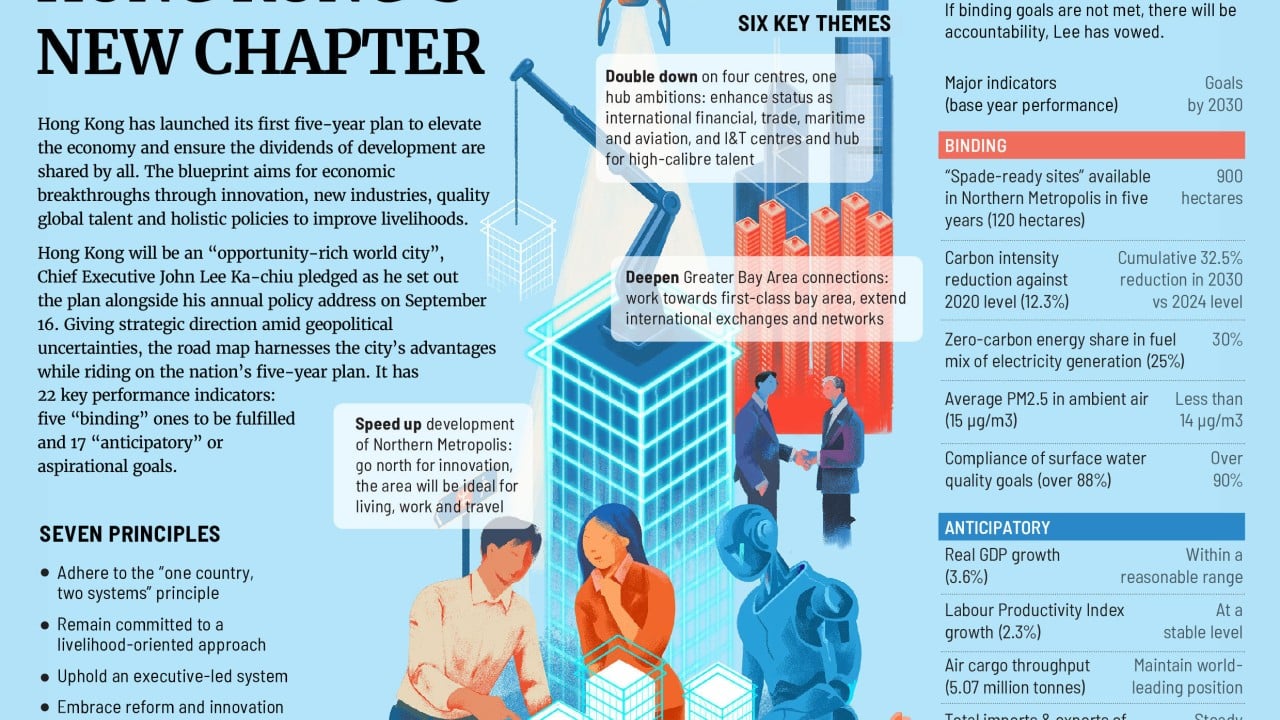
Look at the structural shift documented in the territory's economic blueprints. The government's strategic roadmap explicitly targets the expansion of offshore Renminbi business. Offshore RMB lending in Hong Kong hit historic highs, scaling past 900 billion yuan, while bond issuances crossed the one-trillion-yuan mark for consecutive years. This is not a secondary market; this is the construction of an alternative liquidity highway that operates entirely outside the orbit of the SWIFT-dependent Western financial apparatus.
When Middle Eastern sovereign funds and ASEAN institutional investors want to diversify out of dollar-denominated assets without exposing themselves directly to mainland capital controls, where do they go? They use Hong Kong's specialized legal and banking infrastructure. They use the territory's expanding network of reciprocal tax arrangements and commodity trading hubs.
To call this a decline is to mistake a renovation for demolition. The plumbing is being re-routed. If you are still waiting for Hong Kong to return to its old incarnation as a British colonial trading outpost with an Asian accent, you are waiting for a ghost.
The Institutional Reality Check
Let us be completely transparent about the downsides, because every contrarian thesis fails if it ignores operational friction. Hong Kong is not a frictionless utopia.
Compliance costs have skyrocketed. The regulatory scrutiny applied by the Securities and Futures Commission and the Hong Kong Monetary Authority is merciless. If your business model relies on gray-market arbitrage, lax know-your-customer protocols, or offshore opacity, Hong Kong will chew you up and spit you out. The era of easy, unregulated capital splashing around the harbor is gone forever.
Furthermore, local equity markets have endured a punishing valuation squeeze over recent years, driven by global interest rate shocks and a broader reassessment of regional risk premiums. Retail participation has contracted, and IPO pipelines have had to adapt to a reality where cheap, hyper-abundant venture capital is no longer a given.
This is the exact friction that scares away tourist investors. But for institutional operators who understand compliance-heavy jurisdictions, it creates a moat. High regulatory standards combined with low, predictable taxation create an environment where institutional capital feels safe parking multi-decade horizons of wealth. It weeds out the speculators and rewards patient, well-capitalized players who know how to navigate complex regulatory environments.
Dismantling The Wrong Questions
If you ask industry forums whether Hong Kong can ever reclaim its crown as the premier gateway to China, you are asking the wrong question. That question assumes China and the global economy are still playing by the rules established in the late twentieth century. They are not.
The right question is: how is Hong Kong weaponizing its unique position under the framework to capture the liquidity shifting away from traditional Western financial centers?
Let us address the common queries head-on.
Is Hong Kong losing its talent pool? Headlines scream about brain drains, pointing to emigration waves. But talent is fungible and cyclical. For every mid-level analyst who packed their bags for Singapore, two specialized fintech architects, artificial intelligence researchers, and mainland enterprise executives arrived to take up positions in the Northern Metropolis and local research hubs. The talent pool has not shrunk; it has rotated. The skill sets demanded by the market shifted from corporate advisory and traditional M&A toward asset management, digital asset custody, green finance, and cross-border renminbi settlement architecture.
Are foreign companies abandoning the city? International corporations maintain thousands of regional headquarters and operational bases in the territory. They stay because the common law legal framework remains intact, dispute resolution mechanisms are globally respected, and the physical infrastructure matches any metropolis on Earth. A multinational corporation does not maintain its regional command center in a city out of nostalgia; they stay because the cost of leaving outweighs the friction of staying, and the access points are irreplaceable.
The New Mechanics Of Wealth And Trade
To understand the trajectory of this market, observe the structural upgrades currently underway. The territory is actively building a massive commodity trading ecosystem, utilizing tax concessions to attract global resource giants away from traditional Western hubs. By incentivizing physical commodity trade settlement in local currency and building out specialized storage and shipping infrastructure, Hong Kong is anchoring itself directly into the physical supply chains of the Global South.
At the same time, the regulatory apparatus is formalizing digital asset custody and stablecoin frameworks. While Western regulators engage in turf wars and regulatory ambiguity, Hong Kong is deliberately creating a clear, licensed corridor for institutional digital finance. They are capturing the exact type of financial innovation that traditional banking capitals are too bureaucratic or politically paralyzed to touch.
This is not the behavior of a dying city. This is the behavior of an apex predator adapting to a multipolar world.
Stop Reading The Obituaries
If your investment thesis relies on the assumption that Hong Kong will eventually fail because it no longer resembles a Western colony, you deserve to lose your capital.
The city has shed its skin. It has traded the frothy, speculative volatility of the past for a hardened, sovereign-adjacent role as the primary financial fortress of the East. It is wealthier, more tightly regulated, and more strategically vital to alternative economic blocs than it has ever been.
Stop listening to the mourners in London and New York. Look at the balance sheets, track the family office migration, and watch the renminbi clearing volumes.
The chapter has already turned. You are just reading the wrong book.