Airline headlines love a big red number, and a $257 million quarterly loss certainly gives bears plenty to chew on. When JetBlue Airways reported its third-quarter 2026 results a day early in late October, the surface story looked grim enough to make any investor flinch. Net losses widened sharply from $143 million a year earlier, debt sat near $8.4 billion, and senior creditors had just hired restructuring specialists.
Look past the headline figure, though, and a very different picture emerges. JetBlue actually pulled off something most analysts doubted it could do during a brutal oil spike. That tension—between a widening bottom-line loss and genuinely improving core margins—is the real story behind the airline's survival fight.
How Jet Fuel Ate Two-Thirds of JetBlue's Revenue Surge
To understand why JetBlue lost $257 million in the third quarter, you have to look at the fuel bill first. Everything else is secondary.
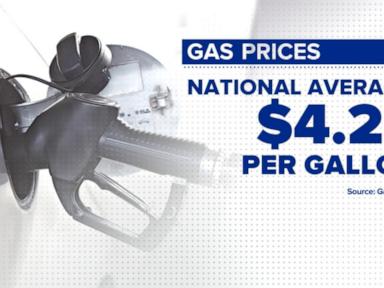
During the three months ended September 30, 2026, JetBlue's average fuel price jumped 57% year over year to $3.91 per gallon, up from $2.49 a year earlier. Total aircraft fuel expense surged 61% to $868 million. For context, that single line item absorbed roughly two-thirds of the $490 million in extra revenue the carrier generated during the quarter.
If you've ever tracked airline unit economics, you know fuel spikes usually crush carriers in real time because tickets get sold months before planes take off. Airlines typically lag behind crude prices by a quarter or two. Yet JetBlue managed to recapture roughly 87% of its higher fuel costs through stronger ticket pricing and demand during the quarter, beating management's earlier forecast of a 70% to 80% recovery.
Here is what the core third-quarter numbers actually look like when you strip away the noise:
- Operating revenue climbed 21.1% year over year to $2.81 billion, landing just shy of the $2.82 billion to $2.83 billion consensus estimate.
- Adjusted loss per share came in at 60 cents, wider than Wall Street's 55-cent expectation.
- Revenue per available seat mile (RASM) jumped 18.4% as average fares rose 19.2% to $245.11.
- Adjusted operating margin edged up 0.2 percentage points to negative 3.9%, even with fuel costing $329 million more than in the third quarter of 2025.
Read that last bullet again. Fuel costs exploded by more than half, and adjusted operating margin still ticked slightly higher. That doesn't happen by accident.
Why CEO Joanna Geraghty Says Margins Are Actually Improving
Wall Street pundits often roll their eyes when a chief executive talks about "margin improvement" right after posting a nine-figure loss. Skepticism is healthy here—JetBlue hasn't recorded a full-year profit since 2019, and its cumulative net loss through the first nine months of 2026 reached $823 million.
Still, CEO Joanna Geraghty has hard operational math backing up her optimism. Under the carrier's multiyear JetForward turnaround plan, the airline isn't just praying for cheaper oil. It's actively reshaping where it flies and what it sells.
The Fort Lauderdale Breakout and Capacity Discipline
For years, JetBlue's biggest weakness was overexposure to congested Northeast corridors where air traffic control delays and fierce legacy competition chewed up profits. Management responded by aggressively reallocating flying toward higher-yielding leisure and premium markets.
Fort Lauderdale has become the poster child for that pivot. In the third quarter, JetBlue expanded capacity in Fort Lauderdale by more than 65%—and still pushed RASM there up nearly 15%. Usually, dumping 65% more seats into a market destroys pricing power. Seeing unit revenue climb almost 15% alongside massive capacity growth tells you demand in South Florida is soaking up every seat JetBlue can put in the air.
At the same time, non-fuel cost inflation is finally cooling off. Cost per available seat mile excluding fuel (CASM ex-fuel) rose 19.4% overall including fuel, yet management expects fourth-quarter CASM ex-fuel to land somewhere between a 1% drop and a 1% increase. Getting non-fuel unit costs flat while unit revenues surge 18% to 22% is the exact formula that drives 1 to 2 percentage points of projected year-over-year operating margin expansion in the fourth quarter.
BlueFirst and the Premium Cabin Gamble
You can't beat Delta or United in 2026 by selling cheap coach tickets. Even leisure travelers want extra legroom, priority boarding, and a hot meal—and they're willing to pay up for it.
JetBlue already proved it could build a cult following on transcontinental and transatlantic routes with its Mint business class. What it lacked was a middle-tier premium product for standard domestic flights. That changes in December 2026, when JetBlue launches BlueFirst, a new domestic first-class cabin rolling out across more than 30 routes—starting on Airbus A220 jets before expanding to the A320 fleet.
Management expects BlueFirst to lift revenue per seat by nearly five percentage points. Early bookings already show strong uptake from existing TrueBlue customers, giving the airline a high-margin revenue stream that doesn't require burning extra fuel to deliver.
The Elephant in the Hangar Debt and Creditor Pressure
If JetBlue's commercial engine is humming again, why did the stock lose more than half its value between August and late October before staging a sharp post-earnings rebound?
Balance sheet anxiety. Plain and simple.
At the end of September 2026, JetBlue carried $8.39 billion in total debt and finance lease obligations against $1.26 billion in cash and cash equivalents, plus $368 million in investment securities and a $600 million undrawn credit line—bringing total liquidity to roughly $2.2 billion. For a carrier whose annual interest expense is tracking around $590 million, that debt load leaves zero room for strategic blunders.
Just days before the earnings release, reports surfaced that a group of senior bondholders and first-lien lenders had hired restructuring adviser PJT Partners and law firm Akin Gump. By mid-November, roughly 55% of creditors—including holders of JetBlue's 2031 notes—had signed a cooperation agreement restricting separate side deals. Because JetBlue's TrueBlue loyalty program serves as collateral for senior debt, bondholders have serious leverage if cash burn drags on.
Geraghty flatly ruled out a bankruptcy filing, stating the airline isn't working with any restructuring firm. And honestly, the liquidity math backs her up for now. Beyond its $2.2 billion liquidity cushion, JetBlue still sits on roughly $7 billion in unencumbered assets—including $2.8 billion in aircraft and engines—and expects to close another $250 million in aircraft-backed financing during the fourth quarter.
Creditors organizing doesn't automatically mean Chapter 11. In corporate finance, bondholders hire advisers early whenever distressed bonds trade down near 42 cents on the dollar so they can protect their collateral priority if refinancing talks happen in 2027 or 2028.
What Has to Go Right for JetBlue to Hit Its 2027 Profit Target
JetBlue expects JetForward to generate at least $310 million in incremental earnings before interest and taxes (EBIT) in 2026, scaling to $850 million to $950 million in 2027 and $1.2 billion by 2028. Management is still sticking to its target of sustained operating profitability in 2027 and at least $1.00 in earnings per share with positive free cash flow in 2028.
Whether that roadmap holds comes down to three concrete variables over the next six months:
- Fourth-quarter fuel absorption. JetBlue projects average jet fuel prices will climb even higher to $4.64 per gallon in Q4—roughly 85% above late 2025 levels. If the airline can maintain its projected 18% to 22% RASM growth through the winter holiday season, it will prove its pricing power isn't just a summer fluke.
- Fuel normalization in 2027 and 2028. JetBlue's long-term profit targets assume fuel eases back to just over $4 per gallon in 2027 and averages $3 per gallon in 2028. If crude stays pinned at late-2026 highs, even a $1.2 billion operational turnaround will get chewed up at the pump.
- Pratt & Whitney engine groundings and fleet discipline. Lingering inspections on PW1100G engines kept aircraft parked throughout the past year. JetBlue already made the tough call to sell its two ordered Airbus A321XLRs and defer 42 A321neos past 2030 to keep annual capital spending under $1 billion. Keeping existing jets flying reliably is critical to hitting capacity targets without blowing up capex.
If you're tracking JetBlue as an investor or industry watcher, stop staring at GAAP net income for the next two quarters. Watch three numbers instead: fourth-quarter RASM growth against that $4.64 fuel benchmark, early BlueFirst load factors after the December launch, and quarterly free cash flow burn. Those three metrics will tell you long before the headlines whether Joanna Geraghty's turnaround outruns the bond market's doubts.
To see how market analysts reacted to the creditor adviser news right before the earnings release, watch JetBlue Creditors Call In Restructuring Experts As Shares Plummet.