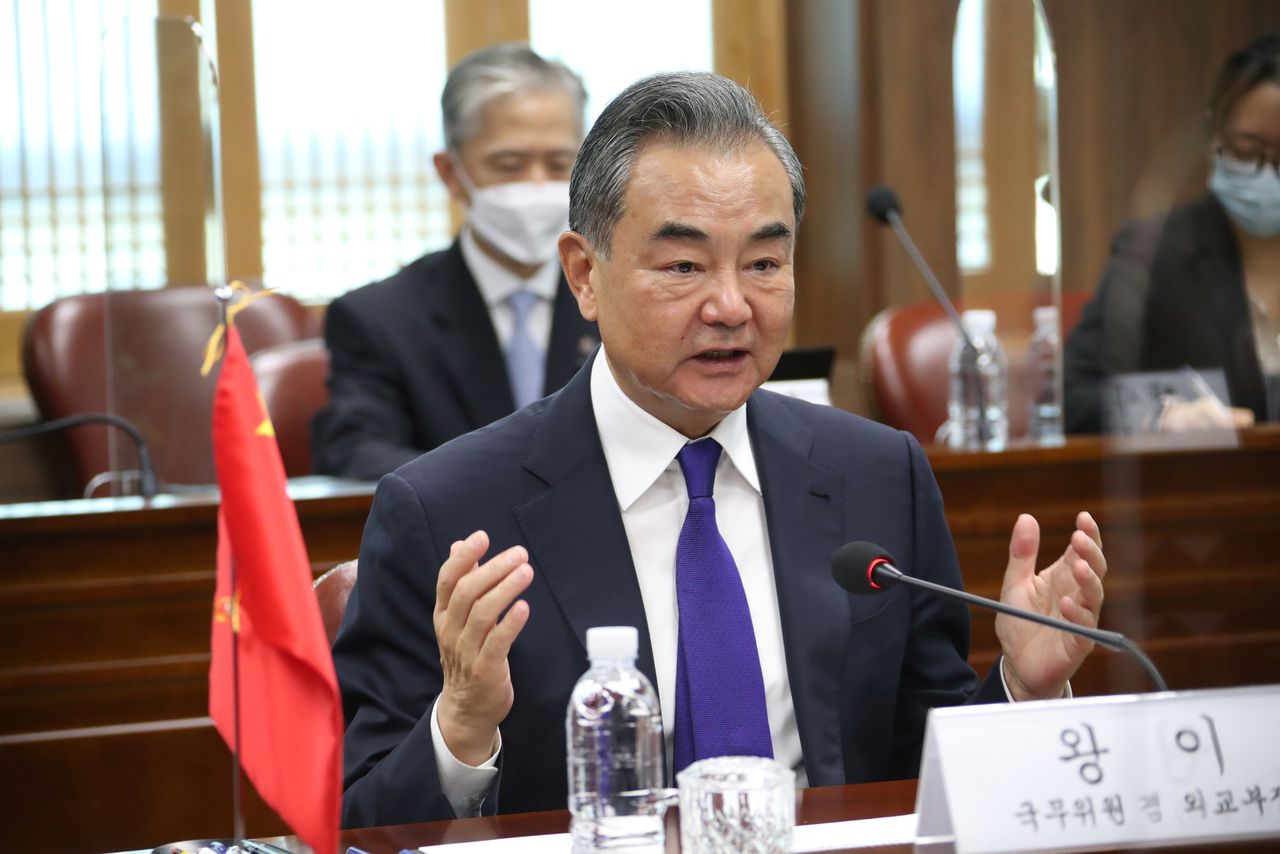
Wang Yi’s arrival in South Korea signals a desperate scramble to realign regional influence before the geopolitical tremors of a new Trump administration fully set in. This is not a standard diplomatic exchange. It is a calculated maneuver to hedge against a Washington-led push to restart talks with Pyongyang that Beijing fears could sideline its own leverage over the Korean Peninsula.
For decades, the standard narrative suggested China acted as the indispensable mediator for North Korea. That version of events is crumbling. As Seoul faces renewed uncertainty regarding American security commitments, Beijing is moving to ensure it remains the primary actor in Northeast Asian security affairs. Wang is not in Seoul to facilitate a peace process. He is there to ensure that any deal brokered between Washington and Pyongyang does not occur on terms that diminish Chinese authority.
The Strategy of Strategic Ambiguity
Diplomacy in the region has always relied on a thin veneer of cooperation covering deep-seated animosity. South Korean officials find themselves in an impossible spot. They need American military protection to counter the nuclear threat from the North, yet they are economically tethered to the Chinese market. When Wang Yi touches down in Seoul, he brings more than pleasantries. He brings the unspoken threat of economic retribution if South Korea leans too far into a renewed American-North Korean rapprochement.
Washington, under a Trump-led framework, tends to view North Korean diplomacy as a transactional opportunity. This transactional nature alarms Beijing. If the United States manages to secure a deal that involves trading sanctions relief for partial nuclear concessions, Beijing loses the ability to act as the ultimate guarantor of North Korean stability. The Chinese leadership views a stable, albeit nuclear-armed, North Korea as a necessary buffer zone. A North Korea integrated into a US-aligned economic system would be a direct threat to the Chinese border.
Misconceptions about the Mediation Role
Observers often mistake Chinese reluctance to pressure Pyongyang for a lack of influence. This is a fundamental error. Beijing exerts control through the dial of economic necessity. They do not turn this dial off; they merely adjust the flow. When Wang Yi meets his counterparts, he is signaling that China will not tolerate any diplomatic architecture that excludes them.
The tension currently gripping the region is not merely about North Korean missiles. It is about the structure of power. For years, the status quo allowed China to maintain its regional prominence while the United States focused on global priorities. Now that the American focus has shifted back toward domestic prioritization and direct intervention, the old rules are being rewritten. South Korea is the ground where this rewriting takes place.
The Financial Realities of Regional Hegemony
Follow the money. Trade between China and South Korea remains one of the strongest links in the global supply chain, particularly in semiconductors and consumer electronics. Whenever diplomatic friction rises, these trade routes suffer. This creates a powerful incentive for Seoul to maintain a neutral stance, even when it directly clashes with Washington's aggressive diplomatic pushes.
Imagine a hypothetical scenario where the United States offers a significant package of trade incentives to Pyongyang in exchange for a verifiable halt to long-range missile testing. In such a case, Beijing would likely mobilize its influence to ensure the agreement includes clauses that prevent the North from aligning too closely with Western financial institutions. They understand that economic integration is the precursor to political realignment.
Navigating the Security Dilemma
The American push for diplomacy is frequently interpreted by the South Korean public as a potential abandonment of their long-standing security umbrella. If the United States begins to treat North Korea as a partner rather than a pariah, what happens to the massive American military presence in the South? This is the question that haunts the corridors of government in Seoul.
Wang Yi utilizes these fears to drive a wedge between Seoul and Washington. By highlighting the unpredictability of American policy, he positions China as the steady, reliable neighbor. It is a tactic that exploits the current volatility of domestic US politics. He does not have to convince South Korea that China is a better friend; he only has to convince them that the United States is an unreliable partner.
The Limits of Diplomatic Maneuvering
Despite the posturing, there are structural limits to what Wang Yi can achieve. The historical animosity between the Korean people and the influence of the Chinese state cannot be erased by a single diplomatic mission. Memories of historical interventions and current cultural disputes remain potent political tools within South Korea. Politicians in Seoul are hyper-aware of public opinion, which remains broadly skeptical of Chinese ambitions.
Furthermore, the nuclear reality on the peninsula has changed. North Korea is no longer just a client state seeking survival. They have developed a strategic arsenal that allows them to interact with the international system on their own terms. Both Beijing and Washington are struggling to adapt to this new reality. The belief that they can simply dictate terms to Pyongyang is a relic of a bygone era.
Realignment and Its Discontents
What we see now is the dissolution of the old security architecture. Every move in Seoul is a defensive one. There is no grand strategy here, only the constant maintenance of survival amidst the competing interests of two superpowers. The South Korean government is attempting to walk a razor-thin line, refusing to alienate the United States while trying to avoid the wrath of Beijing.
This is not a sustainable path. Eventually, the pressure from one side will become so great that a choice must be made. Either they commit fully to the American security architecture at the risk of permanent economic isolation from their largest trading partner, or they pivot toward a more accommodationist stance toward Beijing that risks their democratic autonomy. Wang Yi is in town to ensure that when that moment of decision arrives, the choice is heavily skewed toward Beijing.
The situation is a classic security dilemma where actions taken to ensure survival are perceived as threats by neighbors, leading to further escalation. This cycle will continue as long as the primary actors treat the region as a zero-sum contest for supremacy. Stability is not the goal of these diplomatic missions; the goal is the management of inevitable decline or the maximization of temporary advantage. The coming months will reveal whether this diplomatic dance can hold, or if the region is sliding toward a much harder, more dangerous confrontation.