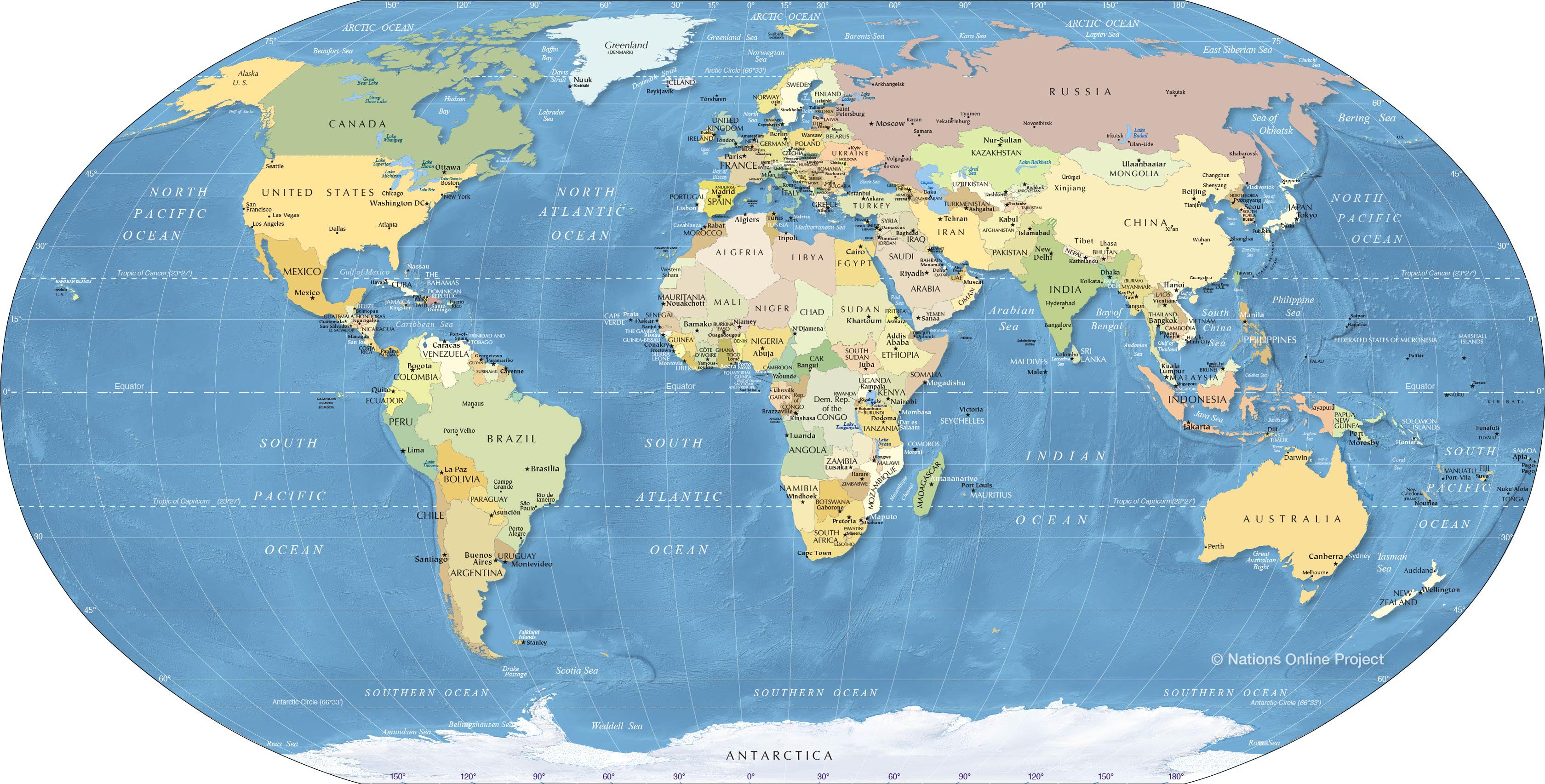
Two people are dead. Three more are wounded. The location is not a trench line in the Donbas or an artillery-scarred suburb of Kharkiv, but the Starokozache border crossing sitting directly on the seam between Ukraine and Moldova.
Overnight, a swarm of Russian long-range strike drones carved through the southern night sky of Ukraine's Odesa region, slamming into civilian infrastructure and turning a vital international transit point into a smoking ruin. This was not a stray round or an errant piece of shrapnel from a distant dogfight. It was a targeted, calculated escalation that pushes the war uncomfortably close to the geopolitical doorstep of the European Union. For another view, read: this related article.
For months, analysts have warned about the peripheral bleeding of this conflict. Moldova, wedged between Ukraine and Romania, has watched its airspace violated repeatedly, its quiet villages peppered with the debris of downed Russian hardware, and its political stability weaponized through hybrid subversion. Yet, the strike on Starokozache marks a grim evolution. The war is no longer just casting shadows across the border. It is actively crossing it, consuming civilian lives on international transit corridors and forcing a brutal reckoning for neighboring states that hoped neutrality would serve as an impenetrable shield.
The Anatomy of a Border Zone Strike
To understand why a customs and transit checkpoint became a graveyard, one must examine the geography and logistics of southern Ukraine. The Odesa Oblast is a primary artery for agricultural export, humanitarian aid, and civilian movement. Crossings like Starokozache function as critical pressure valves for a country whose maritime ports remain choked by naval blockades and constant missile threats. Similar reporting on this matter has been shared by The Guardian.
When long-range loitering munitions—commonly known as Shahed-type drones—are launched toward these southern corridors, they rarely fly straight lines. They weave low across river valleys, utilize terrain masking to evade radar arrays, and frequently drift across international boundaries to outflank air defense networks.
Military planners in Moscow know precisely where these borders lie. That makes the targeting of border infrastructure an intentional stress test. Every time a drone detonates at a customs terminal shared with a sovereign European partner like Moldova, it sends a dual message. It disrupts remaining supply lines and simultaneously probes the collective nerve of Western capitals watching the perimeter of the alliance.
The human cost, however, is paid entirely on the asphalt. Customs officers, truck drivers waiting for clearance, and civilian travelers caught in the overnight curfew hours do not wear body armor. They are administrative personnel and ordinary citizens trying to navigate an existence inside an active combat zone. Two of them perished in the initial blast, while three others were pulled from the wreckage with severe trauma, adding their names to an ever-expanding ledger of non-combatant casualties that rarely captures mainstream headlines until it crosses an international marker.
The Moldovan Dilemma
For Chișinău, the explosion at Starokozache is a nightmare scenario materializing in real time. President Maia Sandu's pro-Western government has spent years walking a geopolitical tightrope. Moldova faces relentless economic coercion, orchestrated protests funded by fugitive oligarchs, and constant cyberattacks designed to derail its path toward European Union integration.
Until now, the physical security threat to Moldova has largely manifested as falling missile debris or stray drone fragments crashing harmlessly into farmer's fields or residential gardens. Those incidents were terrifying, but they could be managed diplomatically as collateral accidents of a brutal neighbor's war.
A deliberate, lethal strike directly on a shared border checkpoint obliterates that plausible deniability.
When infrastructure shared by Moldova is blown apart and civilian lives are extinguished meters from Moldovan territory, the concept of non-alignment begins to fray. Moldovan border authorities and emergency services were forced to scramble in the dead of night, treating casualties, containing fires, and assessing structural damage to a facility that handles bilateral trade and transit.
The political fallout inside Moldova will be immediate and severe. Kremlin-aligned factions will likely attempt to spin the narrative, blaming Ukrainian air defenses or claiming the strike was a staged provocation. Meanwhile, pro-European reformers face an agonizing reality check. Security guarantees are only as good as the radar systems protecting them, and no amount of diplomatic rhetoric can fortify a border against low-flying delta-wing drones packing heavy explosive payloads.
The Technological Reality of Frontier Warfare
We must confront the technical mechanics that make these cross-border tragedies inevitable. Modern air defense is a finite resource. Ukraine's military command is forced into an impossible arithmetic every single night, calculating whether to allocate expensive surface-to-air missiles to protect grain silos, power substations, urban centers, or rural border crossings.
Drones are cheap. Interceptors are excruciatingly expensive.
When waves of dozens of explosive-laden UAVs are deployed simultaneously, gaps will inevitably open in any defensive umbrella. Electronic warfare systems attempt to spoof or jam their guidance computers, often causing them to lose their navigational locks and wander off course. A jammed drone does not simply vanish into thin air. It continues flying on its last heading until its fuel runs dry or it slams into the nearest structure.
Whether the Starokozache crossing was hit by an active guidance vector or a malfunctioning, jammed drone that drifted off target changes little for the victims. The systemic failure remains the same. As long as the conflict grinds on without a technological breakthrough in cost-effective counter-drone infrastructure, border regions across Eastern Europe will remain high-risk hazard zones.
The Broader European Horizon
Capital cities from Bucharest to Berlin should view the smoke rising over the Ukrainian-Moldovan border not as an isolated tragedy, but as a warning flare. The security architecture of the European continent is porous.
When a sovereign border crossing can be turned into a charnel house by remote-controlled munitions, the safety buffer separating NATO and EU territory from the active theater of war shrinks to zero. Every neighboring country sharing a land border with Ukraine or its surrounding maritime zones shares this vulnerability.
The response from Western allies has historically been reactive. Aid packages arrive in increments, sanctions are tightened after atrocities occur, and air defense systems are promised months down the line. But kinetic velocity moves faster than bureaucracy. While defense ministries debate authorization limits and delivery timelines, drones continue to find the weak points in the geography.
There will be no formal declaration of war expanding past Ukraine's borders today. No Article 5 will be invoked over a customs terminal in Odesa Oblast. Moscow understands these thresholds intimately, operating just beneath the tripwire of a direct western military response, utilizing incremental escalation to normalize the intolerable.
Two families are mourning tonight. Three individuals are fighting for their health in regional hospitals. And out on the desolate tarmac where two nations meet, the wind blows through the shattered glass of a checkpoint that thought it was far enough away from the front lines, only to discover that in this war, the front line is everywhere.