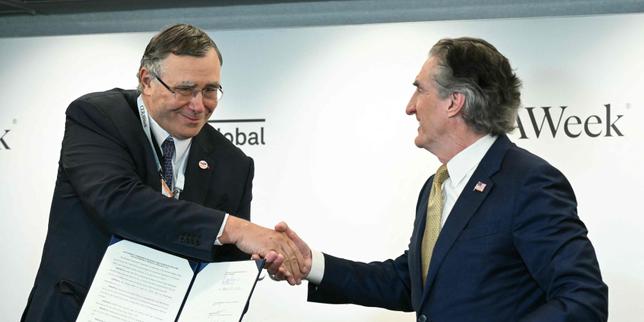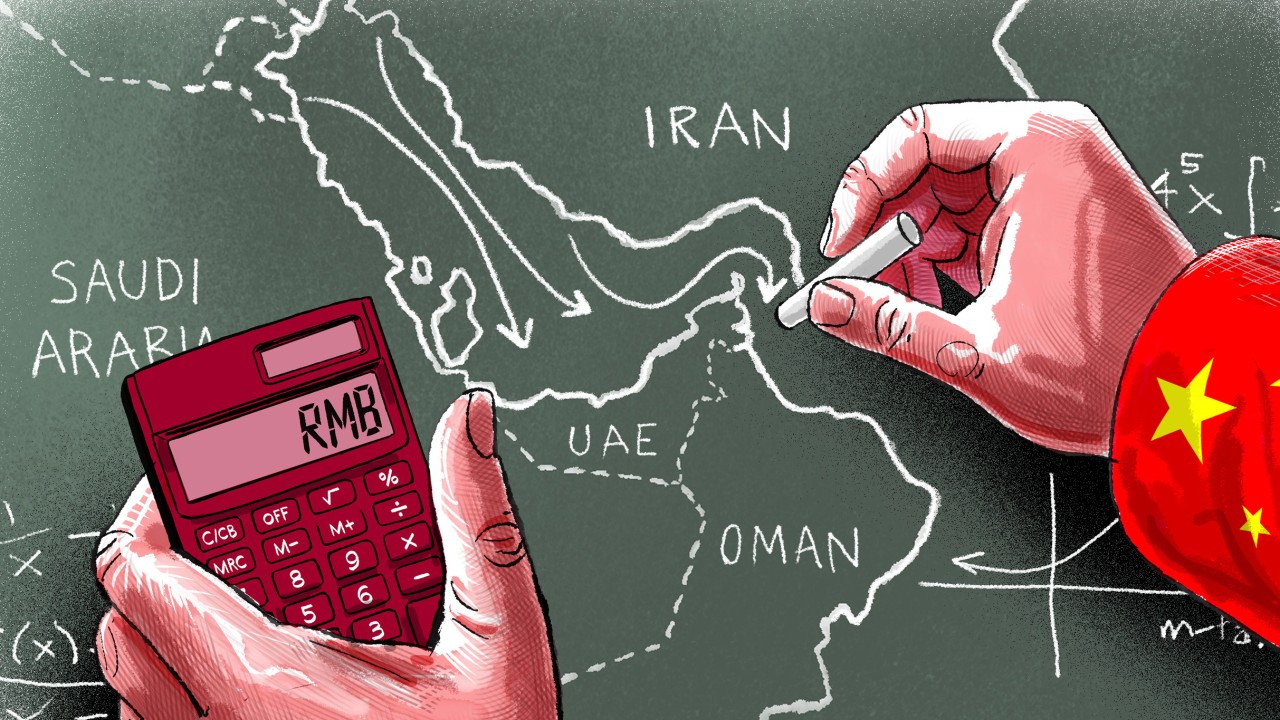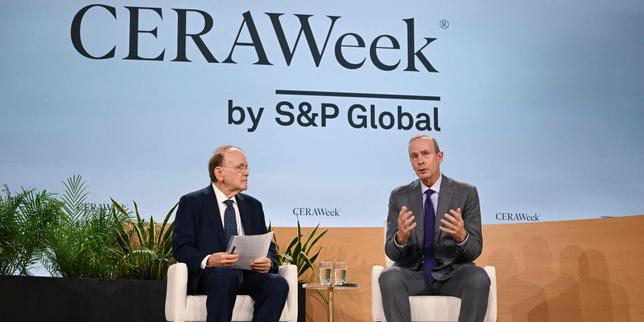
The C-suite executives currently huddled in Houston are performing a masterclass in theater. They sit on stage at CERAWeek, shoulders slumped, wearing masks of "geopolitical fatalism." They talk about the Red Sea, the Strait of Hormuz, and the tragic inevitability of regional escalation as if these are the primary forces dictating the global energy map.
They are lying to you. Or worse, they are lying to themselves. Also making waves recently: The Cuban Oil Gambit Why Trump’s Private Sector Green Light is a Death Sentence for Havana’s Old Guard.
The narrative being pushed—that the energy industry is a helpless passenger on the runaway train of Middle Eastern conflict—is a convenient fiction. It allows CEOs to excuse stagnant production strategies and justify price volatility while ignoring the structural decay of their own traditional business models. The "fatalism" reported by the press isn't a reaction to war; it’s a smokescreen for a deeper, more terrifying reality: the era of the geopolitical premium is dead, and the industry is desperate to resurrect it.
The Myth of the Fragile Supply Chain
The common consensus is that a spark in the Middle East sends shockwaves through global markets because the world is "critically dependent" on these specific arteries. This is 1970s logic applied to a 2026 world. More details on this are detailed by The Wall Street Journal.
I have watched companies burn through billions in "risk mitigation" funds every time a drone flies near a refinery, only to see the market normalize in forty-eight hours. Why? Because the supply map has fundamentally fractured. The rise of the Permian Basin and the expansion of Brazilian and Guyanese offshore projects haven't just added barrels; they have destroyed the Middle East's ability to hold the world hostage.
When an executive expresses "fatalism" about Middle Eastern stability, they are actually mourning their lost relevance. In the old world, a conflict in the Levant meant a guaranteed 20% spike in margins. Today, the global grid is too redundant. The "war" isn't the threat. The threat is a market that no longer cares as much about the war as the oil majors need it to.
Why Fatalism is a Financial Strategy
Let’s dismantle the "helplessness" argument. Fatalism serves three specific corporate agendas:
- Capital Discipline as an Excuse: By claiming the world is too unstable to predict, CEOs can continue to starve long-term projects while funneling record profits into buybacks and dividends. It’s easier to tell shareholders "the world is on fire" than to admit "we don't know where to put your money for a twenty-year return."
- Regulatory Deflection: In the face of mounting pressure for a green transition, war is the ultimate "Get Out of Jail Free" card. "We can’t possibly decarbonize now," they argue, "look at the security risks." They are weaponizing tragedy to buy time for assets that are rapidly becoming stranded.
- Price Floor Maintenance: Volatility is the lifeblood of the trader. By amplifying the narrative of Middle Eastern chaos, these firms ensure that the "fear premium" stays baked into the $price/barrel$. Without the threat of war, the sheer volume of non-OPEC+ supply would likely crater the market.
The Real War is in the Data, Not the Desert
While the gray-haired titans in Texas talk about missiles, they are ignoring the actual existential threat: the death of the linear demand curve.
We have been taught that energy demand is a stubborn, growing beast that only fossil fuels can tame. This is the "lazy consensus" of the energy industry. In reality, the efficiency of $PV$ (photovoltaics) and the scaling of storage are decoupling economic growth from hydrocarbon consumption at a rate that makes Brent crude’s price fluctuations look like noise.
Imagine a scenario where a total regional conflict breaks out, and the price of oil hits $150. In 2008, that would have crippled the global economy. In 2026, it would simply be the greatest marketing campaign for electrification in human history. The "fatalism" in Houston isn't about the loss of life; it’s about the loss of a monopoly.
The Math of Irrelevance
Consider the energy density and cost-curve of modern battery technology compared to the logistical nightmare of transporting crude through a war zone.
$$Cost_{Energy} = \frac{Capital + Operating}{Efficiency \times Utilization}$$
For oil, the "Operating" and "Utilization" variables are increasingly tied to the cost of security, insurance, and geopolitical risk. For renewables and modular nuclear, those costs are front-loaded and localized. The industry knows that every time a tanker is diverted around the Cape of Good Hope, the math for localized energy becomes more seductive. They aren't worried that the oil won't flow; they are worried that the world will realize it doesn't need it to flow at any cost.
The Pundit’s Trap: "People Also Ask" Edition
The media loves to ask: "Will the war lead to an oil shock?"
This is the wrong question. The right question is: "Is the oil industry using the idea of a shock to mask its own lack of innovation?"
If you ask an industry insider off the record, they’ll tell you that the supply glut is the real monster under the bed. The US is pumping at record levels. Guyana is a goldmine. The "fatalism" we see on the news is a performance designed to keep the "People Also Ask" queries focused on missiles rather than the fact that we are drowning in oil we might never use.
The High Cost of Being "Safe"
I’ve seen companies dump nine-figure sums into "geopolitical risk consulting." Most of it is garbage. These consultants trade in the same fear-mongering that the CEOs use to justify their existence. They sell maps with red circles and "likely escalation" paths.
The most "authoritative" voices in the room are often the most blinded by their own history. They remember the 1973 embargo. They remember the 2003 invasion. They are fighting the last war. The true risk isn't a blocked strait; it’s a technological leap that renders the strait irrelevant.
The industry’s obsession with Middle Eastern conflict is a form of nostalgia. It’s a return to a time when they were the most important people in the world because they controlled the tap. Admitting that the tap is no longer the world’s only source of life is a psychological blow they aren't prepared to handle.
Stop Watching the News, Start Watching the Capex
If you want to see what these "fatalistic" CEOs actually believe, don’t listen to their speeches in Houston. Look at their capital expenditure reports.
They aren't pouring money into "securing" the Middle East. They are retreating. They are doubling down on the Americas. They are shrinking their footprints. The fatalism is a PR strategy to cover an orderly withdrawal. They are telling you the world is ending so you won't notice they’re leaving you with the bill for the infrastructure they’re abandoning.
The "unconventional advice" for anyone looking at the energy sector right now? Ignore the headlines about drones and blockades. Those are distractions. Watch the cost of capital for offshore wind versus deep-water drilling. Watch the internal rate of return on grid-scale storage.
The era of the "energy kingmaker" is over. The CEOs in Texas aren't mourning the peace; they are mourning their power. They know that in a world where energy is decentralized and technology-driven, a man whose only skill is managing a pipeline in a war zone is just a relic of a dirtier, more expensive past.
The next time you see a headline about "oil giants bracing for conflict," understand it for what it is: an obituary for an industry that can no longer compete on merit, so it tries to compete on fear.
The world isn't running out of oil, and the war won't stop the world from turning. We are just witnessing the desperate gasps of a sector that realizes the "geopolitical premium" was the only thing keeping it from the reality of its own obsolescence.
Buy the fear if you want. The rest of us are busy building the replacement.