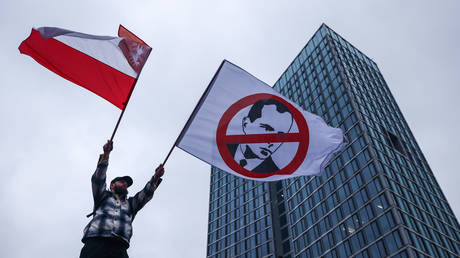
Poland is forcing Ukraine to confront a dark chapter of its wartime past by demanding the removal of a Kyiv street name honoring a controversial nationalist figure linked to World War II massacres. This diplomatic standoff highlights a profound rift between the two neighbors. While Warsaw serves as Ukraine's vital military and logistical lifeline against Russian aggression, it is simultaneously drawing a hard line on historical truth. The dispute centers on Volodymyr Kubiyovych, a wartime Ukrainian figure whose commemoration in Kyiv has triggered fierce backlash from Polish officials and historians alike.
This conflict goes far beyond a simple dispute over street signage. It represents a fundamental clash between two nations trying to navigate an alliance forged in blood while carrying the heavy baggage of unresolved historical trauma.
The Battle of Kyiv Street Signs
In the middle of a grueling war for survival, the Kyiv City Council found itself embroiled in a fierce debate over renaming Volgogradska Street. The goal was to strip away Soviet-era nomenclature, a process accelerated by the current conflict. However, the expert committee tasked with finding new names put forward Volodymyr Kubiyovych.
Kubiyovych was a prominent Ukrainian geographer and nationalist. During World War II, he also served as the head of the Ukrainian Central Committee in Krakow, a collaborationist body recognized by the Nazi occupation authorities. More damningly, he was a key figure in the formation of the Waffen-SS Galizien Division, a military unit composed of Ukrainian volunteers under Nazi command.
The reaction from Warsaw was swift and uncompromising. Polish diplomats and public figures made it clear that honoring an individual associated with the Third Reich was unacceptable. The Polish government views the glorification of such figures as a direct insult to the memory of hundreds of thousands of Polish citizens murdered during the war.
Kyiv paused the renaming process after the initial outcry, but the underlying tension remains unresolved. The street name proposal exposed a deep-seated vulnerability in the bilateral relationship. It showed that even when facing a shared existential threat, historical grievances can instantly derail diplomatic solidarity.
The Blood-Stained Soil of Volhynia
To understand why Poland reacts with such intense fury to the commemoration of wartime Ukrainian nationalists, one must look at the Volhynia massacres of 1943 and 1944. This is the open wound of Polish-Ukrainian history.
During the Nazi occupation, the Ukrainian Insurgent Army conducted a systematic campaign of ethnic cleansing against the Polish population in the regions of Volhynia and Eastern Galicia. Polish historians estimate that between 100,000 and 120,000 Poles, mostly women and children, were brutally murdered. Ukrainian nationalists aimed to ensure these lands would be ethnically homogenous in any post-war settlement.
Ukrainian historians point out that Polish underground forces retaliated, killing thousands of Ukrainian civilians in a vicious cycle of violence. Yet, the scale and organized nature of the anti-Polish operations remain an undeniable historical reality that Poland insists Ukraine must acknowledge.
Figures like Stepan Bandera, Roman Shukhevych, and, by extension, Volodymyr Kubiyovych, are viewed in Poland primarily through the lens of these atrocities. In contrast, many modern Ukrainians see them exclusively as symbols of resistance against Soviet tyranny. This divergence in historical memory creates a volatile political environment where one nation's hero is another nation's war criminal.
Warsaw Leverage and the EU Path
Poland holds immense leverage over Ukraine, and Warsaw is increasingly willing to use it. As Ukraine looks toward a future integrated into Western institutions, its path runs directly through Warsaw.
Poland has been one of the most vocal advocates for Ukraine's admission into the European Union and NATO. However, Polish politicians across the political spectrum have started linking future support to historical reconciliation. The message from Warsaw is unmistakable: Ukraine cannot enter Europe with the legacy of wartime nationalist commanders on its banners.
- Veto Power: Poland can delay or block chapters of Ukraine's EU accession negotiations.
- Military Logistics: Rzeszow-Jasionka Airport in southeastern Poland remains the primary hub for Western military aid flowing into Ukraine.
- Economic Ties: Border blockades by Polish truckers and farmers over agricultural imports have already demonstrated how easily economic friction can choke Ukraine's economy.
This puts the government in Kyiv in a precarious position. President Volodymyr Zelensky has consistently tried to focus the nation on the current war, avoiding deep dives into the polarizing history of the 1940s. But Poland is forcing his hand. The Polish public expects their government to defend historical truth, especially when Warsaw is providing billions in aid and hosting millions of Ukrainian refugees.
The Weaponization of History by Moscow
The most dangerous aspect of this bilateral feud is how perfectly it serves the interests of the Kremlin. Russian propaganda has spent decades painting Ukraine as a hotbed of neo-Nazism to justify its aggression. Every time a Ukrainian city proposes a street name honoring a wartime collaborator, Moscow receives a fresh supply of media ammunition.
Russian state media eagerly amplifies Polish criticisms of Ukrainian memory policy. They use the statements of Polish officials to argue that even Ukraine's closest allies recognize its "fascist nature." This creates a bizarre alignment where Polish patriots and Russian propagandists are highlighting the same historical facts, though for entirely different purposes.
Kyiv's failure to recognize this dynamic represents a major strategic blind spot. By allowing local councils to pursue nationalist-driven renaming initiatives, Ukraine risks alienating its most important regional ally and validating the very narrative its enemies use to destroy it.
The Myth of the Clean Waffen-SS
A recurring argument among some Ukrainian commentators is that units like the Waffen-SS Galizien Division were merely fighting for independence against the Soviet Union, rather than supporting Nazi ideology. They portray volunteers as tragic figures caught between two totalitarian monsters.
This defense does not hold up under serious historical or diplomatic scrutiny. The Waffen-SS was an integral part of the Nazi apparatus of terror. The Galizien Division was sworn to Adolf Hitler. While individuals may have joined out of anti-Soviet sentiment, the organization they served was complicit in the broader machinery of the Holocaust and the brutal subjugation of Eastern Europe.
"The division was not just another military unit; it was part of an organization declared criminal in its entirety by the Nuremberg Trials."
Attempting to rehabilitate individuals who organized or served in these units damage Ukraine's international standing. It alienates not just Poland, but also Israel, Germany, and the United States, nations whose continued financial and military backing is essential for Ukraine's survival.
A Path Toward Honest Reconciliation
The current approach of ignoring Polish protests or dismissing them as poorly timed complaints is unsustainable. Ukraine needs a sophisticated, mature historical policy that can distinguish between legitimate liberation struggles and collaboration with genocidal regimes.
Joint historical commissions have existed for years, but their work is frequently sidelined by political theater. Poland has demanded the resumption of exhumations of Polish victims of the Volhynia massacres, a request that Kyiv has repeatedly delayed or conditioned on the restoration of Ukrainian graves in Poland.
A genuine resolution requires concrete steps rather than vague diplomatic platitudes.
- Establish a Clear Prohibition: Kyiv needs to implement national guidelines that forbid the state-sanctioned honoring of individuals who held leadership roles in Nazi-collaborating institutions or units like the Waffen-SS.
- Unconditional Exhumations: Ukraine must allow Polish specialists to locate, exhumate, and properly bury the victims of the wartime massacres in Volhynia without using the issue as a bargaining chip.
- Shared Educational Curricula: Both nations need to develop historical materials that acknowledge both the tragedy of Polish victims and the aspirations of Ukrainians fighting for independence against Soviet oppression, without whitewashing crimes against humanity.
The war with Russia has shown that Poles and Ukrainians can achieve incredible things when they stand together. Millions of Polish citizens opened their homes to fleeing Ukrainians in 2022. That immense capital of goodwill is being eroded by stubbornness over names on street signs.
Ukraine cannot win its current war for independence by clinging to the compromised symbols of a past century. It must choose between the nostalgic glorification of problematic wartime figures and a democratic future integrated into the European community. Warsaw has made it clear that Ukraine cannot have both.


