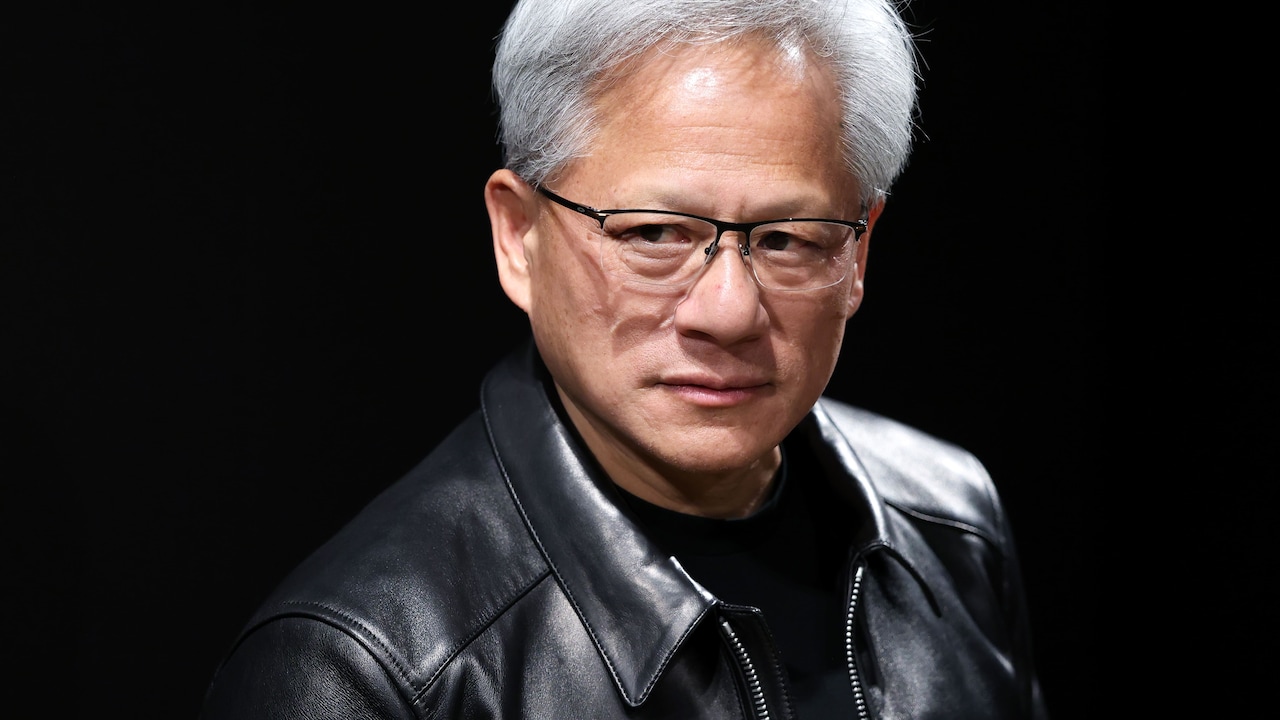
First, let us clear up a glaring factual error in the viral headline circulating across aggregator feeds. Jensen Huang is not the "ex-CEO" of Nvidia. He remains the co-founder, president, and chief executive officer of the world's most consequential semiconductor company, and any congressional summons involving him centers on ongoing disputes over export controls, artificial intelligence hardware dominance, and national security compliance rather than a post-retirement post-mortem.
When a sloppy headline gets a basic executive title wrong, it usually misses the actual story entirely. The real friction between Silicon Valley's most powerful chipmaker and Capitol Hill has nothing to do with corporate succession. It is a high-stakes collision between aggressive hardware engineering, American geopolitical strategy, and the uncomfortable reality that export laws written in Washington rarely survive first contact with global supply chains.
The Anatomy of a Congressional Showdown
Lawmakers do not haul the leader of a multi-trillion-dollar enterprise before a committee out of idle curiosity. They do it when regulatory friction reaches a boiling point and public hearings become the only mechanism left to force accountability on the record.
For years, Nvidia operated in a sweet spot where commercial success aligned neatly with American technological pride. That alignment fractured the moment graphics processing units transitioned from video game accessories into the foundational engines of modern artificial intelligence and military computing. Suddenly, the exact same silicon architecture used to train commercial chatbots became a strategic asset capable of accelerating cyber warfare, autonomous weapons systems, and advanced surveillance.
Washington responded with sweeping export controls administered primarily by the Department of Commerce's Bureau of Industry and Security. The goal was straightforward on paper. Keep high-end compute out of the hands of strategic rivals, particularly China, while allowing American firms to continue selling lower-tier commercial hardware abroad.
In practice, that boundary proved impossible to enforce cleanly. Every time regulators drew a performance threshold—measuring metrics like interconnect bandwidth and total processing performance—Nvidia's engineering teams designed modified chips that sat just beneath the legal ceiling. To lawmakers on Capitol Hill, this looked like a deliberate effort to circumvent the spirit of national security rules. To Nvidia's leadership, it was standard regulatory compliance, executing precisely what the written law permitted while protecting shareholder value in one of the world's largest technology markets.
The Myth of the Clean Hardware Cutoff
To understand why Congress wants Huang under oath, you have to understand how modern AI chips actually work. Politicians often talk about semiconductors as if they are discrete, easily regulated objects like fighter jets or enriched uranium. They are not.
A modern data center accelerator is defined as much by its software ecosystem and networking architecture as by raw transistor density. Even when a single chip's computational throughput is throttled to satisfy a government mandate, engineers can still link thousands of those compliant chips together inside a data center to achieve massive aggregate compute power.
Consider a hypothetical example to see why regulators struggle with this. Imagine the federal government passes a law banning the sale of any commercial truck capable of hauling more than ten tons in a single load. In response, an automaker manufactures a fleet of trucks rated at exactly nine-point-nine tons, equipped with standardized hitches that allow ten of them to be linked together effortlessly on the highway. The manufacturer followed the letter of the law to the decimal point, yet the total cargo moving down the road remains unchanged.
That is the exact dilemma playing out in data centers from Shenzhen to Singapore. High-speed networking fabrics and Nvidia's proprietary CUDA software platform allow clusters of slightly downgraded processors to function as a unified supercomputer. When reports surface that restricted AI clusters are still operating overseas—often acquired through gray-market shell companies, third-party distributors, or cloud rental loopholes—members of Congress demand to know whether the chipmaker is actively policing its downstream supply chain or simply looking the other way once the initial invoice clears.
The Gray Market Blind Spot
Semiconductor supply chains are notoriously opaque. Nvidia designs chips, outsources fabrication to foundries like TSMC, packages components through secondary partners, and sells finished boards to Original Equipment Manufacturers (OEMs) and cloud service providers. By the time a server rack reaches an end user, it may have changed hands four or five times across three jurisdictions.
Lawmakers frequently press executives on Know Your Customer (KYC) obligations, arguing that chipmakers should track high-end hardware with the same rigor banks use to monitor wire transfers. Industry veterans know how difficult that is once hardware leaves the loading dock. Unlike software, which requires continuous cloud authentication and license checks, a physical processor installed in an air-gapped server room can run indefinitely without ever pinging its manufacturer's servers.
What Capitol Hill Actually Wants From Jensen Huang
A congressional hearing rarely uncovers secret technical blueprints. Staffers already have access to classified intelligence briefings and Commerce Department compliance audits. Instead, compelling a high-profile CEO to testify serves three distinct political and regulatory functions.
- Establishing Intent on the Public Record: Under oath, vague corporate statements about "strict compliance" are tested against internal emails, product roadmaps, and distributor agreements. Lawmakers want to know whether compliance teams raised red flags about modified chip variants before they shipped.
- Closing the Cloud Loophole: Even if physical chips never cross a restricted border, foreign entities can rent access to those exact chips hosted inside data centers located in allied nations. Congress is actively weighing whether to extend export restrictions to Infrastructure-as-a-Service (IaaS) providers, a move that would force Nvidia and its largest cloud partners into an unprecedented compliance regime.
- Justifying Future Legislation: Hearings generate the public momentum needed to pass broader statutory authorities. If lawmakers can demonstrate that current export rules are easily gamed through technical adjustments, they gain bipartisan leverage to give the Commerce Department broader, more flexible enforcement powers.
The Counter-Argument Silicon Valley Makes Behind Closed Doors
If you ask semiconductor executives off the record what happens if Washington chokes off global sales entirely, their answer is blunt. You do not stop foreign competitors from acquiring AI compute; you simply hand their domestic chipmakers a guaranteed market monopoly.
This is the central tension that makes the regulatory debate so volatile. Building a competitive alternative to Nvidia's hardware and software stack requires tens of billions of dollars in research and development, years of software optimization, and massive production volume to drive down unit costs. As long as foreign developers remain dependent on Nvidia's CUDA ecosystem, American technology sets the global standard, and American firms capture the revenue needed to fund the next generation of architectural breakthroughs.
Cut off that revenue stream completely, and foreign governments will pour limitless state subsidies into domestic semiconductor champions. Those rival chips may start out slower, hotter, and harder to program. Over a five-to-ten-year horizon, however, captive market demand and state funding create the exact conditions needed for a rival ecosystem to mature. Once a viable non-American AI stack exists, Washington loses both its technological lead and its regulatory visibility.
Huang has made versions of this argument publicly for years, warning that overly broad restrictions risk permanently damaging the American tech sector's competitive moat. To national security hawks in Congress, that sounds like putting quarterly earnings ahead of strategic defense. To economists and industry analysts, it is a sober assessment of how global technology markets respond to unilateral supply shocks.
Why Executive Misinformation Muddy the Waters
Returning to the competitor headline that sparked this discussion—claiming an "ex-Nvidia CEO" agreed to testify—highlights a broader problem in how financial and political news gets amplified online. Automated content farms and hasty aggregators routinely scrape breaking news alerts, scramble basic facts, and publish misleading summaries before human editors ever verify the copy.
In financial markets, precision matters. Suggesting that Jensen Huang has stepped down from Nvidia is not a minor typo; it is a market-moving falsehood. Huang's leadership is so deeply intertwined with Nvidia's valuation and strategic direction that any actual departure would trigger an immediate reassessment across global equity markets. When readers encounter fabricated premises about executive leadership, they are primed to misunderstand the underlying policy fight as well.
Separating Political Theater From Regulatory Reality
Anyone watching a televised congressional hearing needs to filter out the inevitable grandstanding. Committee members routinely use high-profile witnesses to score points for local broadcast clips, asking binary yes-or-no questions about complex engineering trade-offs that do not have simple answers.
Beneath the theater, however, the substantive questions remain dead serious. How does the United States maintain an asymmetric lead in artificial intelligence without crippling the very companies that built that lead? Can export controls ever work against general-purpose computing hardware, or are regulators fighting the last war while AI efficiency gains allow smaller, legal chips to achieve frontier-level performance anyway?
The Algorithmic Efficiency Wildcard
There is one factor rarely mentioned in congressional talking points that threatens to make the entire hardware debate obsolete. Over the past two years, breakthroughs in model compression, quantization, and mixture-of-experts architectures have dramatically reduced the raw compute required to train and run capable AI systems.
Two years ago, conventional wisdom held that only organizations possessing tens of thousands of top-tier accelerators could build competitive foundation models. Today, clever software engineering allows researchers to achieve comparable reasoning performance on a fraction of that hardware budget. You can restrict the sale of the fastest engines on the market, yet if engineers figure out how to double fuel efficiency every twelve months, speed limits lose their bite.
For Nvidia, this creates an unusual strategic position. The company benefits enormously from the insatiable demand for its flagship systems, yet its long-term dominance rests just as heavily on software optimization that squeezes more performance out of every watt and transistor. When Huang sits across from lawmakers, he is defending a business model built on relentless technical velocity against a legislative process that moves at the speed of committee markups.
No single hearing will resolve the friction between open global commerce and national security containment. Washington will continue tightening export thresholds whenever intelligence reports show restricted hardware appearing where it should not be, and semiconductor engineers will continue designing right up to the exact legal boundary set before them. Until lawmakers decide whether their goal is slowing down specific military applications or decoupling the global technology supply chain altogether, every major tech CEO in Silicon Valley should keep a dark suit pressed and a Washington flight on standby.