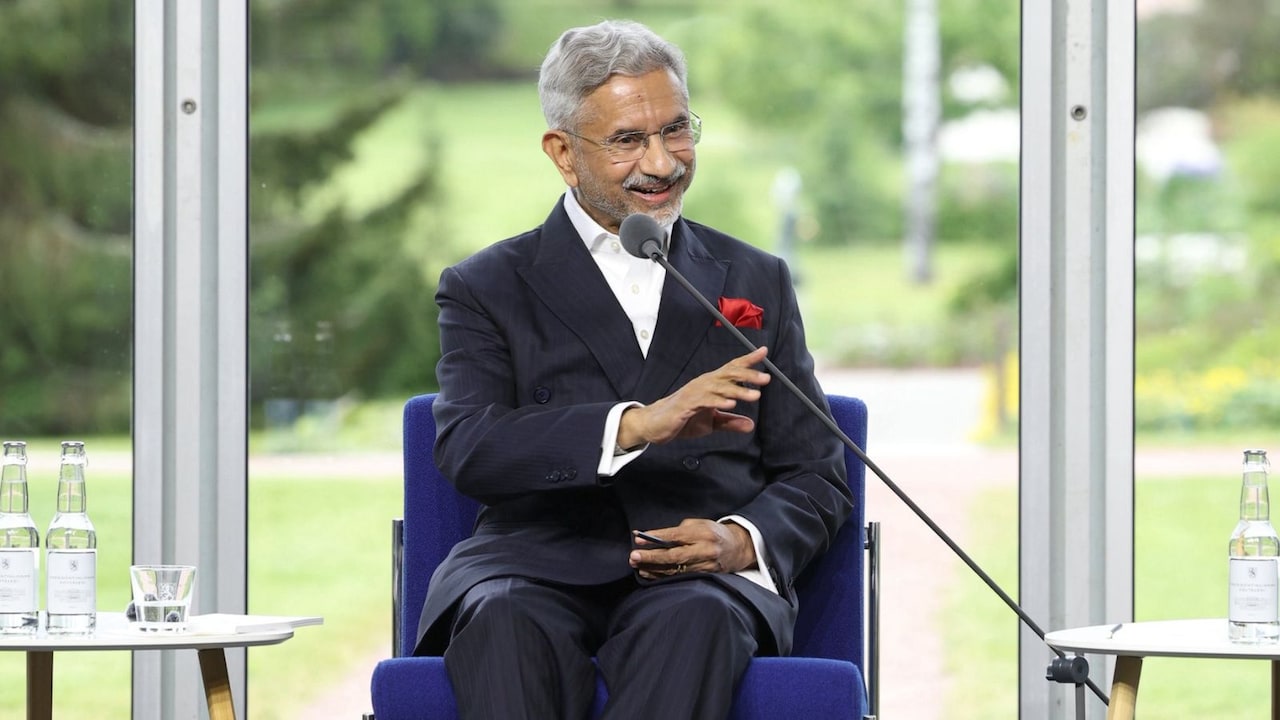
When Indian Foreign Minister S. Jaishankar publicly called out European double standards regarding weapons sales and geopolitical conflicts, he was not just venting diplomatic frustration. He was executing a calculated strategy designed to dismantle Western leverage over New Delhi. For decades, Western powers have used defense supply chains as ethical leverage points, lecturing developing nations on human rights while expecting them to fall in line during global crises. India has decided it will no longer accept this asymmetry. By highlighting how European-made weapons flow into conflict zones that threaten Indian security, New Delhi is flipping the script on Western moral superiority.
The core of this friction lies in the shifting dynamics of global arms procurement and the raw realism of Indian foreign policy. Western nations frequently demand that India alter its historic ties with Russia, particularly its energy imports and defense dependencies. Yet, those same Western nations maintain highly porous export controls when their own economic interests are at stake. This friction is not a temporary diplomatic spat. It is the beginning of a fundamental reordering of international defense relations.
The Anatomy of the Two Way Street
Western defense diplomacy has long operated on an unwritten assumption. The assumption is that Western arms exports are inherently stabilizing, while non-Western procurement is inherently suspect. When European defense contractors sell components or complete systems to nations in the Middle East or Central Asia, these transactions are framed as strategic partnerships. However, when these same weapons leak into the hands of non-state actors or hostile neighbors targeting India, the response from European capitals is often a collective shrug, dismissed as the unavoidable friction of global commerce.
New Delhi's frustration is rooted in specific, observable patterns of proliferation. European dual-use technology—chips, sensors, and specialized machinery—regularly finds its way into supply chains that feed Pakistan’s military apparatus or Chinese-backed modernization efforts. While European leaders travel to New Delhi to pitch multi-billion-dollar fighter jet and submarine contracts, their export control boards quietly sign off on deals that compromise the very security India is trying to buy.
This creates a structural vulnerability for India. If New Delhi relies on Western defense systems, it tethers its national security to the political whims of capitals like Berlin, Paris, or Washington. A sudden shift in a European parliament’s domestic political mood can freeze spare parts, ground aircraft fleets, and leave India exposed during a border crisis.
The Strategy of Aggressive Neutrality
India's response to this predicament has been a doctrine of aggressive neutrality. This is not the passive non-alignment of the Cold War. It is a transactional, cold-eyed pursuit of national interest that completely disregards Western ideological frameworks.
When the West demanded that India stop buying Russian oil to starve Moscow’s war machine, India did the exact opposite. It ramped up imports significantly. New Delhi argued that its primary duty was to shield its own population of 1.4 billion people from inflationary shocks, not to subsidize a European security crisis. Jaishankar famously noted that Europe needs to grow out of the mindset that Europe's problems are the world's problems, but the world's problems are not Europe's problems.
+-------------------------------------------------------------+
|               THE ASYMMETRIC DEPENDENCY LOOP                |
+-------------------------------------------------------------+
|                                                             |
|   [ Western Defense Exporters ]                             |
|                |                                            |
|                | Sells high-tech systems / dual-use tech    |
|                v                                            |
|   [ Secondary Markets / Volatile Regions ]                  |
|                |                                            |
|                | Proliferation & technology leakage         |
|                v                                            |
|   [ Threats to Indian Security Sovereignty ]                |
|                |                                            |
|                | Forces New Delhi to diversify away         |
|                v                                            |
|   [ Indigenization & Alternative Procurement (Russia) ]     |
|                                                             |
+-------------------------------------------------------------+
This position exposes the fragility of Western leverage. The West cannot afford to alienate India because India serves as the ultimate geopolitical counterweight to China in the Indo-Pacific. Consequently, the United States and Europe find themselves in a self-inflicted bind. They must tolerate India's defiance and its continued relationship with Russia because the alternative—a isolated India unwilling to cooperate in the containment of Beijing—is a nightmare scenario for Western strategic planners.
The Illusion of Clean Supply Chains
The defense industry likes to project an image of absolute oversight. Every component is tracked, every end-user certificate verified. This image is entirely mythological.
The reality of modern manufacturing makes absolute verification impossible. A single European missile system contains components manufactured in a dozen different countries. Software is written in one jurisdiction, sensors are fabricated in another, and final assembly happens in a third. Once these systems leave European shores, the ability to control their ultimate destination degrades rapidly.
- Dual-Use Loopholes: Industrial machinery and commercial drones are exported with minimal oversight, only to be converted into military assets by regional adversaries.
- Third-Party Transfers: Weapons sold to allied nations in the Middle East are frequently transferred to proxy networks without the explicit consent of the original European manufacturer.
- Maintenance Contracts: The cutoff of spare parts is used as a political weapon, turning defense procurement into a mechanism of perpetual geopolitical blackmail.
Driving Toward Total Defense Autonomy
To break this cycle, India is executing a massive pivot toward domestic defense production, a policy known under the umbrella of self-reliance. The goal is to eliminate dependency on both Western supply chains that come with political strings attached, and Russian supply chains that are increasingly strained by domestic wartime demands.
This transition is incredibly difficult. Developing an indigenous defense-industrial base takes decades of sustained capital investment and engineering expertise. India has struggled for years with delayed projects, bureaucratic inertia, and state-owned defense firms that consistently underdelivered. The difference now is the sheer urgency driving the political leadership.
New Delhi is systematically banning the import of hundreds of items of military equipment, forcing the Indian armed forces to buy locally. It is also opening up the defense sector to private enterprises, breaking the monopoly of inefficient state monopolies. The objective is clear: India wants to transform itself from the world’s largest arms importer into a major defense exporter.
The Risk of the Middle Income Defense Trap
This strategy carries severe operational risks. If India cuts off foreign imports before its domestic industry can produce world-class alternatives, the military faces a dangerous capability gap.
$$Capabilities\ Gap = \theta \cdot (Threat\ Evolution\ Rate) - \gamma \cdot (Domestic\ Industrial\ Output)$$
Where $\theta$ represents regional threat acceleration and $\gamma$ represents the efficiency of domestic technology absorption. If domestic output fails to match the rate at which regional adversaries are modernizing, India’s deterrence capabilities degrade significantly.
The Indian Air Force, for instance, is operating well below its sanctioned squadron strength. Western manufacturers are eager to sell their jets to fill this gap, but they want to retain control over the core intellectual property. India is refusing these terms, insisting on a complete transfer of technology. This standoff leaves frontline pilots flying aging platforms while bureaucrats and foreign executives argue over the fine print of blueprints.
The End of the Lecture Era
The Western monopoly on defining global norms is over. For centuries, the global South was expected to absorb the externalities of Western conflicts while subordinating its own security needs to the priorities of the North Atlantic treaty nations. India's current diplomatic posture signals that this era has reached its definitive end.
When India points out that European weapons are used to threaten its borders, it is not asking for an apology. It is establishing a baseline of parity. New Delhi is telling the West that if its security concerns regarding Russia are valid, then India's security concerns regarding Pakistan and China are equally sacrosand. You cannot demand solidarity on one front while actively undermining it on another.
The West must now decide how to engage with a subcontinent that refuses to act as a junior partner. Western defense firms must either treat India as an absolute equal—sharing core technologies without political caveats—or watch India build its own industrial ecosystem while continuing to buy from anyone willing to sell without a sermon. New Delhi has made its choice; the burden of adjustment now sits squarely with the West.


