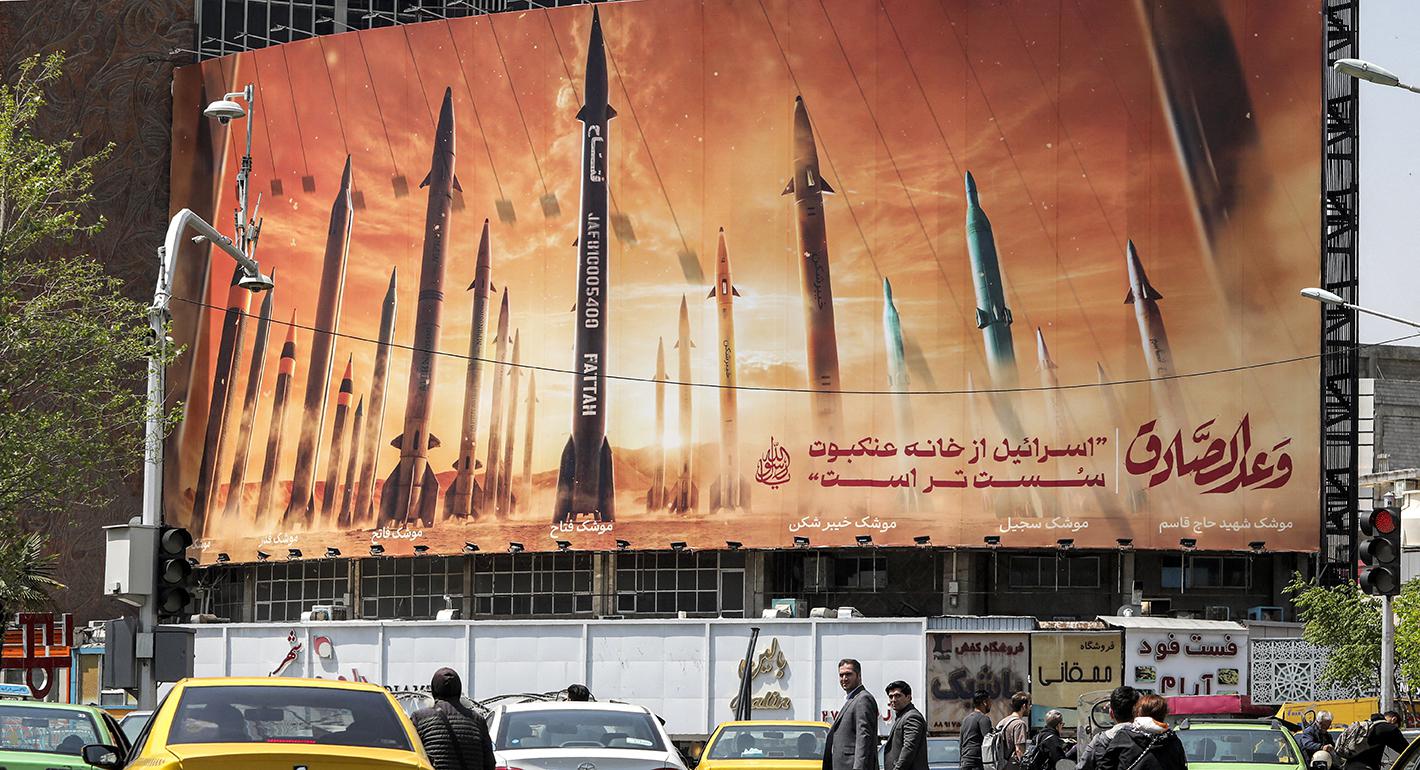
In the cramped corridors of a neighborhood bakery in Tehran, the air usually smells of toasted flour and the sharp, comforting scent of barbari bread hitting the cooling rack. But lately, the conversation has changed. It isn’t about the price of flour or the local soccer scores. It is about the "new phase." When Mohammad Bagher Ghalibaf, the Speaker of the Iranian Parliament, stood before the cameras recently, he wasn’t just delivering a bureaucratic update. He was signaling a shift in the very atmosphere of the country.
He spoke of a nation entering a crucible.
To understand what is happening in Iran right now, you have to look past the military fatigues and the podiums. You have to look at the five requests Ghalibaf laid out—not as a list of policy points, but as a survival manual for a country bracing for impact. This isn't a drill. It is a pivot.
The Front Line is Everywhere
For decades, the word "war" meant something specific: a distant border, a trench, a khaki-clad soldier. That definition is dead. Ghalibaf’s first and perhaps most vital assertion is that the "new phase" of conflict is hybrid. It is a ghost in the machine. It is the fluctuation of the Rial in a merchant's hand and the flicker of a screen in a teenager's bedroom.
Consider a hypothetical shopkeeper named Reza. Reza doesn't carry a rifle. Yet, according to the state's new calculus, Reza is on the front line. When the economy becomes a theater of war, every transaction is a tactical maneuver. The Speaker's call for "national unity" isn't a poetic request for harmony; it is a demand for a closed phalanx. He is signaling that the internal cracks—the social tensions and economic frustrations that have simmered for years—are now seen as entry points for external "cognitive warfare."
The stakes are invisible. They are psychological.
The Iron Grip of the Budget
There is a specific kind of silence that falls over a room when the talk turns to the "War Budget." Ghalibaf’s second major point involved the synchronization of the national budget with the needs of this new phase. In a dry news report, this sounds like accounting. In reality, it is a choice between bread and bullets.
By demanding that the country's financial planning reflect the "extraordinary circumstances," the leadership is telling the people to tighten their belts until they can no longer breathe. It is an admission that the luxury of long-term development has been sacrificed for the necessity of immediate defense. This is the friction of a nation trying to run a marathon while holding its breath. The budget is no longer a ledger of growth; it is a fortress wall.
The Myth of the Lone Actor
One of the most telling requests made by the Speaker was his emphasis on the "Axis of Resistance." This isn't just a geopolitical alliance. It is a psychological safety net. Ghalibaf is reinforcing the idea that Iran is not standing in the dark alone.
By framing the current escalation as a collective struggle involving regional partners, the narrative shifts from a singular nation under pressure to a regional tide that cannot be turned. It is a classic move in the master storyteller’s handbook: if the protagonist is outnumbered, you remind the audience of the hidden army in the hills. The request here is for the Iranian public to see themselves as part of a much larger, historical movement.
But for the mother in Isfahan wondering if her son will be called to serve, the "Axis" is a cold comfort. The human element of this geopolitical chess game is the persistent, gnawing anxiety of what happens when the "Resistance" is tested to its breaking point.
The Information Fortress
The fourth request is perhaps the most modern. Ghalibaf called for a total mastery of the "media space." In his view, a news report isn't just information; it’s a projectile.
We live in an era where a single viral video can do more damage to a regime's stability than a precision-guided missile. The Speaker knows this. He is demanding a narrative monopoly. He is asking the people to trust the official frequency and tune out the static of the outside world.
It is a difficult ask in 2026. The world is porous. Information leaks through VPNs and whispered conversations. When a government asks for control over the "narrative," they are acknowledging that they are losing the battle for the hearts and minds of their own digital natives. The "new phase" of war is being fought in the palm of a hand, on a glowing five-inch screen.
The Fifth Demand: The Ghost of the Future
Finally, there was the call for "strategic patience" combined with "proactive deterrence." It sounds like a contradiction. How do you wait and strike at the same time?
This is the fifth demand, and it is the most heavy. It asks the Iranian citizen to live in a state of permanent suspense. It is the request to endure the sanctions, the isolation, and the looming threat of kinetic strikes without flinching.
Ghalibaf is essentially asking for the soul of the nation to become as hard as the centrifuges in Natanz. He is asking for a collective suspension of the desire for a "normal" life. The "new phase" is not a temporary storm to be weathered; it is the new climate.
The air in that Tehran bakery remains thick. The baker pulls another loaf from the oven. He knows that the price of flour will likely rise again tomorrow. He knows that the "new phase" means fewer customers and more speeches.
The invisible stakes are not found in the transcripts of the Parliament. They are found in the eyes of the people watching those transcripts. They are found in the silence that follows a political declaration of war—the heavy, suffocating silence of a people who have heard it all before, yet know that this time, the "new phase" might not have an ending.
The Speaker has made his requests. Now, the nation waits to see who will pay the bill.