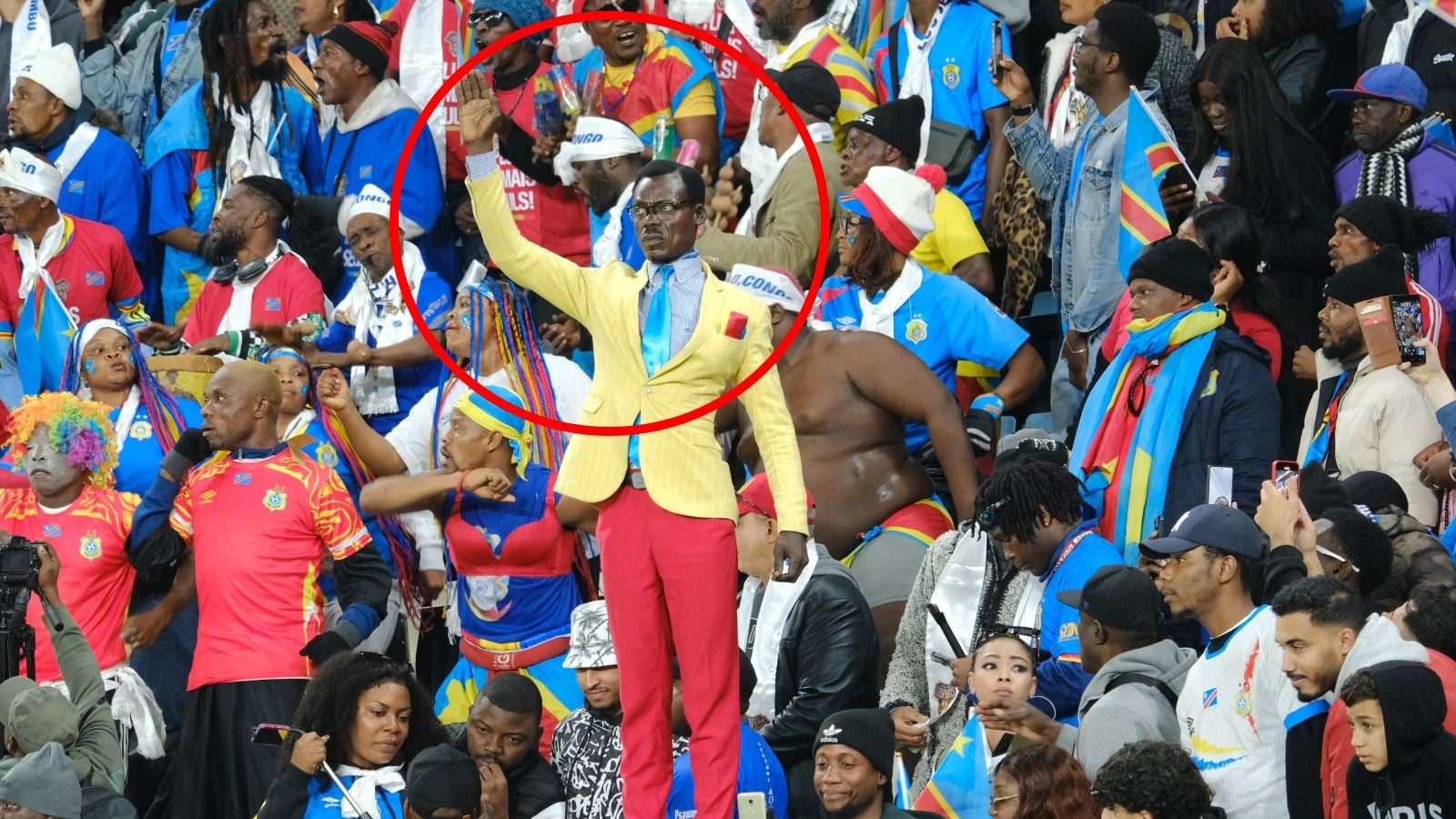
The air inside a football stadium during the knockout rounds of a major tournament does not feel like normal air. It is heavy. It smells of stale beer, wet grass, and the collective anxiety of tens of thousands of people who have pinned their emotional well-being on the bounce of a synthetic leather ball. When you stand in the tunnel before kickoff, the noise from the stands doesn't sound like cheering. It sounds like a mechanical roar, a low-frequency vibration that rattles the fillings in your teeth.
For years, the Belgian national football team carried a label that felt more like a curse than a compliment: The Golden Generation. It was a term manufactured by pundits and embraced by fans, a glittering crown placed upon the heads of a group of players before they had actually won anything to deserve it. But gold is a heavy metal. When you wear it every time you step onto the pitch, it slows you down. It makes every missed pass feel like a national tragedy and every draws feel like a betrayal.
Then came the match that stripped away the glamour and left only the bone.
Belgium won. The scoreboard reflected a triumph, but anyone who watched the ninety minutes unfold knew that the tactical charts and possession statistics told only half the story. The rival team had squeezed them. They had targeted the gaps, exploited the tired legs, and pushed the dark reds to the absolute brink of elimination. In the press room afterward, the microphones were lined up like tiny silver soldiers, waiting for the usual platitudes. We played our game. The coach had a great plan. We are happy with the three points.
Instead, Romelu Lukaku walked up to the microphone, took a breath, and spoke a truth that sliced through the media-trained fog.
"In matches like this, you need character."
He did not talk about triangles. He did not mention expected goals or high-pressing triggers. He spoke about the invisible architecture of survival.
To understand what Lukaku meant, you have to look past the physical specimen that stands at six feet three inches and weighs over two hundred pounds. It is easy to look at a elite striker and see only power, a human battering ram designed to bulldozes defenders. But football at the highest level is rarely decided by muscle. It is decided by the quiet conversations a player has with himself when his lungs are burning, the clock shows eighty-four minutes, and the entire world is watching him fail.
Imagine a young footballer. Let’s call him Jonas. Jonas is nine years old, sitting on a worn linoleum floor in a small apartment in Antwerp, watching the television screen reflect off his worn-out trainers. He sees Lukaku miss a chance. He hears the commentator’s voice sharpen with critique, the immediate social media execution that follows a high-profile mistake. Jonas does not see the fifteen kilometers Lukaku ran to create that space. He does not see the bruised ankle wrapped in ice beneath the sock. He only sees the failure.
What Jonas, and perhaps many of us watching from the comfort of our sofas, fails to realize is that character in football is not the absence of failure. It is the ability to tolerate its presence while continuing to move forward.
The Belgian victory was ugly. There is no other word for it. There were moments where the midfield looked disconnected, where the defense seemed to be clinging to the edge of a cliff by their fingernails. For a team built on the promise of beautiful, fluid football, this was an existential crisis. The beautiful game had turned into a muddy dogfight.
But this is precisely where the traditional sports narrative gets it wrong. We are conditioned to love the triumphs that look effortless. We revere the perfect volleys, the tiki-taka sequences that look like ballet choreographed by a computer program. We treat grit as a secondary virtue, a consolation prize for the less talented.
Lukaku’s post-match reflection turns that hierarchy on its head. When the system breaks down—and against elite opposition, the system always breaks down eventually—tactics become useless. You cannot coach a man to want the ball when thirty million people are waiting to scream at him if he loses it. You cannot draw a tactical diagram that instills the willingness to throw a ribcage in front of a traveling ball.
That is character. It is the raw, unpolished survival instinct that remains when the talent has been neutralized by tactical counters.
The history of the sport is littered with teams that possessed boundless talent but lacked this specific, stubborn chemical component. They are the sides that play beautiful football until the first hard tackle lands, until the referee makes a controversial call, until the rain starts to fall sideways and the pitch turns into a swamp. They are the teams that look like champions in June and are watching the finals from a beach in July.
Belgium has often hovered dangerously close to that precipice. The burden of potential can paralyze. When you are told you are golden, you become terrified of showing any rust.
During that specific match, the turning point didn't come from a brilliant tactical substitution or a piece of individual magic. It came during a stoppage in play in the second half. The Belgian players gathered in a loose circle near the center circle. Their faces were flushed, their shoulders slumped. The momentum was entirely with their opponents.
Lukaku did not give a cinematic speech. He didn't shout or beat his chest. He grabbed the back of a younger teammate’s neck, pulled his forehead close, and spoke quietly. It was a gesture of anchoring. It was a physical manifestation of the phrase he would later use in the press room. He was reminding the team that they were allowed to suffer. They were allowed to be tired. They were allowed to play poorly, as long as they refused to yield.
The match was secured not by a dazzling counter-attack, but by a series of miserable, desperate clearances. A header away from the six-yard box. A sliding tackle that went into the third row of the stands. A goalkeeper smothering a low cross and staying on the turf for three seconds longer than necessary just to let his defenders catch their breath.
When the final whistle blew, the reactions were telling. There were no ecstatic celebrations. Several players simply dropped to their knees, staring at the grass. They looked less like victorious athletes and more like survivors of a natural disaster who had managed to pull themselves onto high ground.
The public reaction to the match was predictably divided. The purists complained about the lack of fluidity. The analysts pointed out the structural flaws that allowed the opposition so many entries into the penalty area. They were not wrong in their assessments. If Belgium plays that way against a clinical, world-class attack, the outcome will likely be different.
But those critiques miss the emotional reality of a tournament cycle. You cannot play seven perfect matches to win a trophy. It is statistically impossible. Somewhere along the way, the engine will misfire. The star playmaker will have an off night. The referee will miss a blatant penalty. A true championship run is defined not by the nights where everything goes right, but by the two or three ugly, agonizing evenings where everything goes wrong and you find a way to win anyway.
Lukaku’s words were a defense of that ugliness. They were a reminder that football is a human endeavor played by fragile, exhausted people, not an optimization problem to be solved by algorithms.
When we look back at tournaments years later, the details of these grinding victories usually fade. We remember the trophies, the final goals, the iconic celebrations. We forget the round-of-sixteen match where a tired team barely survived against an underdog.
But the players don't forget. Those are the matches that forge the internal armor required to face the true giants later in the bracket. You cannot buy character, and you cannot fake it under the floodlights of a stadium. You have to earn it, ninety minutes of suffering at a time, until you finally understand that the weight of the shirt is not a burden, but a shield.