The winter mud in the trenches of eastern Ukraine does not care about geopolitics. It freezes into jagged spikes under boots, thaws into a thick, gray paste that sucks the rubber right off your heels, and smells faintly of rust and wet wool. In that cold, time loses its linear shape. Days blur into a continuous, low-frequency roar of artillery that vibrates through the jawbone before you even hear the shell leave the barrel.
For the soldiers holding the line, the war is small. It is the span of a trench wall, the condition of a tourniquet, the warmth of tea in a battered aluminum cup. But thousands of miles away, and sometimes just a few miles behind the front, the war is a massive, calculating machine of perception, diplomacy, and survival.
Every leader in wartime faces a brutal arithmetic. How do you keep an exhausted nation from collapsing into despair? How do you pierce through the numbing fatigue of a world that has grown accustomed to daily casualty reports?
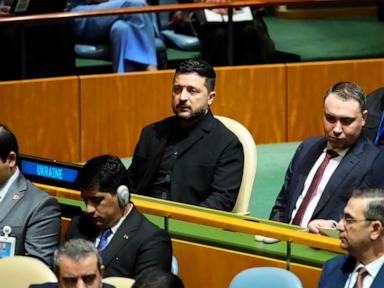
Consider the moment Volodymyr Zelenskyy stepped before the microphones to reveal a piece of intelligence that normally stays buried in the secure vaults of military intelligence: a secret, clandestine prisoner of war transfer, orchestrated behind iron curtains and heavy-handed censorship. It was not merely a tactical announcement. It was a masterclass in narrative survival.
To understand why a president must occasionally pull back the curtain on classified movements, you have to look past the sanitized language of press briefings. You have to look at the kitchen tables in Kyiv, Lviv, and small villages whose names foreign journalists mispronounce.
Imagine a mother named Halyna, sitting in a kitchen illuminated by the flickering, amber glow of a battery-powered LED lamp during a blackout. Her son, Dmytro, has been missing since the brutal defense of an industrial plant months ago. No body. No grave. Just a status on an official ledger: Unconfirmed captivity.
Every morning, Halyna wakes up and checks her phone. She scrolls through Telegram channels choked with grainy, unverified videos of men in mismatched uniforms walking across muddy courtyards somewhere deep inside enemy territory. She looks at their ears, the slope of their shoulders, the way they hold their heads. Is that him?
When a government remains silent about secret negotiations, it protects the mechanics of diplomacy, but it starves the soul of its populace. Silence breeds a creeping, toxic despair. It tells the mother that her son has been forgotten, filed away under administrative inconvenience while the world moves on to the next major headline.
So when a leader shatters that silence—when he announces that a clandestine transfer of prisoners was hammered out, delayed, or miraculously salvaged against impossible odds—it is not just an update on troop movements. It is an injection of oxygen into a suffocating room.
Critics in foreign capitals often look at these announcements through a cynical, clinical lens. They run risk assessments in glass-walled conference rooms. They call it a play for leverage. They whisper about public relations strategies designed to pry open foreign aid coffers or shame hesitant allies into delivering air defense systems.
They are not wrong, strictly speaking. In the high-stakes poker game of international statecraft, leverage is the only currency that matters. When your cities are losing power and your supply lines are strained to the breaking point, you use every tool at your disposal to keep the spotlight burning. You cannot afford the luxury of quiet dignity when noise is what keeps the ammunition flowing.
Yet, reducing these revelations to a cynical public relations stunt misses the deeper, human machinery of modern war. A country cannot fight an existential war on hardware alone. It fights on belief. And belief is a fragile, leaking vessel that must be constantly refilled with proof that human life still has weight, that individuals are not just expendable coordinates on a tactical map.
Let us trace the invisible mechanics of how a prisoner transfer actually unfolds. It is never clean. It does not happen because two honorable generals sign a paper across a mahogany table.
It happens in the pitch-black hours of midnight, on lonely stretches of borderland where headlights are forbidden. It involves low-level intermediaries, intelligence officers who hate each other, third-party brokers from neutral nations who whisper in coded messaging apps, and endless hours of agonizing delay where a single stray mortar round can derail months of delicate bargaining.
A deal falls apart and is resurrected three times before sunrise. Buses sit idling with their engines coughing out blue exhaust, filled with blindfolded men who have not heard a kind word in six hundred days. The families back home know nothing of this turbulence. They only know the silence.
When the deal finally goes through, and the buses cross the threshold into freedom, the human cost of the preceding silence becomes glaringly apparent. Men step off the transport with ribs like xylophones, hair shaved to the scalp, and eyes that refuse to focus on the open sky. They have forgotten how to speak without whispering. They flinch when a door slams.
If a government hides these operations entirely, the return of these broken men feels like an isolated miracle, a rare stroke of luck. But when a leader brings them into the light—when he owns the struggle of securing their release—he binds the fate of the individual soldier to the collective identity of the entire nation.
This is where the political calculation and the human imperative overlap.
Support from international allies is notoriously fickle. Parliaments grow tired. Taxpayers feel the pinch of inflation. Election cycles churn up domestic grievances that make foreign conflicts look distant and expensive. A nation fighting for its survival must constantly remind its partners that this is not a movie or an abstract chess match. It is a slaughterhouse where real human beings are being traded, broken, and rescued daily.
By exposing the hidden machinery of these exchanges, the leadership in Kyiv sends a dual message. To the home front: We see your children, we are tearing down walls to bring them home, and we will not let you feel forgotten. To the world front: Look at the human wreckage we are pulling out of the dark. Look at what it costs to stand against this tide. Do not look away now.
It is a high-wire act. Reveal too much, and you tip your hand to an enemy who specializes in sabotage and psychological warfare. Reveal too little, and you risk isolating your own people, letting them drown in the quiet agony of abandonment.
History is filled with leaders who tried to manage total war through cold, bureaucratic detachment, treating human lives as mere statistics. They almost always failed, because people cannot love an abstraction. You cannot ask a citizen to endure freezing winters, ruined infrastructure, and the daily grief of loss for a spreadsheet. They endure it for the person next to them, for the hope of justice, and for the sacred conviction that their government knows their name.
When Zelenskyy broke protocol to talk about that hidden transfer, he was not just tossing a bone to international news anchors looking for a fresh angle. He was driving a stake into the ground against oblivion. He was saying: This happened. These men existed in the dark, and we dragged them back into the light.
The artillery continues to thump across the freezing steppes. The mud still clings to the boots of exhausted boys who should be in university classrooms. The diplomatic cables continue to burn with sharp, unyielding demands between capitals that have never heard the whistle of a drone.
But somewhere tonight, a mother in a darkened kitchen in Ukraine looks at her phone, sees the grainy photograph of a gaunt, smiling man wrapped in a blue and yellow flag, and draws her first full breath in two years.
That is the leverage that wins wars. Not the metal. Not the ink on treaties. The refusal to let the darkness win, one whispered name at a time.