The pre-dawn mist over a British wildlife sanctuary does not feel like South America. It feels like damp wool. It sticks to your eyelashes, chills the tips of your fingers through heavy work gloves, and turns the scent of alfalfa into something heavy and industrial.
For the people who spend their lives keeping exotic species alive in corners of the world they were never meant to see, this cold humidity is the backdrop to a quiet, exhausting kind of tension. You learn to listen to the dark. You listen for a change in the rhythm of breathing, the scuffle of straw, or the sharp, clicking alarm call that means something has gone wrong in the night.
When you are looking after the only officially recognized capybara breeding pair in the entire United Kingdom, every sigh from the enclosure carries an absurd amount of weight.
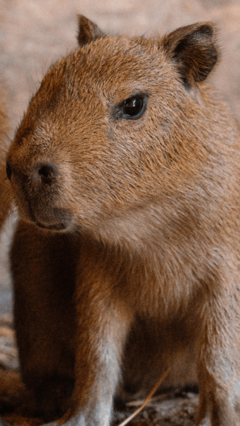
We tend to look at capybaras through the distorting lens of the internet. To the modern world, they are the undisputed kings of zen. They are the giant, oversized rodents that sit unbothered in hot springs while ducks nest on their heads. They are internet memes, symbols of radical peace, icons of a stress-free existence we all desperately want but can never quite achieve.
But when you are the human being holding the clipboard, looking at a species trying to sustain its lineage on an island thousands of miles from its swampy home, the chill sets in. The internet sees a cartoon. The keeper sees a fragile, biological tightrope.
The Silent Enclosure
Consider the sheer pressure of being the only ones.
In a standard zoo environment, genetic diversity and reproductive success are managed across networks of hundreds of institutions. If one pair fails to bond, another might succeed. The burden is distributed. But when a biological mission narrows down to a single paddock, the margin for error evaporates.
For months, the daily routine at the enclosure was a exercise in managed anxiety. Capybaras do not show stress the way a dog or a cat does. They do not pace frantically or whine. When they are uncomfortable, they simply withdraw. They become still. It is a terrifying stillness for someone whose job is to keep them thriving.
Every morning began the same way. A slow walk down the gravel path, the bucket of specialized pellets knocking against a knee, and a silent prayer that both large, barrel-shaped silhouettes would rise from the straw.
The female, heavy with a pregnancy that seemed to stretch time itself, had grown increasingly selective about her space. Her partner, usually inseparable, was being pushed to the periphery. In the wild, these animals live in massive, communal structures, sharing the burdens of vigilance and child-rearing across dozens of individuals. Here, they had only each other. And we had only them.
The stakes were completely invisible to the casual visitor. To the public walking past the wooden fences, the pair just looked like they were doing what capybaras do best: absolutely nothing. They basked under the artificial heat lamps, their blunt snouts pointed toward the ceiling, looking for all the world like ancient, furry stones.
But beneath that heavy, deceptively calm exterior, a biological countdown was ticking away.
The Birth in the Straw
The breakthrough did not happen with a dramatic midnight alarm or a frantic call to the veterinary team. It happened in the absolute, freezing silence of a Tuesday morning.
When the shift started at 6:00 AM, the air inside the house was different. It smelled sharper, warmer. And there, tucked into the deepest hollow of the bedding, were two impossibly small, fully furred replicas of the adults.
Pups.
Unlike most rodents, which are born blind, hairless, and entirely helpless, capybara pups arrive ready for the world. They are precocial. Within hours of leaving the womb, these two tiny creatures were already standing on their webbed feet, their dark eyes open, looking around the damp British sanctuary with the exact same look of profound, unbothered indifference that their parents possessed.
It is a strange thing to witness. It defies our basic understanding of infancy. There is no period of fragile, closed-eye weakness. They look less like babies and more like adults that have been shrunk in a hot wash.
But the relief that washed through the keeping staff was instantly replaced by a new, sharper kind of vigilance. A successful birth is only the first step on a very long road. In a single-pair scenario, the survival of these two pups represents a one hundred percent increase in the local population, but it also represents a massive vulnerability. If something happens to them, the clock resets to zero.
The Mirror of Our Own Anxiety
Watching a mother capybara nurse her young in a British winter forces a strange kind of self-reflection.
We live in an era of constant, low-grade panic. We are bombarded by information, driven by metrics, and hunted by deadlines. We look at these animals and we project our desperate need for calm onto them. We envy their ability to sit in a freezing drizzle and look completely content.
But the truth is far more complex. The capybara’s calm is not a lifestyle choice. It is an evolutionary survival strategy.
In the rivers and marshes of South America, they are the ultimate prey. Jaguars, anacondas, and caimans are constantly looking for them. A capybara cannot outrun a big cat on land, nor can it outswim a caiman in deep water. Their only defense is their social structure and their absolute silence. They blend into the reeds. They remain perfectly still because to move, to panic, to show agitation, is to die.
Their zen is actually a mask for a life lived on the knife-edge of survival.
When we brought them to the UK, we removed the jaguars and the caimans, but we did not remove the biology. The two new pups do not know they are safe behind a double-fenced perimeter in the English countryside. Their tiny hearts beat with the ancient rhythm of the Pantanal. When a crow shadows overhead, their bodies freeze instantly, turning into tiny statues until the danger passes.
This is the real work of modern conservation. It is not just about keeping animals fed and warm. It is about understanding the psychological architecture of a creature that is hardwired to expect disaster, and creating an environment where it feels safe enough to bring new life into the world.
Moving Beyond the Myth
The two pups are growing at an astonishing rate. They have already begun nibbling on solid food, grass, and bark, mimicking their mother’s chewing motions with an adorable, rhythmic intensity.
The public will come to see them. Pictures will be taken. They will undoubtedly go viral on local social media feeds, described as the newest, cutest additions to the country's wildlife roster. People will stand in front of the enclosure, breathe in the smell of damp straw, and laugh at how relaxed the little family looks.
But for those who watch over them when the gates are locked and the crowds are gone, the perspective is different.
These two pups are not a novelty. They are a tiny, fragile bridge. They are proof that even when you strip away the vast wetlands, the communal herds, and the warmth of the southern sun, the fundamental instinct to survive and multiply can still find a way through the cracks of a cold British winter.
The work goes on. The buckets of feed will still be carried through the pre-dawn mist. The heat lamps will be checked and double-checked. The pressure has not left the paddock; it has simply been divided among four individuals now instead of two. And as the small family huddles together against the damp air, snouts tilted upward, they remind us that peace is never the absence of struggle. It is the ability to stand perfectly still right in the middle of it.