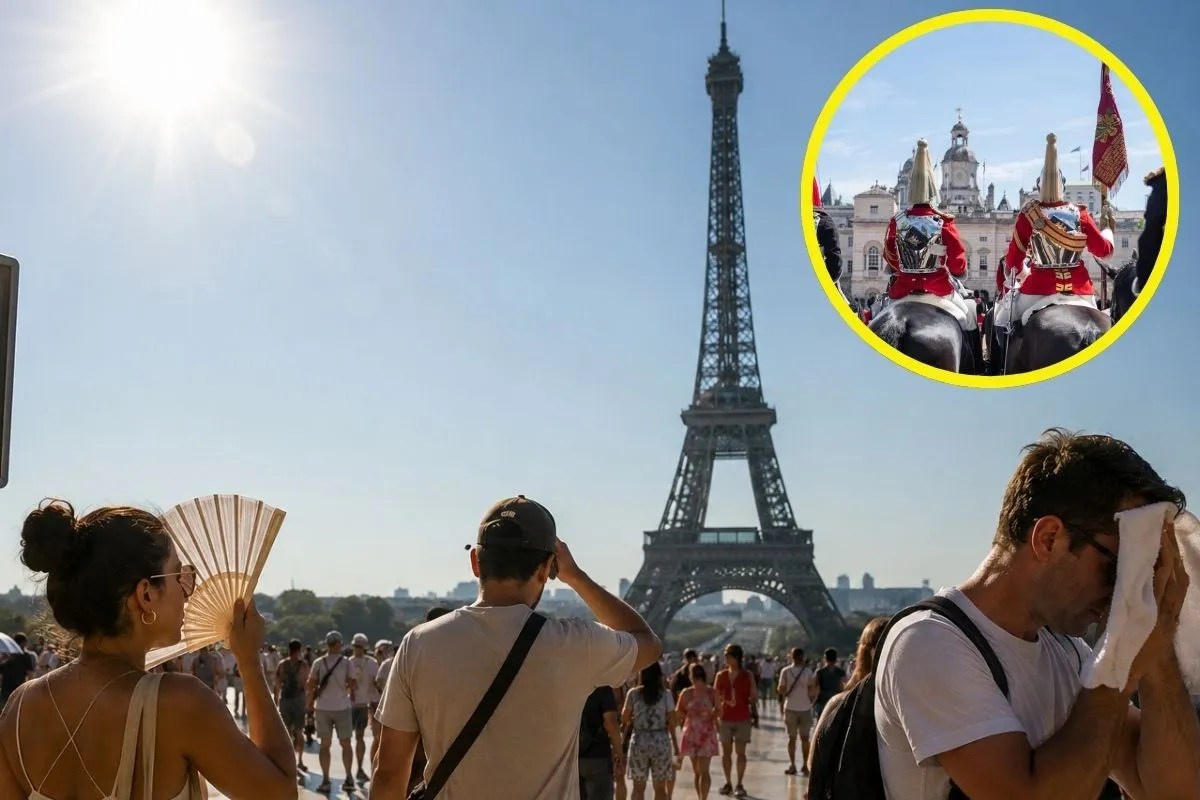
Think Europe is all about breezy summers, sidewalk cafes, and postcard-perfect architecture? Not right now. A massive atmospheric phenomenon known as an Omega Block has trapped a brutal heat dome over the continent. It's pushing temperatures into terrifying, historic territory. Paris is sweating through a jaw-dropping 40.9°C, shattering its June record. Across the English Channel, southern England just clocked its hottest June day ever at 35.8°C.
This isn't just about feeling sweaty. It's a systemic failure of infrastructure designed for a climate that simply doesn't exist anymore.
When a continent built on stone, radiator heating, and a distinct lack of air conditioning hits these numbers, daily life grinds to a halt. If you think a modern society can just power through a few hot days, look at what's happening on the ground.
The Royal Pageantry Pauses for Survival
Britain prides itself on stiff-upper-lip stoicism. But even the British military has its limits. The Household Division officially canceled the iconic Changing of the Guard ceremonies at Buckingham Palace and Windsor Castle.
It's a massive deal for the tourism industry. Thousands of visitors flock to London daily just to see the guards march. But standing under a relentless sun in heavy wool scarlet tunics and genuine bearskin hats is a recipe for medical emergencies. We've all seen the videos of soldiers fainting and collapsing face-first onto the pavement during summer rehearsals. This time, leadership chose safety over spectacle.
The King’s Life Guard at Horse Guards still changed, but they did it at 8:00 AM without any ceremonial elements. The goals are simple.
- Protect the military working horses from heat stress.
- Move on-duty soldiers to shaded positions immediately.
- Rotate guard shifts at a much faster pace to prevent heatstroke.
When the state can't safely exhibit its oldest traditions, it's a clear sign that the weather has mutated into something dangerous.
France Suffers Under a Relentless June Scorcher
Cross over to France, and the situation looks even more desperate. Meteo-France extended its highest red weather alert across 72 of the country's 96 mainland departments. This isn't a localized spike. It's a national crisis affecting roughly 94 million Europeans who are enduring temperatures above 35°C simultaneously.
In Paris, the cultural pillars are blinking. The Louvre Museum and the Eiffel Tower resorted to early closures. Tourists who saved for years to see the glass pyramid or climb the iron tower are standing outside closed gates, staring at signs advising them to seek shelter. Even Paris Fashion Week had to pivot. The star-studded Louis Vuitton show, orchestrated by Pharrell Williams, turned into a collective sweatbox. Other major labels like Dior and Rick Owens quickly scrambled their schedules, moving their shows to the early morning hours to keep models and guests from passing out.
Away from the glamour, real life is breaking down. In northern France, a massive heat-related power grid incident left 68,000 households without electricity. Imagine sitting in a concrete apartment building with no air conditioning, outdoor temperatures passing 40°C, and suddenly your fans and refrigerators shut off. For the hundreds of undocumented migrants living in nylon tents under Parisian overpasses, municipal workers hosing down the scorching sidewalks offers the only real relief.
The Core Problem with European Infrastructure
Why does Europe collapse at temperatures that parts of Texas, India, or Australia handle every single week? It comes down to architectural intent.
European cities were built to retain heat, not reject it. For centuries, the primary survival threat was freezing winters. Thicker stone walls, heavy insulation, large windows designed to capture daylight, and a complete absence of central cooling are standard. When a heat dome settles over a city like Paris or London, these buildings turn into literal ovens. They trap the daytime thermal energy and radiate it all night long.
Public transport isn't built for this either. London Underground lines lack air conditioning on older, deeper tracks. Rail lines actively warp when the steel absorbs too much heat, forcing train operators to slash speeds or cancel routes entirely to avoid derailments.
The numbers from neighboring countries show the regional scale of this infrastructural nightmare.
- Italy: A red alert has been slapped across 16 major cities. In Florence, the world-famous Uffizi Galleries stopped selling tickets entirely after its central air conditioning system broke under the strain.
- The Netherlands: Schools closed early or shut entirely as temperatures neared 36°C, as classroom conditions became totally unlivable for children.
- Switzerland: In a desperate bid to offer public relief, local municipalities opened air-conditioned movie theaters to the public for free during the day, just so people had a place to cool down their core temperatures.
How to Navigate a Major European Heatwave
If you're currently traveling through Europe or living in an apartment without modern HVAC, you can't rely on the usual infrastructure to keep you safe. You need to adapt your daily routine immediately.
First, stop trying to fight the midday sun. Do what locals in southern Europe do. Limit your outdoor exposure between 11:00 AM and 4:00 PM. If you're a tourist, schedule your museum visits for the absolute earliest morning slots available, or pivot to indoor, heavily air-conditioned spaces like modern shopping malls.
Second, rethink your hydration strategy. Drinking tap water isn't enough when you're sweating continuously in a humid, concrete environment. You need to replenish lost electrolytes. Keep a stock of rehydration salts or sports drinks on hand, and completely avoid heavy, alcohol-fueled lunches that accelerate dehydration.
Finally, actively manage your living space. Keep windows, blinds, and curtains completely closed during the blistering daytime hours to block solar radiation. Open them up only late at night when the outside air temperature finally drops below the indoor temperature. If the heat becomes unbearable, don't stay isolated. Find a local "cool hub"—public libraries, larger grocery stores, or air-conditioned hotel lobbies can save your life during peak afternoon hours.