Mainstream economic commentary has fallen into a predictable, lazy trap. Whenever the topic of China’s household registration system—the hukou—comes up, the analysis follows a rigid, copy-paste script. The narrative claims that Beijing eagerly wants to liberalize the system to unlock consumer spending, but greedy, short-sighted local governments are sabotaging the central government's grand plans because they do not want to pay for migrant social services.
This diagnosis is completely wrong. It misinterprets the fundamental mechanics of Chinese political economy.
The sluggish pace of hukou reform is not a story of local government defiance. It is a calculated, deliberate feature of a structural economic model designed to prioritize industrial dominance over consumerism. The assumption that Beijing is genuinely trying to force rapid, sweeping urbanization while local bureaucrats hold the line is a myth.
The Myth of the Rebellious Local Bureaucrat
The standard argument rests on a flawed premise: that the central government is a monolith pushing for total liberalization, while municipal leaders are rogue agents refusing to comply.
In reality, the incentives of local officials are perfectly aligned with Beijing’s actual, unstated priorities. For decades, the career advancement of a provincial governor or city mayor has depended on hitting hard GDP targets, attracting fixed-asset investment, and maintaining social stability. Giving millions of low-skilled migrant workers full access to expensive urban public services—schools, hospitals, subsidized housing—does not build high-tech factories. It drains capital away from them.
If the central leadership truly viewed universal hukou abolition as its highest priority, it would simply adjust the bureaucratic evaluation metrics. The Communist Party’s Organization Department could easily mandate that promotions depend on the number of migrant registrations approved. They have not done so. Why? Because the current system provides a massive economic advantage that China is not ready to surrender: a highly flexible, disciplined, and artificially cheap industrial workforce.
The Secret Engine of Chinese Manufacturing
Western analysts constantly look at the hukou through a human rights or welfare lens. To understand the economics, you must look at it as a macroeconomic shock absorber.
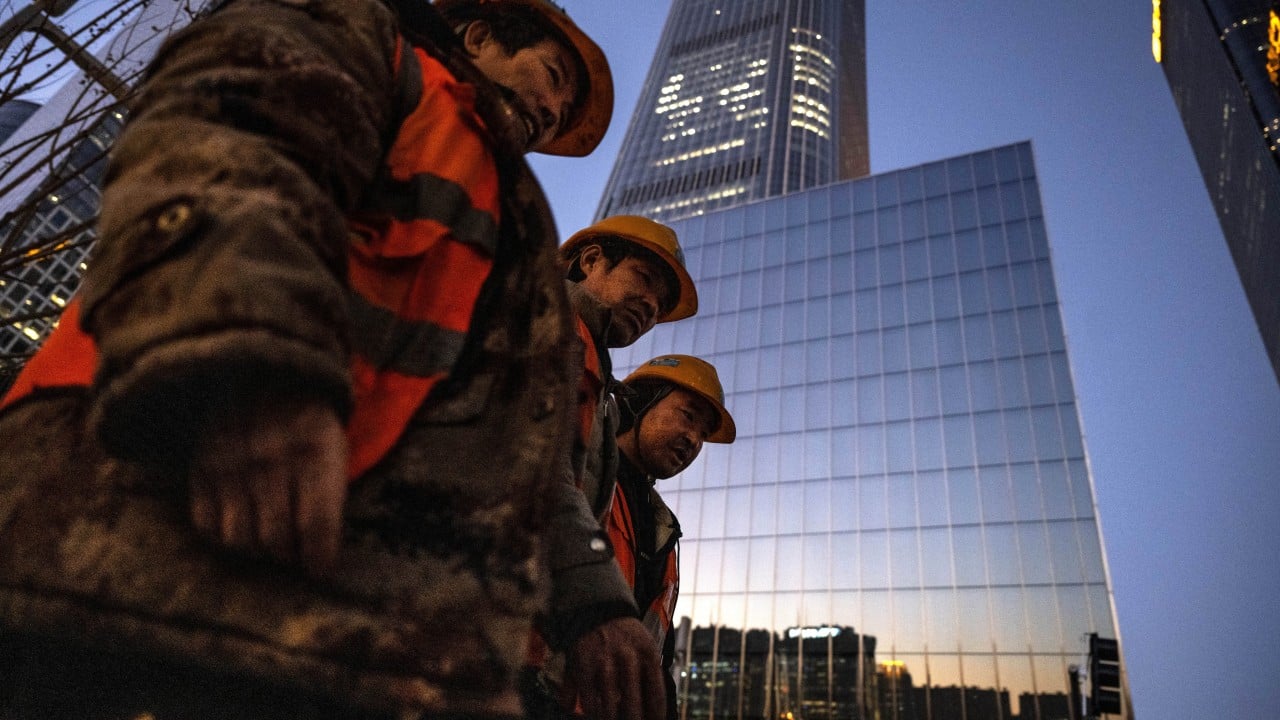
The hukou system splits the labor force into two distinct tiers. This division acts as a safety valve for the cyclical nature of global manufacturing demand. During export booms, coastal megacities absorb tens of millions of rural workers. These workers live in dormitories, work long hours, and send remittances home. Because they do not have urban hukou, their employers and local municipalities avoid paying the long-term pension, healthcare, and educational overhead that a permanent urban family requires.
Imagine a scenario where global demand for electronics or electric vehicles plummets by 30% tomorrow. In a fully urbanized Western economy, those laid-off workers remain in the cities, requiring massive unemployment benefits, straining local welfare budgets, and creating potential political instability.
Under the hukou system, when a factory shuts down in Dongguan or Shenzhen, the migrant workers return to their rural villages where they still hold land rights. The rural agricultural sector acts as a giant sponge, absorbing excess labor during downturns and shielding the urban core from the fiscal shocks of global recessions. The cost of labor maintenance is effectively shifted back to the countryside.
Calling the slow relaxation of this system a "failure of reform" misses the point entirely. It is a highly effective risk-management strategy. The structure keeps the cost of industrial production low, allowing Chinese exports to remain dominant in global markets.
Dismantling the Consumer Superpower Illusion
A favorite talking point among global investment banks is that total hukou reform will instantly create a massive consumer class. The logic goes: if you give a migrant worker an urban registration, they will stop saving every penny for emergencies, feel secure, and start buying cars, appliances, and high-end services.
This is economic fantasy. Changing a piece of paper does not automatically generate wealth.
If a city like Shanghai or Shenzhen suddenly grants full citizenship to all its migrant workers without a massive, trillions-of-yuan redistribution of fiscal resources, the quality of urban services will collapse. Schools will be overwhelmed, hospital wait times will skyrocket, and municipal budgets will buckle under the weight of unfunded liabilities.
Furthermore, the idea that migrants will suddenly spend like the urban middle class ignores the reality of income distribution. Migrant wages are driven by industrial margins. Giving someone an urban hukou does not magically increase their hourly factory wage. Without a fundamental shift in how wealth is shared between the state, corporations, and households, hukou reform is just a administrative reshuffle that changes nothing about aggregate demand.
The Real Crisis: Wealth Transfer, Not Local Reluctance
The true obstacle to reform is a deeply rooted fiscal imbalance that Western commentators rarely analyze correctly.
Since the tax-sharing reforms of 1994, the central government has retained the lion's share of tax revenues, while saddling local governments with the vast majority of public expenditure responsibilities. Localities are responsible for roughly 85% of public spending, including education and healthcare, but receive nowhere near that percentage of tax revenues.
To bridge this massive gap, cities have historically relied on land sales. A local government expropriates rural land, converts it to industrial or residential use, and sells the usage rights to developers. This model is now completely dead due to the prolonged property market downturn.
With land revenues gone and local government financing vehicles (LGFVs) facing massive debt walls, asking cities to take on the fiscal burden of millions of new permanent residents is mathematically impossible. It is not a matter of local political reluctance; it is a matter of basic arithmetic. The central government has consistently refused to take these massive social welfare liabilities onto its own balance sheet. Until Beijing agrees to fund the national welfare system directly from the central treasury, expecting local cities to voluntarily bankrupt themselves for the sake of reform is absurd.
The Fragmented Reality of Selective Urbanization
What we are actually seeing across China is not a failure to reform, but a highly selective, hyper-calculated optimization of human capital.
Cities are not rejecting hukou reform outright. They are using it as a filtration system to win the race for high-tech talent. Tier-1 megacities have drastically lowered the barriers for university graduates, software engineers, and advanced technicians. They want the high-value brains to fuel the "new productive forces" that Beijing constantly talks about.
At the exact same time, they are keeping the doors firmly shut or highly restricted for low-skilled laborers. The system is functioning exactly as intended: as a filter to attract the exact demographic profiles needed for the next phase of economic competition, while shutting out the populations that require more state support than they generate in tax revenue.
Stop looking for a dramatic, singular moment of abolition. It will never happen. The status quo persists because the current setup works perfectly for the state's true goal: maintaining a hyper-competitive industrial machine while avoiding the fiscal burdens of a Western-style welfare state. The analysts waiting for local governments to finally yield to reform are waiting for a ghost that doesn't exist. Instead of asking when the hukou will end, investors should look at how its survival continues to subsidize global manufacturing at the expense of domestic consumption. Everything else is just noise.