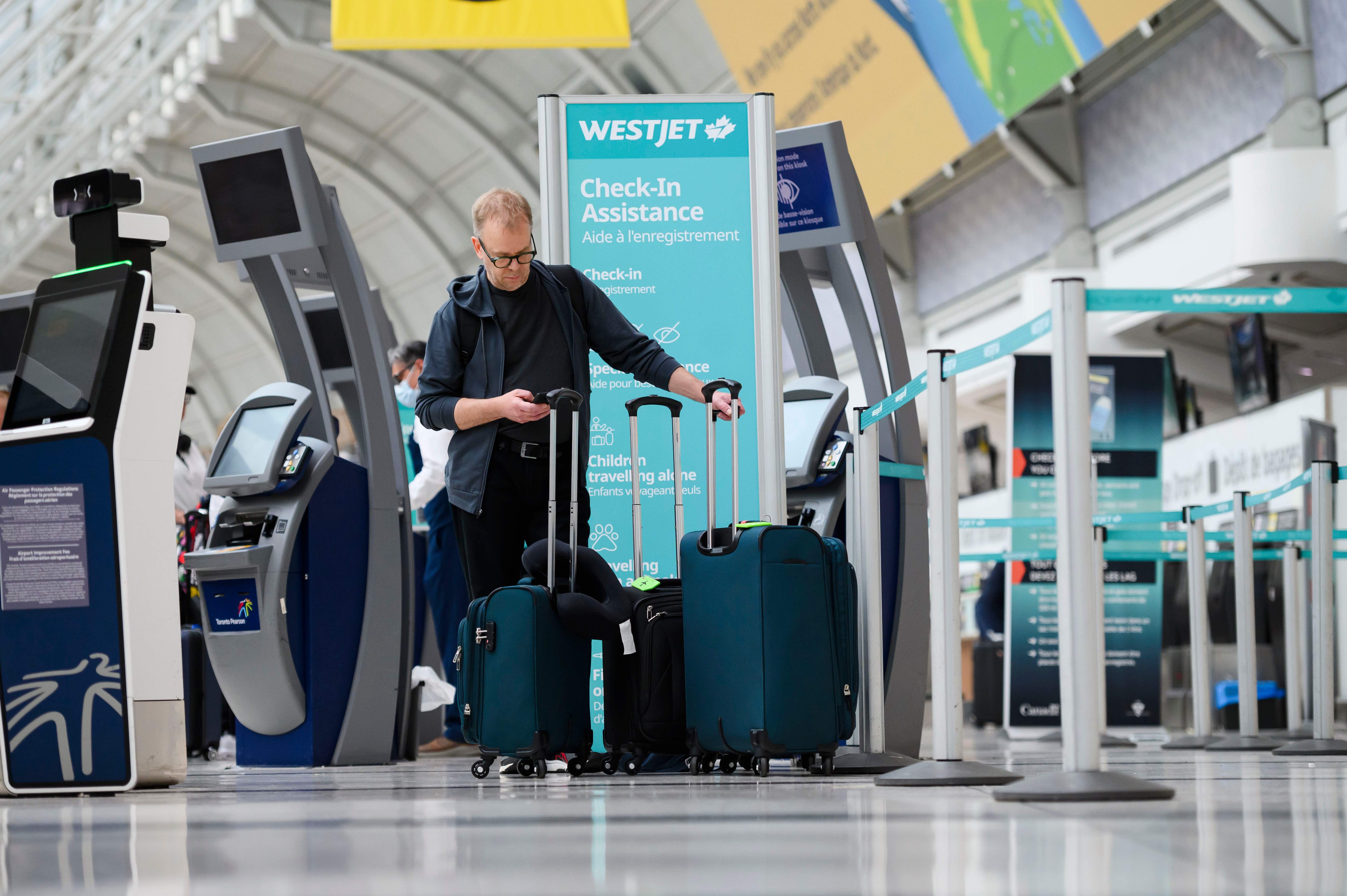
Blaming geopolitical instability for a twenty-dollar suitcase fee is the oldest shell game in aviation.
The news cycle is currently flooded with headlines claiming WestJet’s recent baggage fee hike is a direct reaction to rising jet fuel costs triggered by Middle East tensions. It’s a convenient narrative. It’s clean. It has a clear villain and a sympathetic victim: the struggling airline just trying to keep the lights on. Meanwhile, you can read related stories here: The $9,500 Escape Hatch From the Modern Grind.
It is also total nonsense.
If you believe that WestJet—or any major carrier—adjusts their ancillary fee structure based on the weekly fluctuations of the Brent Crude index, you don’t understand how airline economics work. I have sat in the rooms where these pricing tiers are built. We don’t look at fuel charts when we decide what a checked bag is worth. We look at "yield leakage" and "unbundled conversion rates." To explore the complete picture, we recommend the recent analysis by The Points Guy.
Fuel is a volatile operating expense. Baggage is pure, high-margin revenue. Mixing the two is a PR masterstroke designed to deflect your anger away from the corporate boardroom and toward a global conflict thousands of miles away.
The Fuel Hedge Lie
Airlines do not buy fuel at the pump like you do with your Honda Civic. They use sophisticated hedging strategies to lock in prices months or even years in advance. When the spot price of jet fuel spikes because of a regional conflict, the immediate impact on a major carrier’s bottom line is often negligible because they are burning fuel they bought at 2024 prices.
Even if we look at the raw math, the "fuel is expensive" argument falls apart. Jet fuel accounts for roughly 20% to 30% of an airline's operating costs. If fuel prices jump 10%, the logic suggests a modest increase in the base fare. But instead of raising the ticket price by $15, they slap a $50 fee on a bag.
Why? Because baggage fees are "non-taxable" in many jurisdictions or are treated differently in revenue-sharing agreements. More importantly, they aren't included in the "lead-in price" you see on Google Flights. By keeping the fare low and the fees high, WestJet maintains its ranking in search results while clawing back the margin on the backend. This isn't a survival tactic. It’s a search engine optimization strategy.
The Margin Obsession
Let’s talk about the real numbers. In a standard economy seat, the profit margin on the actual ticket is razor-thin—sometimes less than $10 after taxes, airport fees, and labor.
The profit margin on a checked bag? It’s nearly 100%.
Once the infrastructure is built—the belts, the scanners, the ground handlers—the marginal cost of adding one more suitcase to a Boeing 737 is pennies. By raising baggage fees, WestJet isn't covering the cost of kerosene. They are subsidizing the "ultra-low" fares they use to kill off competition. They are using your suitcase to fund a price war they can't afford to lose.
I’ve watched airlines burn through millions of dollars in "fuel surcharges" that never actually disappeared when oil prices crashed in 2014 and 2020. Once a fee is established, it becomes a permanent fixture of the balance sheet. Calling it a "response to fuel prices" is just the branding they use to make the medicine go down.
The Invisible Tax on Efficiency
The most insulting part of this "fuel hike" narrative is that it punishes the very thing airlines claim to want: efficiency.
If fuel was truly the concern, airlines would be incentivizing you to check bags. Why? Because a cabin full of oversized "carry-on" luggage that people fight to shove into overhead bins creates "dwell time." It slows down the boarding process. Every minute a plane sits at the gate waiting for a flight attendant to find space for a hard-shell spinner is a minute that plane isn't making money.
A delayed departure burns more fuel during the "catch-up" phase of the flight than the weight of fifty suitcases ever could. If WestJet cared about fuel, they would make checking bags free and charge $50 for a carry-on to ensure lightning-fast boarding and perfect gate departures.
They do the opposite because they know you’ll pay for the convenience of not waiting at the carousel. They are taxing your time, not the weight of your cargo.
Dismantling the Middle East Scapegoat
Using the Iran-Israel conflict as a shield for a domestic fee hike is intellectually dishonest. The global oil market is deep. Supply shocks in one region are frequently offset by production elsewhere. Furthermore, WestJet operates a fleet that is increasingly fuel-efficient. The 737 MAX 8 burns significantly less fuel per seat-mile than the older 700-series aircraft.
If the fleet is getting more efficient, and the fuel is hedged, why are the fees going up?
Because they can. Because the "news" provides a perfect cover. In the industry, we call this "price shadowing." You wait for a macro-event that sounds scary—a war, a pandemic, a strike—and you move your pricing under the cover of the chaos.
Stop Asking the Wrong Question
People always ask: "When will fuel prices go down so baggage fees will drop?"
The answer is never. The question itself is flawed because it assumes a link that doesn't exist. You are looking for logic in a place where only leverage exists.
The airline has the leverage. You have the suitcase.
If you want to beat the system, you have to stop playing the game by their rules. Stop looking at the "base fare." It’s a fiction. It’s a marketing hook. The real price of a WestJet flight is the fare + the seat selection + the bag + the "flexibility" fee.
The moment you start believing their excuses about jet fuel, you’ve already lost. You’ve accepted the premise that their pricing is reactive rather than predatory.
The next time you see a headline about war-driven fuel hikes, look at the airline’s quarterly earnings report instead. You’ll find that while they’re crying about the cost of oil, their ancillary revenue—the money they make from your luggage, your legroom, and your credit card sign-ups—is hitting record highs.
WestJet isn't afraid of a war in the Middle East. They are afraid of a consumer who finally realizes that the suitcase fee is just a voluntary tax for people who don't know how to read a balance sheet.
Pack lighter, or pay the "gullibility tax." Just don't call it a fuel surcharge.