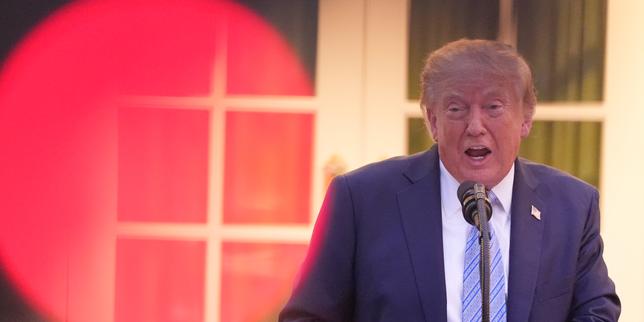
Every time a president revokes press credentials, the media ecosystem suffers a collective stroke. The panels light up with weeping anchors, the editorials drip with trembling warnings about the collapse of the free world, and legal teams rush to court to defend an endangered constitutional sacred cow. When Donald Trump barred CNN, MS NOW, and Politico from the White House grounds, the predictable chorus of outrage deafened the airwaves. Commentators shrieked about authoritarianism, censorship, and the death knell of democracy.
They are lying to you. Or worse, they are deluding themselves. For a different perspective, read: this related article.
The hysteria over White House press bans is nothing more than a coordinated defense mechanism for a dying professional caste. The mainstream media does not miss the truth; it misses the buffet. It misses the ambient validation of standing in a gilded room, holding a microphone, and pretending that asking a loaded question to a press secretary constitutes hard-hitting accountability.
Strip away the righteous indignation, and you find a broken business model addicted to proximity rather than reporting. The entire architecture of access journalism is a fraud. For decades, major networks and political tip-sheets traded genuine independence for backstage passes, exclusive leaks, and the intoxicating illusion of relevance. When the government slams the door on that relationship, it does not destroy journalism. It liberates it. Similar insight on this trend has been provided by NBC News.
The Credential Fetish and the Death of Inquiry
Step inside a modern White House press briefing, and you are not walking into the engine room of democracy. You are attending a heavily scripted theater production where actors in suits read lines off teleprompters and exchange rehearsed insults for morning television clips.
For years, I watched reporters spend entire days obsessing over seating charts, pool rotations, and briefing room etiquette. They guarded their precious access badges like medieval fiefdoms, terrified that a sharp question might get them banished to the back row, or worse, cut off from the inner circle entirely. That fear bred compliance. When your entire career depends on physical presence in a room governed by executive whim, you stop being an investigator and start being a tenant. You learn to play the game. You accept the ground rules set by the very people you are supposed to be watching.
When Trump locked CNN, MS NOW, and Politico out of the building, he did not silence them. He exposed them. He forced them to confront a terrifying reality: their value was never derived from what they discovered through independent digging; it was leased to them by the executive branch. If your ability to inform the public relies entirely on whether a press secretary decides to hand you a microphone under hot studio lights, you are not a journalist. You are a court stenographer with a corporate expense account.
The Symbiotic Parasite
Look closer at the outrage and follow the money. A banned newsroom is a funded newsroom.
Within hours of the ban announcement, subscription drives spiked. Fundraising emails went out to millions of loyalists, framing every revoked badge as a battle scar in the war for truth. Cable news segments stretched into endless hours of self-referential grief porn, reminding viewers that fascism is at the door and only a paid digital subscription can stop it.
This is the dirty secret of modern political conflict: the populist executive and the corporate media machine despise each other in public while making passionate, filthy love in private. They need each other. Trump needs a hostile, easily identifiable enemy to rally his base against, proving every day that the system is rigged by cultural elites. CNN and MS NOW need Trump to remain a walking, tweeting existential threat, because without him, their primetime ratings flatline into terminal irrelevance. Politico needs the insider gossip pipeline to justify its breathless morning newsletters to K Street lobbyists.
When the White House cuts off access, the financial engine of outrage accelerates. Lawyers file emergency motions, judges issue temporary restraining orders, and the cycle of mutual exploitation spins faster. It is high-stakes professional wrestling, complete with babyfaces, heels, and scripted chair shots. The only loser is the citizen who actually believes this charade has something to do with the First Amendment.
Why Access Journalism Is a Con Game
Defenders of the old order argue that without reporters in the room, power operates unchecked in the dark. That argument assumes presence equals scrutiny. History proves the exact opposite.
The most catastrophic policy blunders, intelligence failures, and corporate corruptions of the last fifty years were rarely uncovered by reporters sitting politely in a briefing room waiting to be called on. They were uncovered by whistleblowers, forensic accountants, local reporters working out of damp basements, and data analysts combing through unredacted public filings at three in the morning.
Access journalism operates on a simple bribe: we let you stand near the powerful, and in exchange, you frame your coverage around our schedule, our talking points, and our leaks. When you are inside the tent pissing out, you tend to forget that you are standing in a circus tent. The reporter who spends four hours a day schmoozing administration officials in the West Wing hallway is structurally compromised. They have absorbed the lingo, adopted the framing, and internalized the perspective of the ruling class. They become fluent in bureaucratic self-justification.
Exile changes a newsroom. When you are barred from the building, you stop caring about what the press secretary wants you to talk about. You stop chasing the daily news cycle dictated by a morning tweet. You are forced to look outward, backward, and downward. You start investigating procurement contracts, regulatory capture, state-level corruption, and structural economic shifts that affect actual human lives instead of analyzing the facial expression of a podium occupant.
The Judicial Theater
Naturally, the targeted networks did what any self-respecting corporate entity would do when its perks are threatened: they ran to court. Lawyers mobilized, arguing that the White House press room is a public forum and that viewpoint-based exclusion violates constitutional protections.
There is a charming naivety in watching multi-billion-dollar media conglomerates invoke the spirit of the Founding Fathers to protect their VIP parking spots and front-row seating. Let us be entirely frank about what is actually happening in those courtrooms. This is not a noble crusade for the rights of the common man. It is a corporate dispute over commercial assets.
Imagine a scenario where a private club revokes the membership of three disruptive members who constantly insult the owner. The members do not sue because they care about the club's philosophy; they sue because the club's logo is printed on their business cards and enhances their brand value. That is what a White House press pass has become—a status symbol, a lanyard of authority that media executives use to convince advertisers and subscribers that they are where the action is.
Courts will spend months debating the nuances of public forums versus government property, generating reams of legal commentary while missing the forest for the trees. By treating a credential revocation as an existential blow to the free press, the legal establishment reinforces the dangerous idea that journalism cannot exist without government permission and physical proximity to power. That is the exact opposite of what the First Amendment was designed to achieve.
The Digital Reality Check
We live in an era where an independent researcher with an internet connection, a Freedom of Information Act template, and a spreadsheet can uncover more structural corruption in an afternoon than an entire White House press corps discovers in a legislative session.
The physical geography of power has shifted. Decisions are no longer made behind closed doors in mahogany boardrooms during three-martini lunches; they are hashed out in obscure regulatory dockets, multinational corporate boardrooms, algorithmic codebases, and private messaging apps.
While reporters are busy staging theatrical walkouts from a press briefing because their favorite correspondent got denied a question, actual governance is happening in places where press passes do not matter at all. The obsession with the briefing room is a nostalgic addiction to a twentieth-century model of news gathering. It belongs in the same museum as the wire service teletype machine and the three-network evening broadcast.
When a media outlet wails that it cannot cover an administration properly because its reporters cannot enter 1600 Pennsylvania Avenue, it is confessing to professional bankruptcy. It is admitting that its entire reporting methodology relies on spoon-fed press releases, hand-delivered scoops, and the convenience of a centralized megaphone.
The Real Cost of the Ban
Let us acknowledge the genuine risks of this populist strategy, because intellectual honesty requires admitting the downsides of any contrarian take.
When an administration successfully delegitimizes major news outlets and cuts them off from official channels, it creates a dangerous information vacuum. It encourages alternative media ecosystems to descend entirely into unverified propaganda, partisan cheerleading, and tribal echo chambers where basic factual consensus dissolves. When citizens can no longer agree on a baseline of objective reality, democratic governance ceases to function.
Furthermore, a president who can ban CNN and Politico today can theoretically ban any independent outlet tomorrow, targeting smaller, under-resourced investigative shops that lack the legal war chests to fight back in federal court. The slippery slope argument is real, and the authoritarian impulses behind these bans should not be sugarcoated or dismissed as mere political showmanship.
Yet, blaming the executive for shutting out reporters misses the deeper culpability. The media brought this vulnerability upon themselves by years of editorial laziness, sensationalized outrage peddling, and partisan capture. They hollowed out their own credibility long before any politician decided to lock the doors. When an institution spends a decade convincing half the country that it is an enemy combatant in a culture war, it should not be shocked when that half decides to stop letting its members into the house.
Breaking the Addiction
The solution to the crisis of modern journalism is not a court order forcing an uncooperative president to hand out credentials to disgruntled cable networks. The solution is cold turkey.
News organizations need to stop treating access as a human right and start treating it as a distraction. They need to liquidate their real estate in Washington, pull their reporters out of the stenography pools, and reallocate those millions of dollars into investigative teams that do not need a press pass to do their jobs.
Imagine a media environment where networks refused to cover the daily White House briefing entirely, treating it with the journalistic indifference it deserves, while spending that exact amount of investigative energy tracking every federal dollar spent on state-level infrastructure projects. Imagine anchors refusing to cover the latest juvenile insult hurled from a social media account, choosing instead to publish deep dives into corporate lobbying disclosures and regulatory capture.
It will not happen, of course. Outrage is too profitable. Proximity is too addictive. The executive briefing room remains the easiest place in the world to generate cheap, high-margin content with zero actual reporting required.
So let the lawsuits drag on. Let the talking heads weep on evening broadcasts about the twilight of democracy. Let the politicians score their cheap populist points by slamming doors in the faces of credentialed elites.
Behind the noise, a quiet, necessary evolution is waiting. The death of access journalism is the birth of real independence. The sooner the mainstream press stops crying over a lost badge, the sooner it can pick up a shovel and start digging where the truth actually is.