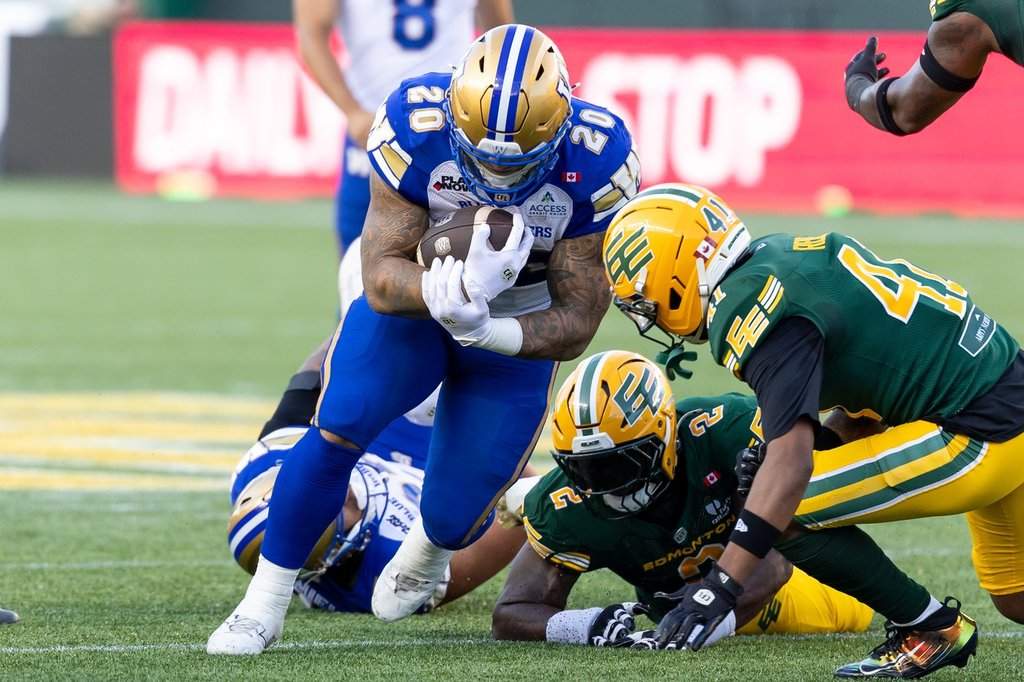
Everybody loves a good narrative about a falling empire. Walk into any press box across the Canadian Football League, and you will hear the same tired song. The Winnipeg Blue Bombers are old. Their window is slammed shut. The Montreal Alouettes are the high-flying, unstoppable modern machine ready to cruise past them into another dynasty.
It is lazy, sloppy analysis. It is the kind of surface-level thinking produced by people who watch the box score and ignore the trench warfare.
The mainstream take is that Winnipeg faces an insurmountable test against Montreal because of raw speed, vertical passing, and youth. The reality is far more uncomfortable for the rest of the league. The Blue Bombers are not a fading contender trying to catch up to the future. They are a brutally efficient organism engineered precisely to dismantle high-flying gimmicks.
I have spent over a decade breaking down CFL game film, standing on sidelines, and watching coaching staffs panic when their shiny, explosive schemes run headfirst into veteran discipline. Let us tear down the conventional wisdom and look at why the Alouettes are walking into a buzzsaw.
The Myth of the High-Flying Offense
Modern football media is obsessed with flash. If an offense throws the ball forty times a game and hits a couple of deep crossing routes, analysts crown them the standard-bearers of the sport. Montreal’s attack is routinely praised for its aerial dynamism.
Here is what the narrative misses: regular-season fireworks do not survive November weather, and they certainly do not survive defensive structures designed to bleed you slowly.
High-flying passing games rely on timing, spacing, and rhythm. Winnipeg's defensive coordinator, Richie Hall—a man whose mind for defensive spacing is criminally underrated by casual observers—does not care about your pre-snap motion. He cares about disruption at the five-yard mark.
When you look at how Winnipeg defends vertical concepts, you see a masterclass in suffocating leverage. They do not chase receivers across the yard; they squat in zones, trust their pass rush to arrive via calculated pressures, and force quarterbacks to make tight-window throws for sixty minutes. Most quarterbacks cannot maintain that level of clinical precision under persistent, physical duress.
Montreal wants a track meet. Winnipeg plays demolition derby. And in a collision sport, demolition derby wins every single time.
Age Is Just a Weapon in the CFL
The primary weapon used against Winnipeg in pre-game breakdowns is their average roster age. Critics point to veteran legs as a liability against younger, faster opponents.
This argument exposes a fundamental misunderstanding of how professional football works north of the border.
In the three-down game, experience is worth more than raw forty-yard-dash times. The wider field, the waggle, and the complex rules regarding motion mean that positioning beats speed every single day of the week. A twenty-four-year-old receiver running fast in the wrong direction is just an expensive decoy.
Winnipeg's core has played together through multiple Grey Cup appearances. They have survived heartbreak, blown leads, and brutal late-season stretches. They possess institutional memory. When the stadium noise hits peak volume and a blown coverage threatens to break a game wide open, a veteran secondary does not panic. They check to the proper coverage, communicate without speaking, and erase the threat.
Youth is loud. Experience is quiet. And quiet execution wins championships.
The Trench Reality Nobody Wants to Discuss
If you want to know who is going to win a football game, stop looking at the slotbacks and start looking at the line of scrimmage.
Montreal’s offensive line is talented, athletic, and built to protect the pocket. But they have not faced a front four that plays with the synchronized violence of Winnipeg's defensive interior. When Willie Jefferson sets the edge, he dictates where the play has to go. On the other side, the internal pressure generated by Winnipeg’s tackles forces quarterbacks off their spot before their third step.
You can draw up the prettiest play designs in the playbook, but they all require time to develop. If the quarterback has two point five seconds to survey the field, your deep threat is just a spectator running cardio.
Winnipeg does not need to blitz heavily to ruin a game plan. They rush four, drop seven into suffocating zone structures, and wait for the mistakes to pile up. It is an unglamorous style of football that makes television broadcasters yawn and defensive coordinators sweat.
Why the Alouettes Are Playing Into a Trap
The Alouettes come into this matchup with momentum, public backing, and the swagger of a team that feels its time has arrived. That is a dangerous mental state when you are visiting a hostile environment against a locker room full of players who have heard all week about how their era is over.
Disrespect is the most powerful fuel in professional sports.
When you tell a veteran-laden team that they are too old, too slow, and too broken to stop the new kids on the block, you do not motivate them to play harder—you provide them with absolute focus. They stop worrying about style points and start focusing purely on execution.
The matchup analysts are calling a tough test for Winnipeg is actually an execution clinic waiting to happen. The Blue Bombers will control the clock, limit explosive plays, and force Montreal into the kind of grinding, low-margin football where veteran poise matters more than youthful exuberance.
Do not look for a shootout. Look for a masterclass in how to suffocate an opponent's identity.
Stop waiting for the changing of the guard. The old guard is holding the keys, and they aren't handing them over anytime soon.