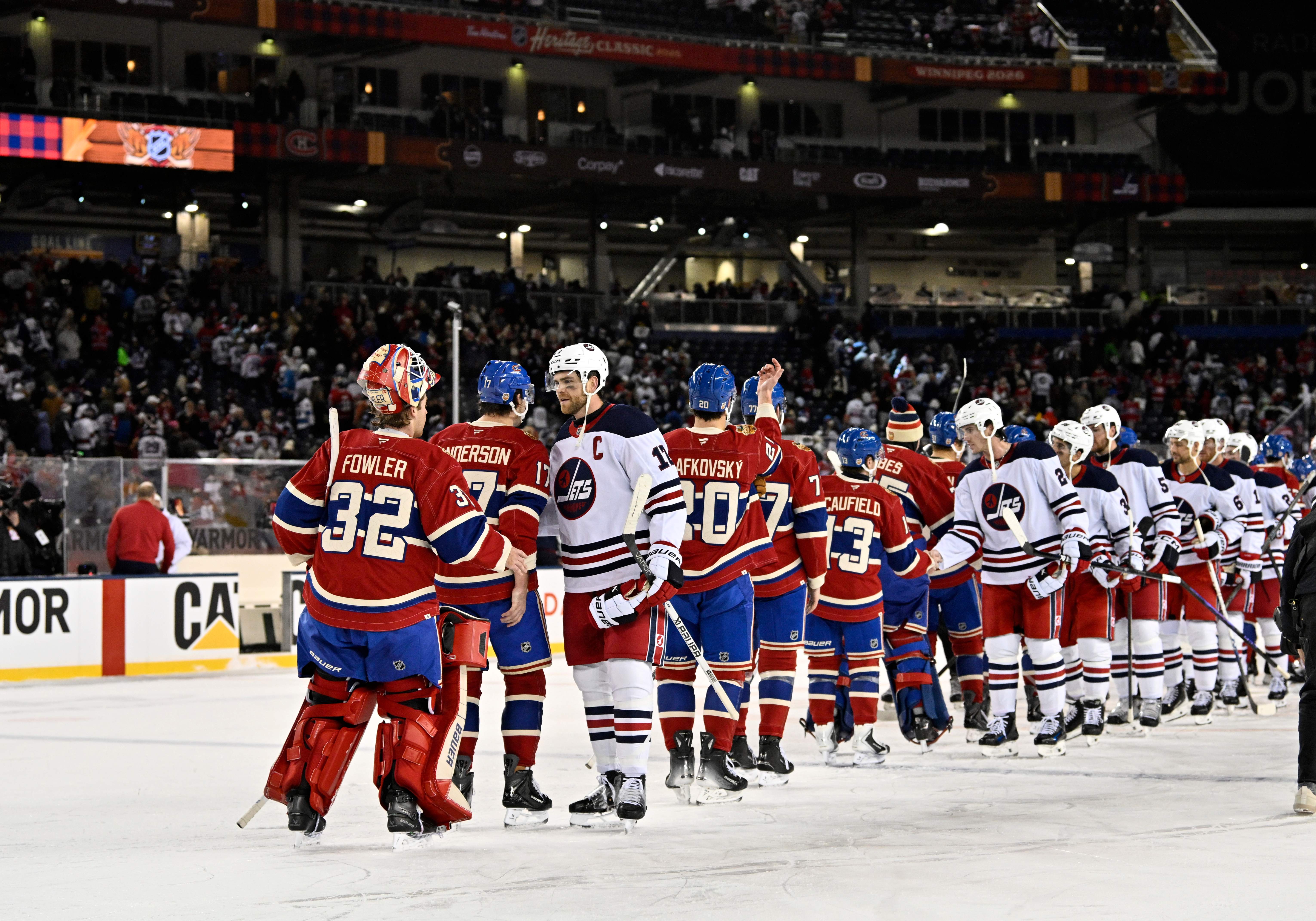
Five straight losses. Every single one decided by a single goal. When the Winnipeg Jets dropped a 2-1 decision to the Montreal Canadiens at Princess Auto Stadium on October 25, 2026, the easy narrative was that Winnipeg simply ran into a hot goalie outdoors.
That narrative is wrong.
Sure, 21-year-old Jacob Fowler made history as the youngest netminder to ever start an NHL outdoor game, and he turned aside 33 of 34 shots to steal the spotlight. If you only glance at the box score, you'll see a Winnipeg team that outshot Montreal 34-21 and controlled play for long stretches. You might even feel sorry for them. Don't. Digging into what actually happened on the ice at the 2026 Tim Hortons NHL Heritage Classic exposes structural flaws that plagued the Jets long before the puck dropped in front of a packed Manitoba crowd.
The Perimeter Trap That Cost Winnipeg the Heritage Classic
Shot volume means nothing when the opposing goaltender has a clear view of every piece of rubber coming his way. Winnipeg fired 34 pucks at Fowler, yet the Canadiens' rookie rarely had to fight through traffic to find them.
Jets head coach Scott Arniel didn't sugarcoat it after the final horn. He pointed straight at his forwards' refusal to invade the blue paint, noting that NHL goaltending is simply too sharp for perimeter shots to beat anyone clean. He's right. If a goalie sees the release, he makes the save. It's basic hockey physics.
Look at how the Jets generated their offense during that 0-3-2 slide. Over a four-game stretch culminating in the Heritage Classic, Winnipeg managed just six total goals. That isn't an anomaly. It's a pattern of keeping play to the outside, settling for low-danger wrist shots from the flanks, and failing to establish net-front screens.
Consider the numbers from that Sunday night in Winnipeg:
- Total shots on goal: Winnipeg dominated the shot clock 34-21, outshooting Montreal in every single period.
- Power-play efficiency: The Jets went 0-for-4 with the man advantage, stretching their power-play drought to 0-for-12 over four games.
- Secondary scoring: Outside of Isak Rosén's third-period one-timer off a feed from Gabriel Vilardi, Winnipeg's bottom nine offered almost zero finish.
Mark Scheifele's top line accounted for eight of the team's first ten shots on net. When one trio carries eighty percent of the early offensive workload, defending them becomes predictable. Montreal's blue line—missing veteran pieces and leaning heavily on young defenders—simply collapsed into the slot, boxed out rebounds, and let Fowler swallow up everything from the perimeter.
How Montreal Capitalized on Four Minutes of Chaos
Outdoor games are notoriously weird. Ice conditions fluctuate, wind gusts alter dump-ins, and sightlines take a period to adjust to. Both teams spent a scoreless opening twenty minutes feeling out the rink at Princess Auto Stadium, though Cole Perfetti had two golden looks in tight that Fowler denied.
Then came the second period. And in a span of less than four minutes, Montreal showed Winnipeg what clinical execution actually looks like.
At 7:19 of the middle frame, Cole Caufield worked the Jets' blue line, slipped the puck to Noah Dobson along the boards, and watched Dobson thread a crisp seam pass right onto the tape of Lane Hutson for an easy tap-in. There was no frantic scrambling from Montreal—just quick puck movement that pulled Winnipeg's coverage out of position and exploited the back door.
Before the Jets could even reset their structure, the Canadiens struck again at 11:04. Caufield picked up his second assist of the period, feeding defenseman Kaiden Guhle at the point. Guhle fired a wrist shot through a heavy screen that beat Stuart Skinner cleanly for a 2-0 lead.
Notice the contrast there. Montreal scored its second goal using the exact blueprint Arniel begged his own players to follow—a point shot paired with layered traffic in front of the crease. Skinner made 19 saves on 21 shots and gave Winnipeg every opportunity to stay competitive, yet he got zero help on Guhle's marker because the Canadiens owned the sightlines.
Montreal entered that night missing injured offensive stars Nick Suzuki and Ivan Demidov. They didn't have a single power play all evening. Still, Martin St. Louis's squad found two goals in four minutes because they attacked the middle of the ice when openings appeared.
The Connor Hellebuyck Elephant in the Locker Room
You cannot honestly evaluate the Jets' five-game winless skid without talking about what happened 48 hours before puck drop.
On Friday, October 23, general manager Kevin Cheveldayoff finally ended a four-month organizational headache by trading three-time Vezina Trophy winner Connor Hellebuyck to the New Jersey Devils. Hellebuyck had refused to report to training camp following an August trade request, leading to a team suspension and months of relentless media scrutiny that hung over the dressing room like fog.
Captain Adam Lowry admitted before the Heritage Classic that moving Hellebuyck brought a massive sense of relief. For ten seasons, Hellebuyck was the safety net that erased defensive mistakes in Winnipeg. When you have a future Hall of Famer masking coverage breakdowns every night, bad habits creep into your five-on-five play.
Suddenly, that safety net was gone. Stuart Skinner, signed to a two-year deal in July to take over the crease, played well against Montreal. But the Jets were also missing top-pair defenseman Josh Morrissey for a sixth consecutive game due to injury. Without Morrissey driving transition from the back end and without Hellebuyck bailing them out, Winnipeg's margin for error shrank to zero.
And then there was Dawson Mercer. Acquired from New Jersey as the centerpiece of the Hellebuyck return alongside Nico Daws, Nick Bjugstad, prospect Alexander Command, and two draft picks, Mercer landed in Winnipeg just before midnight on Friday. Less than 48 hours later, he was skating 15:22 on a third line with Lowry and Rosén in front of an outdoor stadium crowd. Mercer recorded two shots and a blocked shot in his debut, holding his own considering he barely knew his teammates' names, though expecting instant offensive chemistry under those circumstances was unrealistic.
Why One-Goal Losses Are a Warning Sign Rather Than Bad Luck
Hockey fans love to chalk up five straight one-goal defeats to variance. "We're right there," players say in post-game scrums. "A bounce here or there and we're 4-1 instead of 0-5."
I don't buy it. Not when the underlying process points to systemic issues.
In the modern NHL, nearly half of all regular-season games are decided by a single goal or go to overtime. Losing one or two tight contests is hockey. Losing five in a row—and watching that slide stretch even further when mental errors and penalty trouble crept back in against Florida and Carolina later that week—tells you a team doesn't know how to manufacture ugly goals when games tighten up.
Look closely at Winnipeg's power play during that October slump. Going 0-for-4 in the Heritage Classic, including a golden opportunity with 1:32 left in the third period after Josh Anderson took a tripping minor, killed any chance of forcing overtime. Why did the man advantage stall out? Because every pass stayed on the perimeter. Scheifele's one-timers from the circle were telegraphed, giving Fowler time to push across his crease and square up. Without a net-front presence taking away the goalie's eyes or digging out loose pucks in the bumpers, even elite shooters look ordinary.
What Actually Fixes a Stalled NHL Offense
If you're looking at how a team breaks out of a scoring funk like the one Winnipeg endured in late October, the adjustments aren't complicated—they're just uncomfortable. Coaches preach them constantly because players naturally drift back toward easier habits when confidence dips.
- Funnel everything through the slot. Stop looking for the pretty back-door tap-in when the passing lane is clogged. Shoot for sticks and pads. When Rosén finally beat Fowler at 15:24 of the third period, it happened because Vilardi attacked off the wall and forced the Canadiens' defense to collapse before feeding a quick one-timer.
- Park a body in the crease on every power play. You don't need tic-tac-toe passing to score with the extra skater. Put a big frame directly in front of the goaltender's nose, fire low-to-high shots from the point, and live off second-chance rebounds.
- Spread the ice time beyond the top trio. When Scheifele's line takes over the shot share early, opposing coaches match their shutdown pair against them all night. Rolling four lines with purpose forces defenders to make decisions under fatigue.
- Eliminate lazy stick penalties. Taking two or three minor penalties every fifteen minutes destroys five-on-five rhythm and forces your best offensive players to burn energy killing clocks instead of attacking.
The Heritage Classic was supposed to be a clean slate for Winnipeg—a chance to wash away the Hellebuyck drama under the open Manitoba sky. Instead, it served as a stark reminder that outdoor spectacle doesn't fix indoor habits. Until a team commits to paying the physical price inside the faceoff dots, one-goal losses aren't bad luck—they're earned.