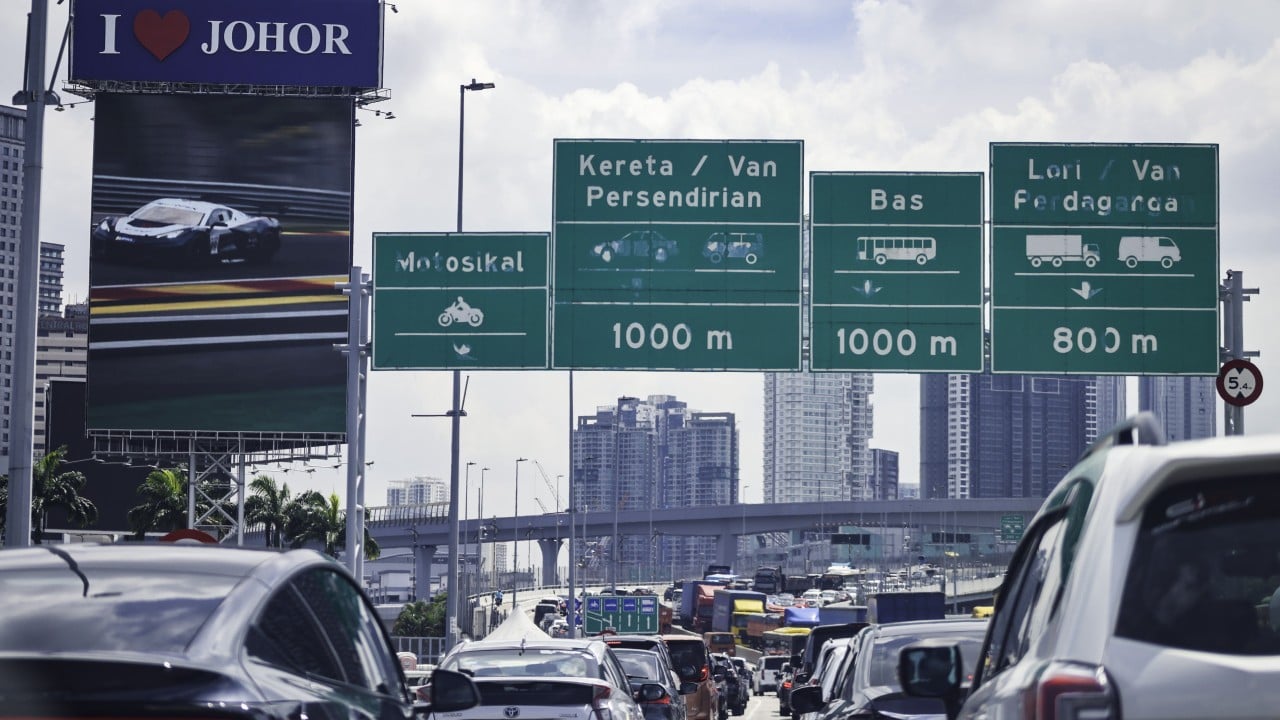
Blaming a localized power outage for a multi-hour standstill on the Johor-Singapore Causeway is the laziest journalism in Southeast Asia.
Every time a transformer trips at the Woodlands Checkpoint, the headlines write themselves. Predictable. Sensational. Completely blind to the structural rot underneath. The competitor reports on this incident treat the blackout like an act of God—a sudden, unpredictable lightning strike that paralyzed one of the busiest land crossings on earth. For another look, read: this related article.
They are wrong. The blackout wasn't the cause of the gridlock. It was merely the pin that popped an already overinflated, structurally unsound balloon.
If your entire cross-border logistics and commuter network collapses because one substation loses primary grid power, you do not have an electrical problem. You have a single-point-of-failure architecture disguised as modern infrastructure. Related reporting on the subject has been published by The Guardian.
The Myth of the "Freak" Power Outage
Let’s look at the mechanics of what actually happens when the lights go out at a high-volume border complex.
Standard critical infrastructure—hospitals, data centers, Tier-1 airports—operates on N+1 or 2N redundancy. When the main utility feed drops, uninterruptible power supplies (UPS) bridge the millisecond gap before industrial diesel generators kick in. The end user never sees a flicker.
Border checkpoints, however, suffer from a fatal design flaw: asymmetric redundancy.
While critical security databases and primary servers might sit on backed-up circuits, the peripheral systems that actually move human beings and cargo do not. Automated clearance gates, license plate recognition cameras, biometric scanners, and customs declaration terminals frequently rely on secondary power loops. When those drop, the Immigration and Checkpoints Authority (ICA) is forced to revert to manual processing.
Here is the math the mainstream coverage ignores:
- Automated e-Gate clearance: ~12 to 15 seconds per traveler.
- Manual counter processing during a system fallback: ~60 to 90 seconds per traveler, assuming the officer still has local cache access to watchlists. If the network link to the central database severs along with the power, that time balloons to several minutes per person while officers verify credentials via fallback protocols.
When you process over 300,000 travelers a day across a 1.056-kilometer strip of concrete, multiplying processing time by a factor of six doesn't create a "delay." It creates an instant, mathematically guaranteed mathematical lockup.
I have spent fifteen years auditing supply chain choke points and municipal transit grids across APAC. I have watched logistics directors blow millions of dollars on predictive GPS routing software while ignoring the basic electrical engineering of the customs plazas their trucks sit in. They treat border delays like bad weather—something to endure rather than a predictable systems failure.
Why "More Lanes" and "Faster Gates" Are Making the Problem Worse
Whenever gridlock hits the Causeway, the public demands the exact same things: expand the checkpoint, add more lanes, build the RTS Link faster, deploy more QR-code clearance apps.
This is a textbook application of Braess’s Paradox and induced demand, dressed up in border-security clothing.
- Digitization increases fragility. The faster you make the normal flow of traffic using automated QR codes and biometric gates, the higher the baseline volume becomes. Commuters and freight operators optimize their schedules around a 15-minute crossing. You strip out all the slack from the system.
- Zero slack equals total collapse. When a system runs at 98% capacity because digital clearance made it frictionless, a 20-minute power hiccup doesn't cause a 20-minute delay. Because the Causeway is a closed physical tube with zero exit ramps once you pass the point of no return, a 20-minute stoppage creates a shockwave that takes six hours to dissipate.
- The RTS Link won't save the Causeway. The Johor Bahru–Singapore Rapid Transit System (RTS) will move up to 10,000 passengers per hour per direction. Great. That will pull bodies off buses. It will do nothing for the thousands of commercial lorries hauling semiconductors, fresh produce, and raw materials that cannot ride a passenger train. And as long as passenger cars still have access to the asphalt, induced demand will fill the vacated lanes within eighteen months.
Answering the Questions You Should Actually Be Asking
When drivers are stuck on the bridge in 32-degree heat with their engines idling, they search for quick answers. Most of the standard advice circulating on social media and news sites is dangerously flawed. Let’s dismantle the most common misconceptions.
"Should I just use the Second Link (Tuas) when Woodlands goes down?"
No. By the time a Woodlands outage makes the news, Tuas is already dead.
Think about latency in traffic networks. A blackout happens at 6:00 AM. It takes 15 minutes for queues to spill onto the Johor Bahru side. It takes another 20 minutes for commuters to start posting photos on Telegram and X. By the time a news desk publishes a breaking alert, thousands of drivers have already diverted toward the Malaysia-Singapore Second Link.
The Tuas checkpoint has narrower approach bottlenecks for certain vehicle classes and sits miles out of the way for anyone living in central JB. Diverting reactively puts you at the back of a secondary wave of panic-driven traffic, burning twice the fuel for the exact same three-hour wait. Unless you have live, sub-5-minute telemetry showing an incident before public alerts go out, diverting late is a sucker's bet.
"Why doesn't Singapore or Malaysia just waive passport checks during an emergency?"
Because sovereignty isn't a customer service KPI.
Commuters love to float this idea when they are late for work. It shows a fundamental misunderstanding of what a border actually is. Both Singapore and Malaysia enforce strict immigration and customs controls—particularly around contraband, security watchlists, and tax-evading goods.
If an authority waves traffic through unverified during a power failure, they immediately incentivize bad actors to cause power failures. From a national security standpoint, a six-hour traffic jam is an acceptable operational cost; an unvetted breach of the border is an existential failure. Stop expecting immigration officers to act like highway toll collectors.
"Is the Causeway simply too old for modern traffic volumes?"
The concrete isn't the problem. The pricing model is.
Built in 1923, the Causeway itself is just a granite causeway and railway embankment. Concrete doesn't care how many Toyotas drive over it. The failure is economic. Right now, crossing the Causeway is massively underpriced relative to the congestion externality each single-occupancy vehicle creates.
A private car carrying one driver takes up roughly 15 square meters of road space and requires individual customs scrutiny, yet pays a nominal toll that does nothing to deter peak-hour travel. Meanwhile, a public bus carrying 45 workers occupies 35 square meters and clears the exact same bottleneck at a fraction of the per-capita footprint. Until both governments implement aggressive, dynamic congestion pricing that penalizes single-occupancy cars during peak windows, no amount of electrical redundancy will stop the bridge from locking up.
The Brutal Truth About Cross-Border Logistics
If you run a business that moves goods or people between Johor and Singapore, the Woodlands blackout should be a wake-up call—not because SP Group or Tenaga Nasional failed, but because your contingency plan is probably nonexistent.
Imagine a scenario where a similar substation failure hits at 4:30 AM on a Monday, right as the morning wave of 150,000 Malaysian workers and hundreds of refrigerated trucks enter the approach roads. The automated gates drop. The backup generators fail to transfer load to the secondary customs kiosks. Within 25 minutes, traffic backs up past the Eastern Dispersal Link (EDL) in Johor Bahru, gridlocking the entire city center.
Your drivers are trapped. Your just-in-time factory line in Jurong stops. Your perishables spoil on the tarmac.
You cannot fix the power grid at Woodlands. You can, however, stop running your operations like the grid is infallible.
What Smart Operators Do Differently
- Kill the "Morning Rush" Dispatch: Stop scheduling freight arrivals between 5:00 AM and 9:30 AM. Shift cross-border movements to the 1:00 AM to 3:30 AM window. Yes, you will pay night-shift differentials. That cost is a rounding error compared to a single missed SLA penalty or a spoiled cold-chain load.
- Decouple the Tractor from the Trailer: Top-tier cross-border logistics firms don't let a $150,000 prime mover and a licensed driver sit idling on a bridge for four hours. They use drop-and-hook models with bonded staging yards on both sides of the strait. If the Causeway locks up, your prime movers keep working local routes instead of turning into expensive parking-lot ornaments.
- Build Buffer Inventory in Singapore: The obsession with lean, zero-warehouse inventory worked great when borders were frictionless. In an era of aging grid infrastructure and climate-driven power spikes, holding zero buffer stock on the island side isn't "efficient"—it is reckless gambling.
The Contrarian Catch
Let’s be completely honest about the downside of what I am proposing.
Dynamic congestion pricing hurts working-class commuters who rely on motorcycles or budget cars to reach jobs in Singapore. Shifting freight to midnight windows disrupts sleep cycles and drives up consumer prices for groceries and construction materials. Building redundant power loops across every single peripheral sensor at a massive border complex costs tens of millions of taxpayer dollars—money that sits idle 99.9% of the year just to prevent an outage that happens once every eighteen months.
Resilience is expensive. Slack looks like waste to an accountant until the exact moment the power goes out.
The competitor article wants you to be angry at a tripped circuit breaker in Woodlands. Save your outrage. A blackout is just darkness. The real culprit behind the Causeway gridlock is an obsession with frictionless efficiency that left zero room for human or mechanical error.
Fix the redundancy, price the asphalt properly, and stop building supply chains on wishful thinking—or get used to turning off your engine on the bridge.