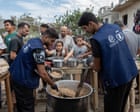
Half a million people in Gaza just lost their monthly World Food Programme lifeline. Not because hunger suddenly vanished. Not because families suddenly got jobs. Simply because the money ran out.
When the World Food Programme scaled back its monthly support from 1.6 million people to 1.1 million in October 2026, it exposed a brutal catch-22. Large-scale aid shipments over the past year pulled Gaza back from the famine declared in summer 2025. Yet the underlying conditions that made families dependent on those shipments barely budged. Roughly 80% of people in Gaza are unemployed. Farmland remains largely occupied or ruined, greenhouses and irrigation systems sit wrecked, and fishing boats stay off the water. Take away food assistance in a place with no wages and no local harvests, and hunger doesn't wait around to see if reconstruction starts next month.
How World Food Programme Cuts Reshape Daily Survival
Cutting half a million people off the roster isn't the only blow. Even families still receiving support are getting less of it.
Rations dropped by half, leaving households with one food parcel instead of two and a smaller bag of wheat flour. Daily hot meals slid from 250,000 down to 150,000. If a family lives near the yellow line of Israeli military control or another hard-to-reach zone, hot meals shifted from daily to every other day. Cash stipends for 75,000 families were trimmed too, while recipients report longer gaps between food coupons.
Some safety nets are holding on, at least for now. The agency continues backing bakeries that cover roughly one-third of Gaza's bread needs, provides nutrition support to 300,000 women and children, and sends healthy school snacks to 200,000 children. Still, the broader picture stays grim: two-thirds of Gaza's population faces crisis-level food insecurity (IPC Phase 3), and around 200,000 people face emergency-level food insecurity (IPC Phase 4), just one step below famine.
Why Food Aid Alone Cannot Fix a Broken Economy
Here's what people outside Gaza often miss when they hear that food aid helped curb last year's famine: stopping starvation isn't the same as building food security.
A food parcel buys time. It doesn't create a paycheck. Before the conflict, Gaza grew much of its own fruit and vegetables, and fishing supplied vital protein. With vast stretches of farmland occupied, irrigation and greenhouse infrastructure shattered, and maritime access restricted, families have almost nowhere to grow or catch food themselves. And even when goods reach local markets, unemployment around 80% means many households simply don't have cash on hand to buy fresh produce or protein.
As WFP Country Director for Palestine Shaun Hughes pointed out, Gaza's recent hunger gains are fragile and easily reversed without serious investment in recovery. Honestly, nobody wants to stand in a soup line forever. People want livelihoods, stability, and a real shot at feeding their own kids.
Donor Fatigue Meets Winter in Gaza
Funding for the WFP's Palestine operation in 2026 came in at less than half of what it received in prior years. To keep vital programs running across Gaza and the West Bank through March 2027, the agency faces a massive shortfall—roughly $436 million to $450 million over six months.
Why did donations dry up so fast? Two shifts collided. First, sweeping cuts to U.S. foreign aid under the Trump administration—including the gutting of USAID—alongside tighter budgets in other donor countries squeezed humanitarian agencies across the board. Second, once a nominal ceasefire arrived and peak famine headlines faded, global attention drifted elsewhere. Donor fatigue set in even though the emergency on the ground never really ended.
Timing makes this cash crunch even worse. Winter rain and cold have hit Gaza, turning already strained tent camps into wet, freezing hazards. Overflowing sewage pits mixing with rainwater, soaked bedding, and respiratory illness hit hardest when calories and nutrition are already low. UNICEF survey data cited by WFP shows one in eight children in Gaza is chronically malnourished or stunted—a warning sign of developmental harm that won't disappear overnight. Meanwhile, supplies needed for winter operations and basic repairs—like heaters, fuel, wood, water pumps, spare parts, and heavy machinery—still face entry delays and restrictions.
What Local Groups Are Doing When Big Budgets Shrink
When massive international programs pull back, smaller frontline groups scramble to fill the gaps—though they can't replace a $400-plus million hole.
Organizations like the American Friends Service Committee (AFSC) have worked directly with local farmers in Gaza to buy and distribute fresh vegetables to displaced families, reaching more than 61,000 people over the past year while trying to keep whatever remains of local farming alive. That kind of local sourcing is smart because it puts nutritious food on tables and supports local growers at the same time. Yet crossing closures, shifting market prices, and restricted commercial deliveries make every distribution a logistical puzzle.
Practical Ways to Follow and Support the Response
If you're trying to make sense of conflicting numbers or figure out how to help without falling for hype, start with clear, verified sources:
- Track official field updates: Check dispatches directly from the World Food Programme and UN humanitarian briefings to see how funding shortfalls translate into actual ration sizes, hot meal counts, and IPC food security phases.
- Look past headline counts: Don't judge food conditions by the number of trucks or market stalls alone. Check whether families actually have income, whether crossings are open for commercial goods and winter gear, and how nutrition indicators like child stunting are trending.
- Vet organizations before donating: If you give, verify how funds reach people on the ground—whether through established UN food and nutrition channels or vetted local-partner groups operating inside Gaza—and pay attention to administrative transparency rather than viral appeals.
- Push for policy and access alongside charity: Relief checks can keep someone fed this week, yet lasting recovery depends on funding commitments, unhindered entry of food and winter supplies, and real steps toward rebuilding local agriculture and jobs.


