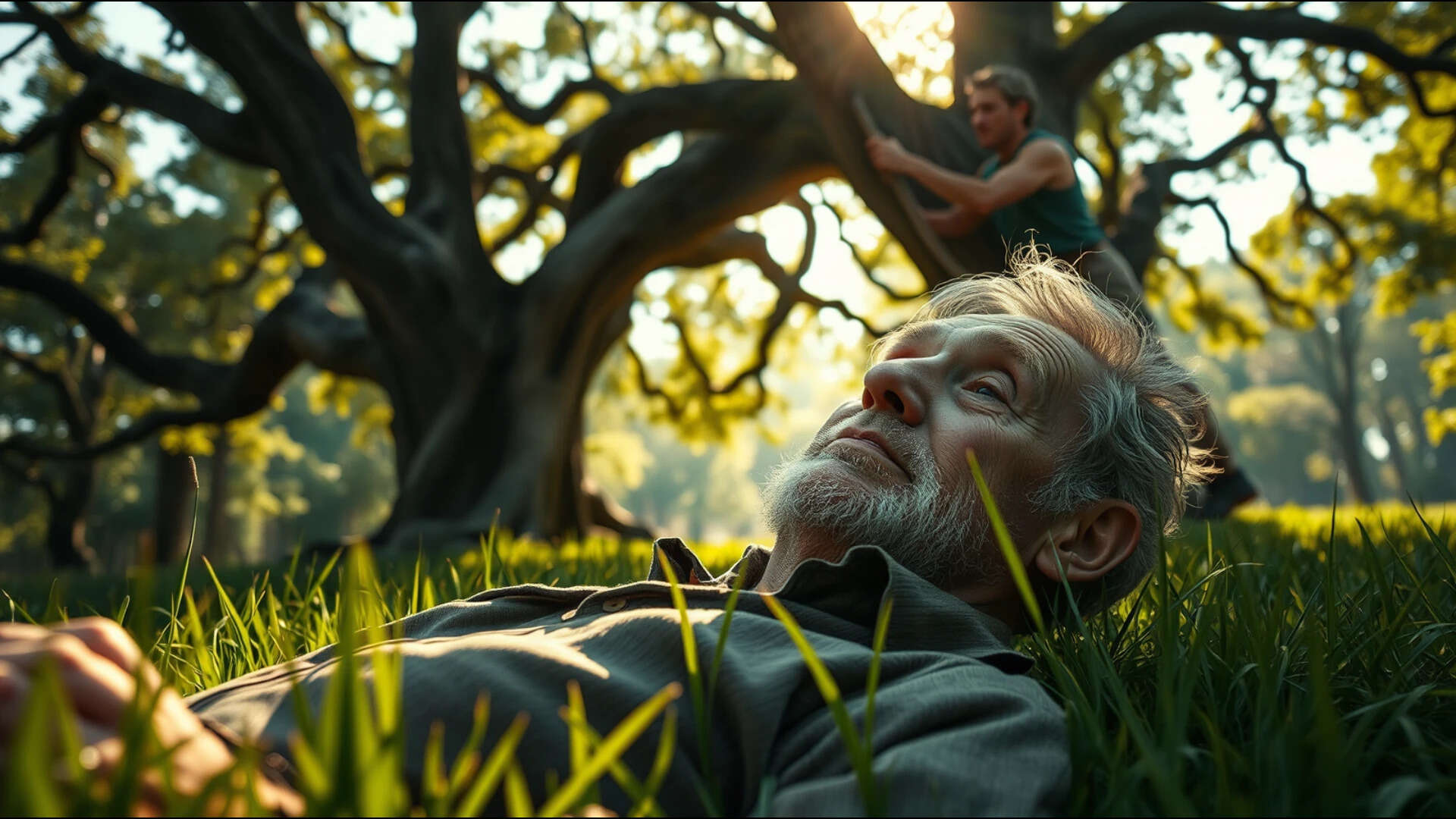
Youth is loud, fast, and obsessed with elevation. We climb trees, metaphorically and literally, thinking a higher vantage point gives us a better view of the world. It doesn't.
There's a classic Nigerian proverb that cuts right through this modern illusion. It says that what an old man sees while lying down, a young man can never see even when he climbs up in a tree. It's a blunt critique of raw ambition stripped of perspective. In a world where 22-year-old tech founders are treated as oracles, this ancient African insight is a necessary reality check on how judgment actually works.
We confuse information with wisdom. They aren't the same thing. You can Google a fact, but you can't Google the subtle intuition built from decades of making mistakes.
The Anatomy of the Tree Illusion
Why does the young man climb the tree? He wants an edge. He thinks height equals vision. In modern terms, the tree is a master’s degree, a promotion, a trendy framework, or a massive data dump.
We assume that because we have more data, we know more. But the young man in the tree is blinded by the immediate horizon. He sees the shiny things far away, but he misses the snake crawling near the roots. He lacks context.
An elder lying down has something better than height. They have ground-level integration. They aren't just looking at the landscape; they've walked it. They know how the soil shifts when it rains. They recognize the scent of a storm before the clouds turn gray. This isn't magic. It's pattern recognition.
Daniel Kahneman, a Nobel laureate who spent his life studying human judgment, famously broke down thinking into two systems. System 1 is fast, instinctive, and emotional. System 2 is slower, more deliberative, and more logical. True wisdom, the kind the old man possesses, is a highly refined System 1 built on decades of grueling System 2 analysis. The elder isn't overthinking. He just knows.
Why Fast Retailing and Tech Culture Got It Wrong
Look at the corporate world. We've seen a massive push toward youth-centric leadership over the past two decades. Companies pushed out older workers to make room for digital natives.
The results? Mixed, at best.
Take the collapse of several hyper-funded startups over the last few years. Founders with brilliant technical skills but zero emotional intelligence or historical context burned through billions. They couldn't read the room. They didn't understand human nature, regulations, or macroeconomic cycles. They were high up in the tree, completely blind to the foundational rot underneath them.
Contrast that with seasoned leaders who survived multiple recessions. They didn't panic during market downturns. Why? Because they'd seen the movie before. They knew that what goes up must come down, and they kept cash reserves when everyone else was screaming to spend.
How to Build Judgment When You're Still in the Tree
You can't speed run old age. You shouldn't want to. But you can change how you view your own perspective.
First, stop ignoring the elders in your space. Whether you're in corporate finance, creative arts, or community organizing, find the people who survived the eras you only read about in history books. Don't just ask them what to do. Ask them how they felt when things went wrong, and how they spotted the early warning signs.
Second, practice active reflection. Experience alone doesn't grant wisdom; evaluated experience does. Most people bounce from one project to the next without analyzing their failures. Write down your missteps. Keep a decision journal. Look back at what you thought would happen versus what actually happened.
Get off the high branch occasionally. Sit on the ground. Listen more than you speak. The view from the top is great for a moment, but the ground is where things actually grow.


