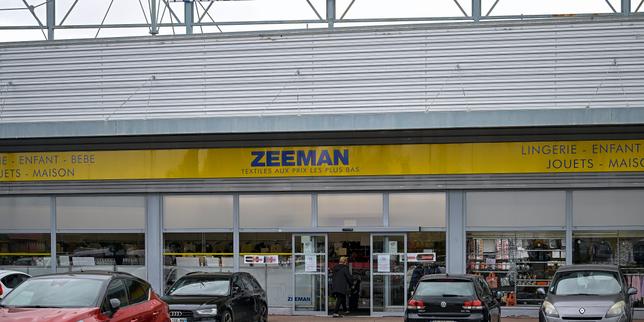
The operational viability of Zeeman, a dominant player in the European discount textile sector, is currently being stress-tested by a specific macroeconomic correlation: the inverse relationship between petroleum-derived fuel costs and the disposable income of the suburban working class. While traditional retail analysis often attributes declining foot traffic to "consumer sentiment," the crisis facing Zeeman is a mechanical failure of the Low-Cost Accessibility Loop. When the marginal cost of a vehicle trip exceeds the perceived utility of a low-ticket purchase, the discount model’s fundamental reliance on high volume collapses.
The Geographic Bottleneck of the Discount Model
Zeeman’s real estate strategy is predicated on suburban and peri-urban positioning. By securing lower commercial rents in peripheries compared to high-street city centers, the firm maintains its razor-thin margins. However, this strategy externalizes a specific cost to the consumer: the Transport Tax.
In a high-inflation environment where fuel prices spike, the cost of the "last mile" is shifted entirely onto the customer’s balance sheet. For a consumer purchasing a €3.99 pack of organic cotton basics, a €2.00 increase in the cost of the commute to the retail park represents a 50% surtax on the transaction. This creates a Transaction Utility Deficit. The consumer does not merely view the product as more expensive; they view the act of acquisition as irrational.
The Elasticity of the Essential
The textile discounter operates within a paradoxical market segment. Unlike luxury goods, which exhibit Veblen effects, or mid-market fashion, which is highly discretionary, Zeeman’s inventory consists largely of "basics"—underwear, socks, and household linens. These are technically inelastic goods; people need them regardless of the economy.
The fragility arises because while the demand for the product is inelastic, the channel is highly elastic. The consumer will still buy socks, but they will redirect that demand to a more convenient, albeit slightly more expensive, channel—such as a local supermarket (inter-category competition) or a digital platform with bundled shipping. Zeeman’s "vulnerability" is not a lack of product demand, but a failure of the physical distribution network to compete with the rising cost of consumer mobility.
The Cost Function of Low-Price Retail
To understand why Zeeman cannot simply "absorb" these pressures, one must deconstruct the internal economics of a discount textile operation. The business operates on a High-Velocity, Low-Margin (HVLM) framework.
- Gross Margin Compression: Discount retailers typically operate with gross margins significantly lower than specialized fashion brands. Because Zeeman refuses to compromise on the entry-level price point (their brand promise), they cannot easily pass on increased logistics costs to the consumer.
- Inventory Carrying Costs: In an environment of declining foot traffic, the Inventory Turnover Ratio slows. For Zeeman, a slower turnover is lethal. Textile logistics are optimized for rapid replenishment. When goods sit on shelves, they tie up working capital and eventually require deeper markdowns, further eroding the margins that were already minimal.
- Logistics-Energy Correlation: Every step of the Zeeman supply chain is energy-intensive. From the polyester production (petrochemical-based) to the maritime freight and the final truck-based distribution to suburban stores, the company is effectively a "short" on the price of oil.
The Digital Substitution Trap
The competitor's analysis fails to account for the Asymmetric Digital Threat. In a period of high fuel costs, e-commerce becomes a defensive hedge for the consumer. However, for a discounter like Zeeman, the digital transition is fraught with technical debt and logical inconsistencies.
The average basket value (ABV) at Zeeman is often too low to offset the cost of "last-mile" home delivery. If a customer spends €15, the logistics of picking, packing, and shipping that order can cost the retailer €5 to €7. In the discount sector, this wipes out the entire net profit of the transaction. Zeeman is trapped in a Physical-Digital Pincer:
- High fuel prices discourage physical visits.
- Low product price points make home delivery economically unviable for the firm.
- Click-and-collect models still require the consumer to drive, which does not solve the fuel-cost barrier.
The Socio-Economic Profile as a Risk Factor
Zeeman’s core demographic is the "budget-constrained household." This segment spends a disproportionate percentage of its total income on energy and food—the two categories most impacted by current inflationary cycles.
This creates the Disposable Income Squeeze. Unlike the middle-class consumer who might trade down from Zara to Zeeman (a potential tailwind for discounters), the existing Zeeman customer has no "lower" tier to move to. They simply stop buying or prolong the lifecycle of their existing textiles. The "fragility" mentioned by observers is actually a Consumption Ceiling. When the cost of living hits a certain threshold, discretionary spending in the bottom quintile of the population doesn't just slow; it halts.
The Failure of the "Value" Narrative
Discounters often rely on the narrative that they are "recession-proof." This is a simplification. They are recession-proof only if the recession is driven by asset devaluations or corporate restructuring. When a recession is driven by Supply-Side Cost Shocks (energy and raw materials), the discounter is the most exposed.
The cost of cotton and synthetic fibers is directly linked to the same global inflationary pressures affecting fuel. Consequently, Zeeman faces a Dual-Sided Margin Attack: their operating costs are rising while their customers' purchasing power is evaporating.
Structural Reconfiguration: The Strategic Mandate
To survive the "fuel-price fragility," Zeeman must move beyond the "pile it high, sell it cheap" suburban model. The following structural pivots are the only path to maintaining market share in an era of expensive mobility.
Urban Infill and Micro-Footprints
The reliance on large-format suburban stores must be hedged with high-density urban "micro-stores." These locations, while carrying higher rents, benefit from pedestrian traffic and public transport access, removing the "Transport Tax" from the consumer's decision matrix. The inventory in these stores must be curated for high-margin, high-necessity items to offset the smaller square footage.
The "Bundle" Logistics Model
To solve the e-commerce profitability gap, Zeeman must transition from selling individual items to selling Thematic Bundles. By incentivizing the consumer to buy a "Back to School" kit or a "Household Refresh" pack, they can drive the ABV to a level where shipping costs become manageable. Selling a single pair of socks online is a loss-leader; selling a €40 household starter kit is a viable business.
Supply Chain Decoupling from Petro-Costs
Investment in circularity—specifically textile-to-textile recycling—is no longer a "green" initiative but a fiscal necessity. By reducing reliance on virgin polyester (oil-based) and virgin cotton (water and transport-intensive), Zeeman can begin to decouple its CO2 footprint and its cost base from the volatility of global energy markets.
The current drop in foot traffic is not a temporary fluctuation; it is a signal that the suburban discount model is misaligned with the new energy reality. The firms that survive will be those that view "low cost" not just as a price on a tag, but as the total cost of acquisition for the consumer. If the drive to the store costs more than the shirt on the rack, the rack will stay full, and the business will fail. Zeeman must optimize for the consumer's total journey, or watch its volume-based empire erode under the weight of a €2.00 liter of diesel.