Late autumn in New Bedford carries a specific kind of cold. It seeps through woven cotton and clings to coastal asphalt. At 44 degrees, the air is sharp enough to outline every breath in white mist.
Shortly before midnight on a quiet Saturday, that chill was pierced by the scream of tearing metal, the dry snap of shattering plastic grilles, and the violent thud of an SUV flipping onto its side.
Five parked cars took the hit across from the Dartmouth Street Stop & Shop. Two were folded like accordion doors. When the dust settled on the apartment complex lawn, scattered pieces of headlamps and side mirrors glittered under the streetlights.
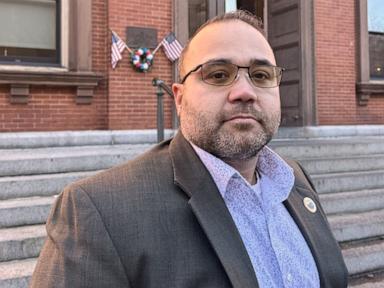
Inside the wrecked cabin was Shawn Oliver.
He was 42 years old. He was a city councilor, a corrections officer, a father, and a grandfather. He was also the Republican nominee for Lieutenant Governor of Massachusetts.
Hours earlier, his name represented a statewide campaign, political leverage, and the ambitious hopes of a party attempting to mount a challenge against an incumbent administration. By sunrise, his name was logged in a police blotter under operating under the influence, negligent operation of a motor vehicle, marked lanes violations, and speeding.
Power is a fragile construct, but we rarely see the precise moment it disintegrates.
The Physics of a Public Collapse
Political campaigns are built on friction-free narratives. Candidates spend millions of dollars polishing images of restraint, steady judgment, and unwavering discipline. They stand on oak stages in tailored suits, promising voters they possess the clarity required to navigate complex state budgets and law enforcement systems.
Then comes the physics of real life.
Consider what happens when a vehicle weighing over two tons loses control on a residential road. Momentum ignores political party lines. Kinetic energy does not check a driver’s resume. When tires lose traction on pavement, abstract qualifications evaporate into the reality of skid marks and deployment sensors.
Oliver was rushed to St. Luke's Hospital for evaluation. He survived. Miraculously, no pedestrians or neighboring drivers were injured. But the political casualty was immediate and total.
When he walked out of jail the following morning, the optics of campaign rallies were gone. There were no campaign banners or press secretaries. He wore a plain white T-shirt against the 44-degree air, carrying his personal belongings in a clear plastic police bag.
No ride was waiting. He simply walked away on foot.
The Unforgiving Reality of the Ticket
In American politics, a candidate for governor and their running mate operate on an unspoken agreement: protect the ticket at all costs.
Gubernatorial candidate Mike Minogue had spent months pitching a vision for Massachusetts. By Sunday morning, he was forced to address the wreckage. His public response did not hedge or make excuses.
"I am extremely disappointed," Minogue posted on social media. "Shawn is lucky to be alive and lucky that no one innocent was hurt. There is no excuse for driving under the influence."
Minogue explicitly called for Oliver to suspend his campaign immediately. Shortly after, Oliver released a statement stepping down from the race, citing that the election was "too important to be overshadowed by personal matters."
The legal system will process the formal charges. Oliver entered a plea of not guilty during his arraignment. But in public life, the verdict on judgment happens instantly.
A campaign takes months of relentless labor to build—endless miles on state highways, thousands of handshakes, volunteer calls, and policy position papers. Yet it can vanish entirely in less than sixty seconds of terrible decisions behind the wheel.
What the Wreckage Leaves Behind
We often treat political scandals like distant drama, detached from our own daily reality. We read headlines, digest soundbites, and move on to the next breaking news alert.
Yet events like this reveal something uncomfortably human about the people who ask for our trust. They remind us that the veneer of high-office candidacy is thin. Behind every candidate’s podium is a person subject to the same vulnerabilities, flaws, and failures of judgment as anyone else.
The residents of Dartmouth Street woke up to towed cars, insurance claims, and broken glass swept into the gutters. The voters of the Commonwealth were left with one less choice on their ballots.
On the lawn outside that apartment complex, small pieces of plastic grille remained tangled in the grass long after the flatbed tow trucks had cleared the street. They served as a quiet reminder of how fast a life—and a campaign—can flip upside down on an ordinary Saturday night.