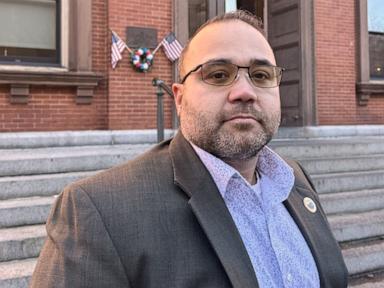
The crunch of twisted steel against parked sedans sounds the same whether you are a factory worker, an insurance salesman, or a man whose name is printed on hundreds of thousand-dollar campaign signs across the Commonwealth of Massachusetts.
It is a dull, violent thud. Followed by the glass shattering. Followed by the sudden, suffocating silence of an engine dying on its side.
At 11:40 on a Saturday night on Dartmouth Street in New Bedford, the universe shrank down to a single overturned vehicle resting on cold asphalt. Inside sat Shawn Oliver. Forty-two years old. A city councilor. A father. A man who, until that precise second, was sixteen days away from potentially being elected the second-highest executive official in the state.
Then came the red and blue flashes. The smell of leaking fluid. The heavy, measured tread of local police officers approaching the wreckage.
By Sunday morning, the campaign was dead. The press releases were sent. The statements of profound disappointment were published on social media feeds. But to understand what actually happened on that quiet street in New Bedford, you have to look past the standard political ticker and examine the human fragility that turns a lifetime of quiet ambition into a midnight disaster.
The Mirage of the Political Ascent
We like to picture political candidates as frictionless creatures. We see them in tailored suits, standing under bright gymnasium lights, nodding with practiced empathy as voters air their grievances. We treat them as logos, party platforms, and soundbites.
We forget that they drive home on the same dark roads as the rest of us. They carrying the same unseen weight, the same exhaustion, and, sometimes, the same disastrous errors in judgment.
Shawn Oliver was running alongside gubernatorial nominee Mike Minogue on the Republican ticket, mounting a long-shot challenge against an entrenched administration. In state politics, running for lieutenant governor is a strange, grueling purgatory. You work eighteen-hour days. You shake thousands of hands in drafty American Legion halls. You eat cold rubbery chicken at suburban breakfast mixers. You grin through relentless scrutiny, knowing your job is essentially to be the loyal wingman.
Imagine the sheer physical drain of that routine. Day after day. Week after week. The sheer momentum of a statewide race convinces a person that they are invincible, that the normal rules of fatigue, alcohol, and human limitation somehow do not apply to them.
It is a dangerous delusion.
Because steel does not care about your polling numbers. A parked car on Dartmouth Street does not bend out of the way for a political campaign.
Five Parked Cars and a Life Turned Sideways
The police report provides the dry outline of the wreck: a vehicle plowing into five stationary cars before flipping over entirely.
Visualize that scene for a second.
Five ordinary people in New Bedford went to sleep on Saturday night believing their cars were safely parked outside their homes. They were likely asleep when the impact shook their windowpanes. Imagine waking up to that noise—the sickening metallic violence echoing down a residential street—and walking outside in your bathrobe to find your morning commute crushed like an aluminum soda can.
For Oliver, those few seconds of impact shattered far more than body panels.
When the cruiser doors slammed shut and the handcuffs clicked around his wrists, the campaign did not just slow down; it dissolved into air. He was charged with operating under the influence of alcohol and negligent operation.
Think about the sheer, suffocating panic of that ride to the booking station. The smell of stale alcohol hanging in the back of the police car. The sudden, agonizing realization that every door you spent a decade opening just slammed shut in a single evening.
By noon the next day, his running mate, Mike Minogue, released a public statement stating he was "extremely disappointed," adding the stark truth that everyone knows but too few respect: there is no excuse for driving under the influence. Minogue asked for his immediate suspension from the trail. Oliver obliged.
Just like that, the signs sticking into autumnal suburban lawns became instant relics.
The Ghosts on the Ballot
Here is the surreal glitch in our democratic machine: because the crash happened barely two weeks before Election Day, Shawn Oliver’s name cannot simply be erased from the physical paper ballot.
Thousands of voters will walk into curtained booths across Massachusetts, pick up a black pen, and see his name sitting right there alongside Minogue’s. The machinery of an election is too large, too slow, and too rigid to react to a midnight mistake on Dartmouth Street.
It creates a eerie ghost in the machine. A candidate who has publicly stepped down, who has asked for privacy, whose campaign staff has packed up their folding tables, will still collect votes from people who didn't catch the Sunday afternoon news cycle.
This is where abstract political reporting misses the mark. This story isn't merely about a party losing a candidate or a gubernatorial ticket suffering a self-inflicted wound late in the game. It is about how fragile our public lives truly are.
We live on a knife-edge. We build elaborate structures—careers, reputations, political movements, personal legacies—and we foolishly believe they are permanent. We stack brick upon brick for forty years, convinced that our dedication makes us immune to catastrophe.
Then comes a single bad decision. A turn of the key. A distraction. A breath too heavy with liquor.
And in less than three seconds, the entire structure collapses into a pile of overturned glass and metal.
The Real Cost of a Midnight Mistake
In his withdrawal statement, Oliver thanked his supporters and asked for privacy for his family as they navigate the personal fallout. It was a standard, polished piece of crisis communications text.
But beneath those sterile sentences lies a deeply human tragedy. Not a tragedy of circumstance—because driving impaired is a choice, and a dangerous one at that—but a tragedy of self-sabotage.
Every person reading this has made a mistake they wish they could snatch back out of the air. Most of us are lucky enough that our worst lapses in judgment happen in the dark, away from public light, without a fleet of news vans setting up broadcast lights outside our front yard.
Oliver does not have that luxury. His worst moment will be archived in search engine indexes forever. It will be discussed in political columns, referenced in future campaign playbooks, and replayed on local evening broadcasts.
As the glass is swept up from Dartmouth Street and the tow trucks haul away the wreckage, the rest of the state moves on. The election will happen. Votes will be counted. A winner will be declared.
But somewhere in New Bedford, a man sits in a quiet house, facing the heavy silence that follows the siren's fade. He is left to reckon not with polling percentages or party platforms, but with the stark, unyielding reality of what happens when you gamble with your life—and everybody else’s—on a dark street late at night.