The air in Tehran does not carry the scent of diplomacy. It carries the smell of exhaust, toasted saffron, and the heavy, electric tension of a city that has spent decades waiting for a storm that never quite breaks. In the high-ceilinged offices where policy is whispered into existence, the language of the state is not merely about borders or enrichment levels. It is about face. It is about the ancient, intricate dance of who blinked first in a staring contest that has lasted longer than many of its participants have been alive.
When the Iranian government recently declared that Donald Trump had "backed down" following a series of escalatory threats, they weren't just issuing a press release. They were narrating a victory for a domestic audience that survives on the bread of resilience. To understand the weight of these claims, one has to look past the scrolling news tickers and into the psychology of a nation that views every American hesitation as a crack in the armor of a superpower. For an alternative perspective, see: this related article.
The reports of "fake news" regarding potential talks aren't just denials. They are defensive walls.
The Mirror of Escalation
Imagine a narrow hallway. At one end stands a man who believes his strength is derived from unpredictable displays of force. At the other stands a collective that believes its strength is derived from never being seen to yield. This is the geometry of U.S.-Iran relations. When the Iranian side claims a retreat by the former American president, they are engaging in a specific kind of geopolitical storytelling. They are telling their people that the "Maximum Pressure" campaign—a policy designed to crush the Iranian economy into submission—has hit a ceiling. Similar analysis on this matter has been provided by Al Jazeera.
The facts are often obscured by the fog of psychological warfare. Iran points to the absence of direct military kinetic action following their own provocations as evidence of American timidity. In their narrative, the dragon breathed fire, realized the knight wouldn't move, and decided to go back to its cave.
But reality is rarely that linear.
The stakes are invisible until they are catastrophic. For the shopkeeper in the Grand Bazaar, "backing down" isn't a headline; it is the hope that the price of cooking oil might stop its vertical climb. For the student in Isfahan, "fake news" about talks is a bitter pill, a reminder that the bridge to the outside world remains a ghost. These are the human anchors of a story usually told through the lens of aircraft carriers and centrifuges.
The Architecture of the Denial
Why brand the talk of negotiations as "fake news"?
To negotiate is to admit that the current state of affairs is unsustainable. For the hardliners in Tehran, that admission is a form of political suicide. They have built an identity on the concept of Muqawama—resistance. If you are a professional resistor, the moment you sit at a table to find a middle ground, your professional identity begins to dissolve.
By labeling reports of back-channel communications or secret overtures as fabrications, the Iranian leadership maintains its purity. It tells its base that they are not being sold out. They are asserting that the West is so desperate for a deal that it must invent the existence of one to save its own reputation.
It is a masterful flip of the script.
Consider the mechanics of a rumor in a closed system. A report surfaces in a Western outlet suggesting a secret meeting in a third-party country—perhaps Oman or Switzerland. In a standard diplomatic environment, this would be a trial balloon. In the current climate of Tehran, it is a grenade. The immediate, forceful branding of such reports as "fake" serves to cauterize the wound before the internal opposition can use it as leverage.
The Ghost at the Table
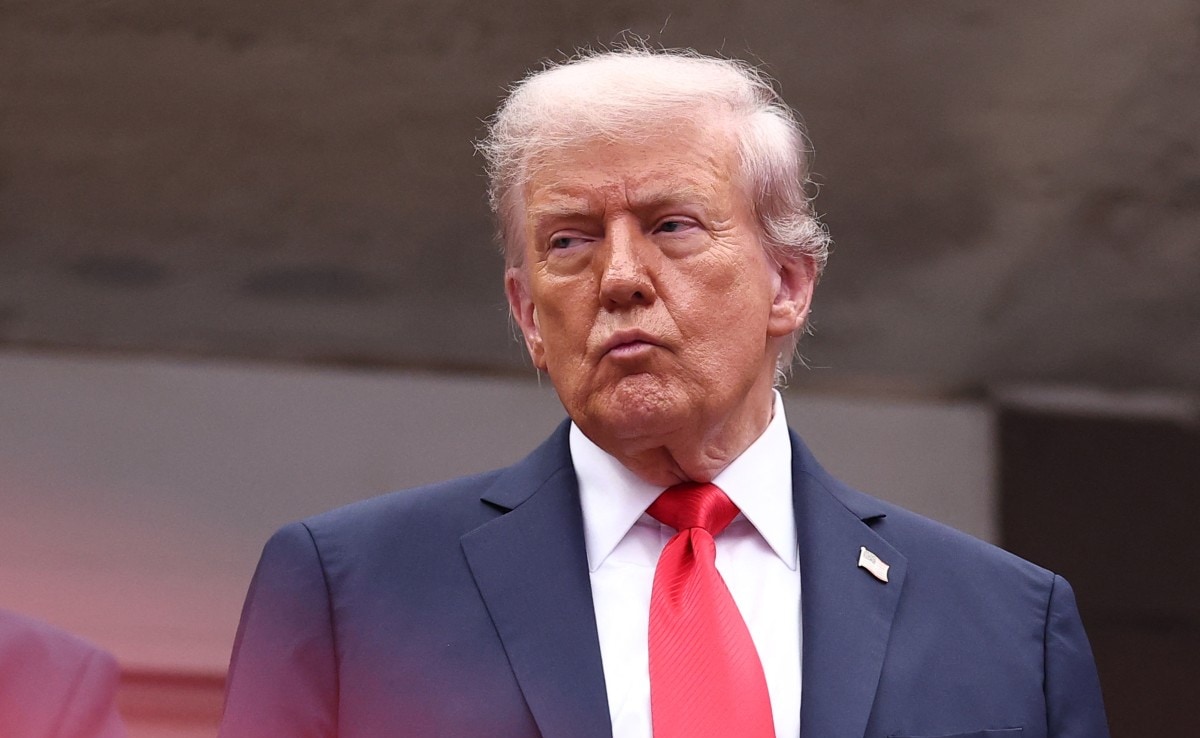
Donald Trump remains a singular figure in the Iranian psyche. He is the man who tore up the nuclear deal, the man who ordered the strike on Qasem Soleimani, and the man who redefined the boundaries of what Iran expected from Washington. When Tehran speaks of him backing down, they are reclaiming a sense of agency that was stripped away during the years of crushing sanctions.
They describe a world where the U.S. realized that Iran could not be broken by economic means alone. Whether this is true is almost secondary to the fact that it is believed. In the theater of international relations, perception is the only currency that never devalues.
The Iranian narrative suggests that the U.S. looked into the abyss of a full-scale regional conflict and found it unpalatable. They use this to justify their own stubbornness. If the giant slowed his pace, the logic goes, we must be winning.
The Cost of the Standoff
The tragedy of this narrative is that it leaves no room for the quiet voices.
While the titans exchange barbs about who retreated and who lied, the infrastructure of a society slowly erodes. The "invisible stakes" are the lives of millions caught in the middle of a rhetorical war. Every time a potential diplomatic opening is slammed shut and labeled "fake," a window of opportunity for a more stable Middle East is boarded up.
We are witnessing a clash of two different versions of "strength." For one side, strength is the ability to impose one's will through sanctions and military posturing. For the other, strength is the ability to endure that imposition without changing course.
It is a stalemate masquerading as a series of victories.
The Iranian claims of a Trump retreat serve as a psychological balm. They provide a sense of victory in a landscape where victory is hard to find. By framing the U.S. as the party that flinched, the Iranian leadership reinforces the idea that time is on their side. They are betting that the West will eventually tire of the friction, while they, having lived in the friction for forty years, are merely existing in their natural state.
The Echo Chamber of Sovereignty
There is a specific kind of pride that grows in isolation. When a nation is cut off from the global financial system, it begins to view its isolation as a badge of honor rather than a handicap. This is the "Resistance Economy" in practice. In this world, any suggestion of a deal is viewed as a Trojan horse.
The denial of talks is a signal to the regional proxies—the groups in Lebanon, Yemen, and Iraq—that the center is holding. If the patron state is perceived to be wavering or "making deals" with the Great Satan, the entire network of influence begins to fray. The "fake news" label is, therefore, a message to the neighborhood: We have not abandoned the cause.
But the narrative has a shelf life.
Eventually, the gap between the rhetoric of "victory" and the reality of the street becomes too wide to ignore. You can tell a hungry man that the enemy has backed down, but the man is still hungry. You can tell a generation of tech-savvy youths that the West is collapsing, but they can still see the world through their VPNs.
The Unseen Exit
The danger of branding all progress as "fake" is that it eventually makes real progress impossible. When you poison the well of diplomacy to keep your supporters thirsty for defiance, you risk dying of thirst yourself.
The current posture is a high-stakes gamble on the volatility of American politics. Tehran is watching the calendar, calculating the odds of a shifting administration, a changing tide, a moment where they can claim an even larger retreat. They are playing a game of chess where the board is on fire and the pieces are melting, yet they insist they have the advantage.
It is a world of mirrors. One side sees a strategic withdrawal; the other sees a cowardly retreat. One side sees a necessary diplomatic overture; the other sees "fake news" designed to destabilize the revolution.
In the end, the truth isn't found in the headlines or the official denials. It is found in the silence that follows the rhetoric. It is found in the moments when the cameras are off and the officials realize that the path they are on has no ending, only a series of increasingly dangerous loops.
The sun sets over the Alborz mountains, casting long, jagged shadows over a city that has heard every version of this story before. The people walk the streets, moving between the grand proclamations of their leaders and the harsh realities of their lives, waiting for a day when the news is finally real, and the backing down is not a boast, but a beginning.
The shadow of the next move looms, not as a calculated step on a map, but as a breath held too long in a room where everyone is afraid to be the first to exhale.