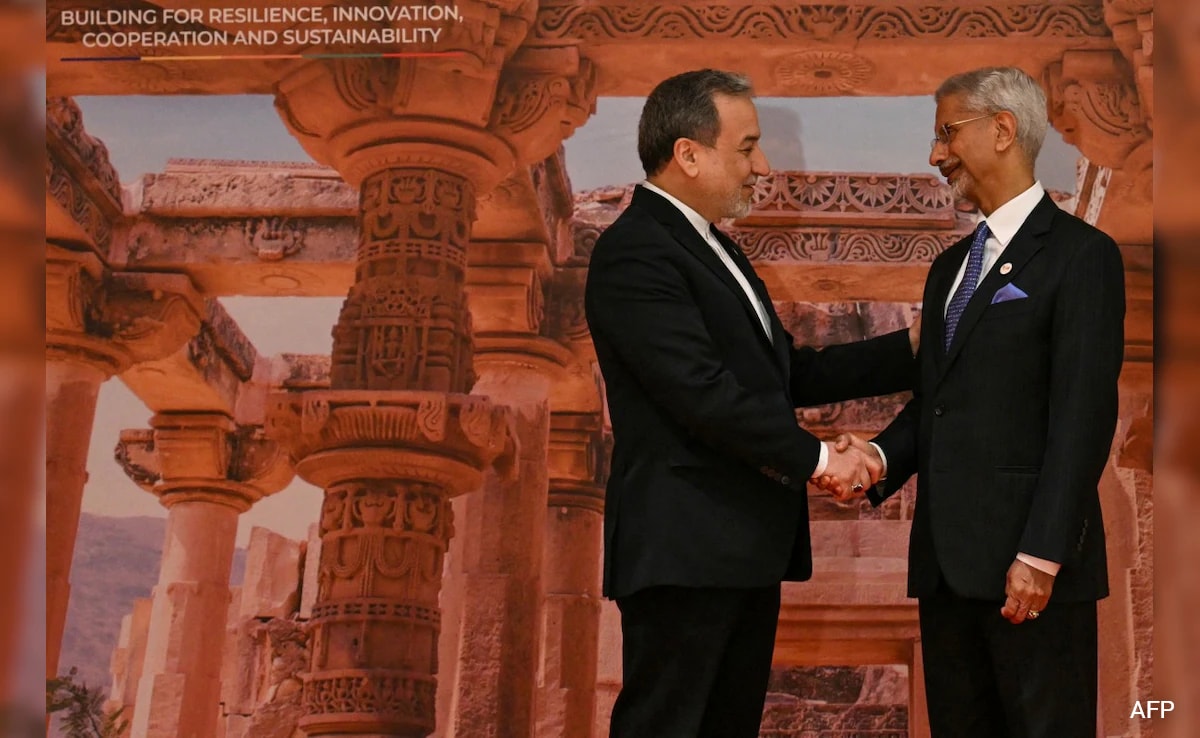
Foreign Minister Abbas Araghchi stands at the podium in Kazan and the world sees a fist. He speaks of "defiance." He "blasts" the United States. He signals a "new world order" where the BRICS bloc serves as the ultimate shield against Western hegemony. The mainstream media laps it up, framing the event as a binary clash between a fading West and a rising East.
They are wrong. They are missing the desperation hidden in the rhetoric.
If you think Tehran’s presence at BRICS is a sign of geopolitical strength, you’ve been sold a hollow narrative. I’ve spent years watching trade flows and diplomatic posturing; the loudest shouts often come from the weakest rooms. Araghchi isn't building a fortress. He’s trying to find a back door into the very global financial system he claims to despise.
The Myth of the BRICS Shield
The "lazy consensus" suggests that BRICS provides Iran with a functional alternative to the SWIFT banking system and Western trade routes. This is a fundamental misunderstanding of how international finance operates. BRICS is not a monolith. It is a loose collection of states with wildly divergent interests, most of whom are terrified of secondary US sanctions.
China is not going to torch its $500 billion trade relationship with the United States just to facilitate Iranian oil exports. India is not going to jeopardize its growing tech partnership with Silicon Valley to help Tehran bypass banking restrictions. When Araghchi talks about "shaking off the yoke of the dollar," he’s ignoring the reality that even the New Development Bank (the BRICS bank) follows Western sanction protocols to maintain its own credit rating.
The "shield" doesn't exist. It’s a series of bilateral trade agreements disguised as a revolutionary alliance. Iran isn't joining a new world order; it's joining a waiting room.
Sovereignty is an Expensive Illusion
We hear the word "sovereignty" thrown around as if it’s a tangible asset. In modern economics, absolute sovereignty is just another word for isolation.
Iran’s leadership insists they will "never bow." Fine. But every time they refuse to negotiate on standard global financial transparency—like the FATF (Financial Action Task Force) requirements—they tax their own citizens. They force their businesses to use "shady" middlemen who take 15% to 20% off the top of every transaction.
Is it defiance if you’re just paying a massive premium to exist?
True power in the 2020s is not the ability to say "no" to Washington. It is the ability to be so integrated into the global supply chain that your absence would cause a systemic collapse. Look at Taiwan. Look at the UAE. They are "too integrated to fail." Iran, by contrast, has spent decades making itself "easy to ignore" for everyone except the defense industry.
The Currency Delusion
Araghchi and his peers love to talk about "de-dollarization." It’s the ultimate buzzword for the BRICS set. They want you to believe that a "BRICS currency" or the use of the Yuan will magically restore the Rial’s purchasing power.
Here is the brutal truth: A currency is only as good as the trust behind it.
- The Dollar is backed by the most liquid markets and a predictable legal system.
- The Yuan is a managed currency that Beijing manipulates to suit its export needs.
- The Rial is a casualty of ideology.
Even if Iran trades oil for Yuan, what do they buy with it? They buy Chinese goods. They are effectively trading their most valuable natural resource for a store credit card that only works at one mall. That isn't "breaking free." It’s changing masters.
The Performance of Defiance
Why does the rhetoric remain so aggressive? Because Araghchi is speaking to two audiences, and neither of them is the US State Department.
First, he is speaking to the hardliners in Tehran. He must prove that he hasn't "gone soft" by engaging with the international community. Second, he is speaking to the Global South, positioning Iran as the vanguard of the "oppressed."
It’s a branding exercise. If Iran actually wanted to destroy the US-led order, they would do it through economic outperformance, not fiery speeches at summits. But outperformance requires transparency, rule of law, and a pivot away from a revolutionary mindset. Those are the very things the current leadership views as an existential threat.
The Missing Nuance: Iran’s Pragmatism
The mistake the "hawks" make is assuming Iran is irrational. They aren't. Araghchi is an experienced diplomat who understands exactly how much trouble the Iranian economy is in.
His "blast" at the US is a tactical move to increase his leverage for when—not if—negotiations resume. He wants to show that Iran has "options." But these options are inferior. Moving oil through "ghost fleets" and selling at a discount to independent Chinese refineries is a survival strategy, not a growth strategy.
I’ve seen this play out in corporate restructuring. A failing CEO will stand on a stage and talk about "disrupting the industry" and "unwavering vision" right up until the moment the creditors walk through the door. Araghchi’s rhetoric is the geopolitical equivalent of a corporate press release from a company that just missed its earnings targets for the tenth quarter in a row.
Stop Asking if Iran Will Bow
The question "Will Iran bow?" is the wrong question. It’s a cinematic, emotional inquiry that misses the mechanics of power.
The real question is: "At what point does the cost of defiance exceed the benefit of survival?"
The BRICS summit isn't a solution for Tehran; it’s a sedative. It provides the appearance of motion while the country remains stuck in a cycle of stagflation and aging infrastructure. Every year spent "blasting" the West at these summits is another year Iran falls behind its neighbors in Riyadh, Doha, and Abu Dhabi.
Those neighbors aren't "bowing" to the West. They are buying the West. They are investing in Western tech, hosting Western sports, and becoming indispensable to Western energy security. They have realized that in a globalized world, the most effective way to "defy" an empire is to own a significant chunk of it.
The Actionable Reality
If you are an investor or a policy analyst, ignore the headlines about "Araghchi Blasts US." Look at the trade data. Look at the inflation rate in Tehran. Look at the capital flight.
The status quo is a slow-motion car crash disguised as a revolutionary march. BRICS offers Iran a seat at the table, but it doesn’t provide the meal. Unless Iran tackles the structural rot of its economy—starting with the FATF and ending with a realistic rapprochement—all the summits in Kazan won't save them.
The defiance is the mask. The desperation is the face.
Stop reading the subtitles and start looking at the balance sheet.