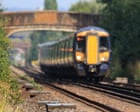
Britain's rail network was built by Victorians who engineered everything for a damp, temperate island. They didn't plan for 40°C summers. When a red extreme heat warning drops, the network simply grinds to a halt, leaving millions of commuters stranded or staring at boards filled with cancellations. Transport operators issue the dreaded advice to stay home unless your trip is absolutely essential. It sounds like an overreaction. It isn't.
The tracks are literally under intense pressure. Steel rails absorb heat rapidly, often running 20 degrees hotter than the surrounding air. When the air temperature hits 38°C, the metal under the train can easily surpass 50°C. Steel expands when it gets hot. If it expands too much, it has nowhere to go. The track buckles, twists, and tears itself away from the wooden or concrete sleepers holding it down. For a more detailed analysis into this area, we recommend: this related article.
If a train hits a buckled rail at 125 miles per hour, the result is catastrophic. That is why safety directors hit the brakes across the whole system. They don't have a choice.
The Physical Reasons Behind the Travel Disruption
Network Rail engineers work with a concept called Stress-Free Temperature. In the UK, rails are legally set and tensioned to handle an ideal track temperature of 27°C. This specific calibration allows the network to function normally during freezing winter nights and warm summer afternoons. It's a calculated compromise. It works perfectly for 360 days of the year. For broader information on this development, extensive reporting is available on Travel + Leisure.
The system breaks down entirely when climate patterns shift. When ambient temperatures shatter records, the internal forces inside the steel rails multiply exponentially. The metal wants to stretch. Because the rails are welded together in long continuous strips to give a smooth ride, they can't lengthen naturally. Instead, they warp sideways.
Speed restrictions are the first defensive measure. Slowing a commuter train from 100 mph down to 20 mph cuts the dynamic forces exerted on the infrastructure. A slower train puts far less lateral stress on a fragile, expanding track. It keeps the train on the wheels, but it completely destroys the timetable.
Overhead electric wires present another massive engineering headache. The copper cables that supply power to electric trains expand and sag dramatically in intense sunlight. If the wires drop too low, they get caught in the train's roof equipment, known as the pantograph. One snagged wire can rip down miles of electrical infrastructure, causing damage that takes days of round-the-clock engineering work to fix.
What to Do When Your Journey Is Cancelled
If you are holding a ticket during a red weather alert, your immediate priority should be securing a refund or rerouting. Do not just show up at the station hoping for the best. Platforms quickly become dangerously overcrowded, and hot stations turn into concrete ovens.
Know Your Rights Under National Rail Conditions of Travel
The law protects your wallet when the weather breaks the network. If your train is cancelled, delayed, or your ticket is rendered useless by an official "do not travel" warning, you have distinct options.
- You can claim a full refund with no administration fees if you choose not to travel because of the disruption.
- You can use your ticket on alternative routes or with different train operators in most cases, as ticket acceptance agreements usually activate automatically during major crises.
- You can delay your journey, as operators normally extend ticket validity to the days immediately following the heatwave.
You must keep your original physical tickets or digital booking receipts to claim through the Delay Repay scheme. Every single operator manages their own claims portal, but the rules are governed by national frameworks. If your journey is delayed by more than an hour, you are typically entitled to 100% of your ticket cost back.
Staying Safe If You Are Stuck on a Train
Sometimes you get caught out. You are already on the train when the wires drop or a track buckles ahead of you. Power failure means the air conditioning stops working instantly. Sealed carriages heat up within minutes.
Carry a large bottle of water on every trip during July and August, even if you think the journey will only take twenty minutes. It can save your life. If a train gets stranded between stations, passengers must remain onboard until emergency teams coordinate a safe evacuation. Walking onto live tracks is exceptionally dangerous, even when trains are moving slowly.
Keep a close eye on vulnerable passengers around you, especially the elderly and families with small children. Heat exhaustion strikes quickly in enclosed spaces. Symptoms include dizziness, heavy sweating, and a rapid pulse. Notify the train conductor immediately via the pass-comm intercom system if someone shows signs of severe heat illness.
How the Infrastructure Is Trying to Adapt
Engineers are looking for long-term solutions, but altering an entire national network takes decades and billions of pounds. You cannot simply rebuild every mile of track overnight.
Some sections of track are being painted white. It sounds primitive, but it actually reflects enough sunlight to lower track temperatures by up to five degrees. This simple modification can prevent a rail from reaching its critical buckling point during peak sunlight hours.
Newer sections of line use heavily reinforced concrete slabs instead of traditional stone ballast. These slab tracks lock the rails into place with massive structural rigidity, preventing any lateral movement even when the steel gets incredibly hot. The downside is the cost, which makes it impractical for older, rural branch lines.
Check your travel apps at least two hours before you leave your house. If the warnings tell you to stay home, believe them. The physics of steel and electricity won't bend for your schedule.