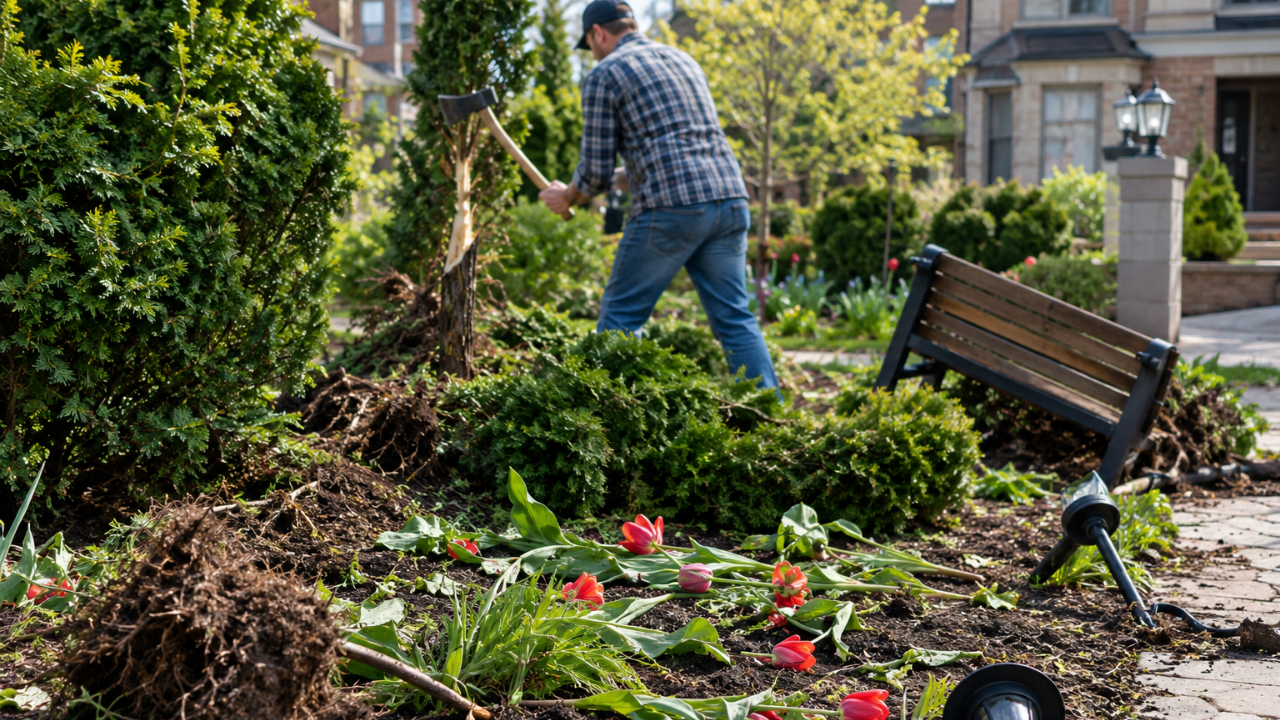
Chopping down shrubs, trampling tulips, and ripping out landscaping lights in a shared garden isn't "routine maintenance." Even if you swear you were just tidying up, an Indiana appeals court just reminded homeowners that calling destruction upkeep won't stop an HOA injunction.
In a dispute reported in October 2026 involving a homeowner named Booth and a homeowners association, the Indiana Court of Appeals left a preliminary injunction standing after the homeowner altered shared garden landscaping installed around 2023. That landscaping included arborvitae shrubs, tulips, other plants, lighting, and a bench. When the association took the matter to court and argued the homeowner acted without permission, the appellate judges kept the court order intact while the broader legal fight plays out. For a closer look into this area, we recommend: this related article.
Honestly, this kind of clash happens way more often than people admit. One neighbor sees overgrown branches or weird lighting choices and grabs shears or a shovel. The HOA board sees unauthorized alterations to common property. Suddenly a backyard annoyance turns into a courtroom headache.
Why Calling Garden Damage Maintenance Backfires in Court
Here's the problem with the "I was just maintaining it" defense. Maintenance implies caring for something within your authority and preserving its intended condition. Ripping out lights or cutting down shrubs without approval crosses straight into altering or damaging property you don't exclusively control. To get more background on this issue, in-depth coverage is available at Reuters.
In the Indiana dispute, the homeowner framed his actions as routine maintenance. Courts look past labels and focus on control, authority, and consent. Once the association presented evidence that it controlled the shared landscaping and hadn't given permission, the appeals panel saw enough support for a potential vandalism claim under state law to keep the injunction alive.
You can argue intent all day long. If you don't own the common area outright and lack board approval, your opinion on what looks neat doesn't carry much legal weight.
Common vs. Exclusive Property Lines
Plenty of homeowners get tripped up by invisible boundaries. Just because a garden sits right next to your lot or you walk past it every morning doesn't mean you get to manage it.
Shared spaces and common elements usually belong to the association or are governed by recorded covenants and restrictions. Even when a homeowner claims a contractual interest predated recorded restrictions, courts examine whether the property was acquired subject to those rules and who actually controls the common areas. That distinction is everything.
How an HOA Injunction Works When Shared Spaces Get Damaged
A lot of folks hear "injunction" and picture a final verdict where someone loses their house or pays a giant judgment on the spot. Not quite.
A preliminary injunction is an early court order meant to freeze behavior while the main case moves forward. In this Indiana ruling, the appellate court emphasized that an injunction makes sense when stopping ongoing damage is more practical than forcing the association to sue for money again and again after each incident. Judges also weighed signs that the homeowner planned to keep working in those shared areas.
Think about the math from a judge's perspective. If someone keeps pulling up plants or damaging fixtures, waiting around for a final damages tally years later doesn't protect the space today.
Bond Amounts and Memorandum Decisions
Two technical details from the ruling deserve a closer look because they shape how these cases play out in practice:
- Low bond amounts: The appeals panel found no abuse of discretion in setting the bond at $100. Homeowners sometimes assume posting a tiny bond invalidates an injunction, but trial judges have broad leeway here.
- Non-binding memorandum status: Under Indiana appellate practice, the ruling was issued as a memorandum decision rather than binding precedent. It doesn't rewrite statewide law for every future case, yet it still shows how Indiana courts view evidence on injunctions and evidentiary rulings.
Also worth noting: upholding an injunction doesn't settle final liability or total damages. Those issues stay open for the underlying dispute.
What Homeowners and HOAs Both Get Wrong
I've watched neighbor disputes spiral over things that started with good intentions or sheer frustration. Both sides make avoidable mistakes.
Homeowners often assume self-help is faster than paperwork. Maybe the tulips look messy or a light shines toward a window. Taking matters into your own hands feels decisive in the moment, right up until you're served with court papers.
HOAs aren't blameless either. Boards sometimes let rules sit unenforced for years, then suddenly crack down hard when tempers flare. Clear records showing who installed what, when it was installed, and who controls the parcel make a massive difference when a judge reviews a request for emergency relief.
A Quick Reality Check on "Routine Upkeep"
If you're wondering where the line sits between pitching in and overstepping, ask yourself three blunt questions before touching anything outside your deeded lot:
- Does my deed or the HOA's governing documents give me authority over this exact spot?
- Did I get written permission from the association before pruning, digging, or removing fixtures?
- Would I be okay if another neighbor came onto my yard and did the exact same thing without asking?
If the answer to any of those is no, put the tools down.
Practical Next Steps Before You Touch Shared Landscaping
Whether you're a homeowner frustrated by an eyesore or an HOA member trying to keep peace in the neighborhood, taking smart steps early saves money and stress.
- Read your governing documents and plat maps: Check declarations, covenants, rules, and boundaries before altering plants, lighting, or hardscape.
- Put requests and concerns in writing: Ask the board in writing to address overgrown shrubs, broken lights, or drainage issues rather than taking unilateral action.
- Document everything calmly: If you're on an HOA board dealing with unauthorized changes, keep dated photos, maintenance logs, and ownership/control records organized for your attorney.
- Talk to a local real estate or HOA lawyer early: Once an injunction is filed—or you're thinking about seeking one—guessing at court rules or evidentiary standards gets expensive fast.
Self-help might feel like quick maintenance today, but in court it can look like a violation you can't walk back.