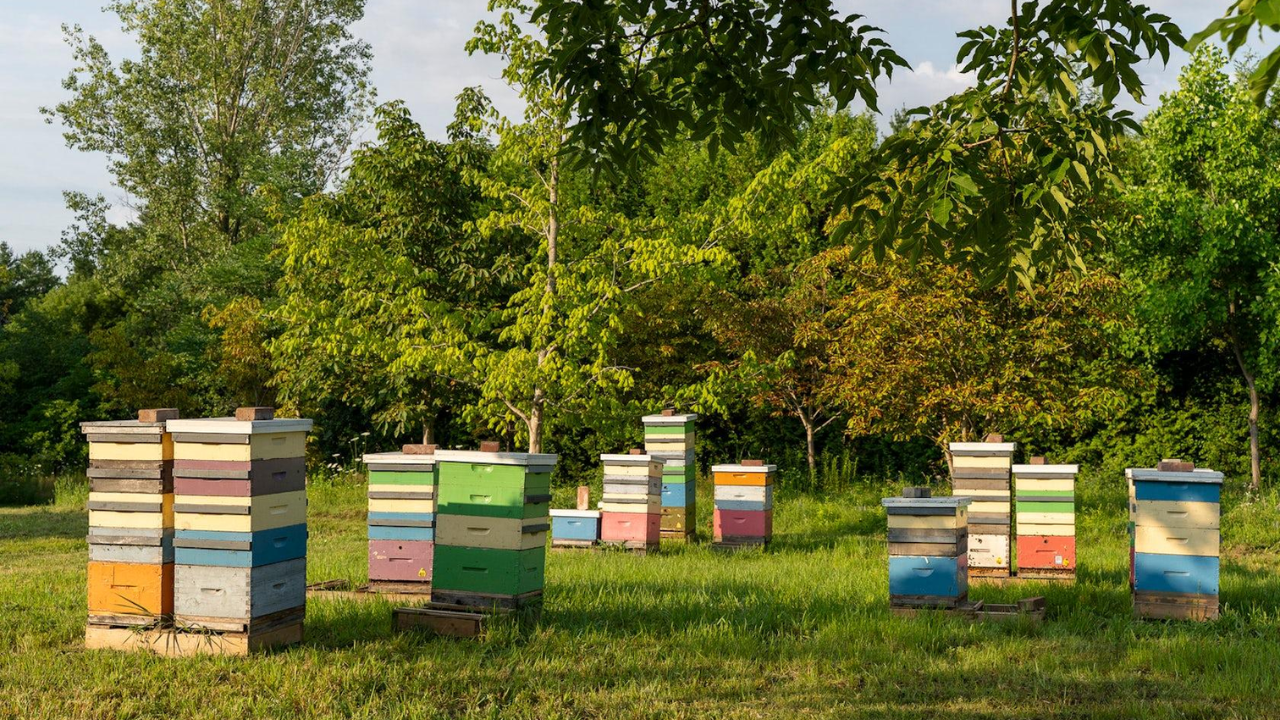
A tiny Canadian conservation club with just four members preparing to transfer nearly 100 acres of woodland to a university for honeybee research exposes a deeper truth about rural land stewardship and pollinator science. Most press releases treat a handover like that as pure pastoral charity. It rarely is. When an aging group with four members holds roughly 100 acres in Canada, survival math already looms over the boundary line. Handing the parcel to a research university solves succession, keeps the trees standing, and gives entomologists an outdoor laboratory without forcing the university to buy real estate out of a strained endowment.
I have covered land-use disputes, agricultural shifts, and environmental nonprofits for over twenty years. You learn quickly that good intentions and clean mechanics can exist side by side. A four-member club does not have the manpower to patrol boundaries, clear windfalls, fight invasive buckthorn, or manage municipal tax friction for another thirty years. Universities, by contrast, have graduate students, grant cycles, and institutional permanence—alongside bureaucratic blind spots that turn wild acres into complicated spreadsheets.
Why Small Conservation Clubs Hand Over Land
Small rural clubs built the backbone of local land protection in the last century. People pooled modest dues, bought cheap or tax-delinquent acreage, and walked the trails every weekend. Time does not care about bylaws. Membership shrinks through attrition, relocation, or age, until four people are carrying administrative weight meant for forty.
Transferring roughly 100 acres to a university looks tidy on paper. The club exits cleanly. The school gains field access without paying market land prices. Yet every seasoned land manager knows that land transfer mechanics carry friction that a feel-good headline glosses over. Legal title rules, municipal zoning, liability coverage, and restrictive covenants decide whether the parcel stays wild or turns into a maintenance headache.
- Stewardship capacity: Four volunteers can mend a fence or clear a trail; they cannot absorb decades of ecological management alone.
- Institutional continuity: A university outlives individual club members, though its priorities can shift with leadership and grant funding.
- Property obligations: Taxes, insurance, public access rules, and neighbor disputes follow the deed no matter who signs it.
- Research utility: A near-100-acre forest offers edge habitats, tree canopy, and forage diversity that a small campus plot cannot replicate.
Consider a hypothetical example to see how those pieces collide. Imagine a four-person club holding 96 acres of mixed hardwood and meadow beside active farmland, where members are in their late sixties and seventies. One member wants strict non-intervention; another wants selective brush clearing; a university pollinator team wants hive placement, floral surveys, and year-round vehicle access along an old logging track. Without crystal-clear covenants, ecological management goals pull in opposite directions before the ink even dries.
What Honeybee Research Actually Needs From a Forest
Public coverage often treats honeybee research as a simple effort to "save the bees" by planting wildflowers and setting out boxes. Real pollinator science is messier and far more exacting. Researchers track colony health, forage availability, pesticide drift, pathogen load, and winter survival across shifting weather patterns and surrounding land use.
A nearly 100-acre forest gives scientists something rare: a semi-buffered buffer zone. Forest canopies and understory plants shape microclimates, wind exposure, and bloom timing across spring, summer, and late season. When colonies sit right next to monoculture crops, bees often face short, intense bursts of bloom followed by nutritional drought and chemical exposure. Woodland edges and clearings can offer steadier pollen and nectar, provided the surrounding landscape cooperates.
Still, honeybees are not native to North America. That distinction matters more in serious ecology circles than in casual conversation. Western honeybees (Apis mellifera) were brought over centuries ago and are heavily managed for agriculture and honey production. Putting dense numbers of honeybee colonies into natural or semi-natural habitats can create competition with native bees for shared floral resources under certain conditions.
Good research does not ignore that tension. It measures it. Field stations use controlled plots, marked hives, and baseline surveys to see how honeybees interact with local flora, how mites and viruses move through apiaries, and which forage plants sustain colonies heading into harsh Canadian winters. A university that treats a donated forest as a living experiment—rather than a trophy—will look closely at both colony performance and broader pollinator ecology.
The Hidden Friction Inside Forest Donations
Real estate gifts to universities sound effortless until you read the fine print. Even when land is donated rather than sold, "free" land rarely stays free. Someone has to draft surveys, verify boundaries, check for environmental liabilities, and set up an endowment or operating fund for upkeep.
Universities operate on budgets that reward funded projects, not open-ended maintenance. If a university endowment lacks dedicated stewardship money, basic tasks like hazard-tree removal, invasive species control, or road repair can stall between grants. A four-member club giving up its only asset may assume the university will treat the woods with the same devotion the club did. Sometimes that happens. Sometimes the parcel sits quiet while faculty chase other priorities.
| Factor | Four-Member Conservation Club | Research University |
|---|---|---|
| Day-to-Day Presence | High personal attachment, shrinking labor pool | Periodic field crews, seasonal student labor |
| Funding Model | Dues, small donations, personal out-of-pocket costs | Grants, institutional budgets, restricted gifts |
| Long-Term Horizon | Limited by aging or dwindling membership | Multi-decade institutional lifespan |
| Primary Mandate | Local protection and community tradition | Teaching, publication, and funded inquiry |
There is also a cultural gap between local neighbors and academic institutions. Rural residents often watch outside researchers arrive with trucks, traps, and clipboards and wonder who speaks for the land when the study ends. If the club negotiates strong conservation covenants and clear rules on public trails, hunting, or timber work before signing, the transfer protects both science and the neighborhood. If they rush to close the deal out of exhaustion, regrets tend to surface later.
Why Scale Matters Less Than Intent
Nearly 100 acres will not solve national agricultural pressures on its own. It is not a vast wilderness reserve. In the grand scheme of Canadian forestry and commercial apiculture, a parcel that size is modest.
Scale is not the whole story. A well-documented, accessible 100-acre site can anchor years of longitudinal observation—tracking varroa mites, forage diversity, microclimate shifts, and colony overwintering without constant turnover of test locations. Consistency is gold in field science. When researchers can return to the same forest block season after season, patterns emerge that short-term trials miss.
The real test comes after the ribbon-cutting or handshake. Will the university publish clear findings? Will the forest stay ecologically intact? Will the four outgoing members know their years of quiet care turned into durable knowledge rather than forgotten paperwork?
Watch the deed restrictions, check who pays for long-term land stewardship, and ask whether the research serves real ecological questions rather than a convenient headline.