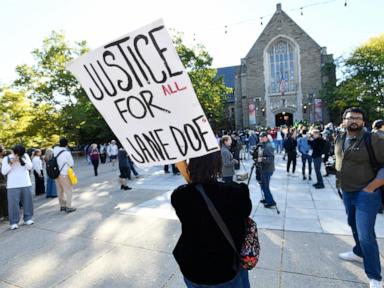
The security perimeter around a modern university campus is an illusion. Behind the ivy-covered brick walls and the pristine courtyards, institutions of higher education function as dense, pressurized urban centers where administrative bureaucracy often collides violently with real-world dangers. When Jane Doe stepped forward through her legal representation to expose a terrifying reality of targeted threats at Cornell University, she did not just highlight a personal safety crisis. She exposed a systemic failure of institutional protection that stretches far beyond Ithaca, New York.
Universities spend millions cultivating images of sanctuary and intellectual freedom. Yet when students face credible, specific threats to their physical safety, the machinery of campus administration frequently stalls. Legal representation for Doe revealed a pattern of institutional inertia, where liability management supersedes immediate student protection. This is the structural flaw at the heart of modern collegiate crisis response. Officials are trained to protect the brand first and the individual second.
Let us look closely at the mechanics of this failure. When a student reports severe harassment or targeted threats, standard operating procedure inside a university title IX or student conduct office usually involves a maze of internal committees, risk assessments, and legal reviews. Days bleed into weeks. In a high-stakes environment where physical safety is compromised, administrative deliberation is a dangerous luxury.
Doe’s legal team laid bare a stark disconnect. While threats escalated, the response from Cornell leadership remained glacial, wrapped in layers of cautious legal phrasing rather than urgent security intervention. The attorney's public statements were not merely a plea for help; they were an indictment of a risk-averse system that leaves victims isolated while administrators consult their general counsel.
Higher education institutions have grown into corporate entities. With multibillion-dollar endowments and massive public relations apparatuses, universities operate more like Fortune 500 companies than traditional schools. This corporate pivot changes everything about how crises are managed. Every decision is filtered through the lens of potential litigation, reputational damage, and donor relations.
When a high-profile controversy or safety threat arises, the default corporate reflex is damage control. Transparency is sacrificed for narrative management. Communication is tightly controlled by public relations teams whose primary directive is to mitigate institutional liability. In practice, this means victims reporting abuse or threats often find themselves treated as PR problems to be managed rather than human beings in crisis.
The situation at Cornell serves as a case study in institutional paralysis. When the attorney went public, it broke the administrative seal of silence. Universities hate public exposure because it punctures the carefully curated illusion of a safe, orderly campus community. But silence protects the institution at the direct expense of the student.
Public pressure forces a reaction where internal pleas fail. That is an indictment of the system itself. If an individual must retain high-powered legal counsel and air grievances publicly just to compel a university to take basic safety precautions, the system is fundamentally broken.
The Anatomy of Institutional Inaction
Understanding why universities stumble in these moments requires examining their bureaucratic architecture. Campuses are decentralized empires. Campus police, student services, academic departments, and legal teams often operate in isolated silos.
When a threat crosses multiple jurisdictions—moving from digital harassment on social media apps to physical stalking on campus grounds—responsibility gets diffused. The campus police might say it falls under student conduct; student conduct might defer to the Title IX office; the legal department steps in to restrict what anyone can say. Nobody takes ownership of the total picture.
This diffusion of responsibility creates massive blind spots. A student can fall completely between the cracks of these departmental silos, experiencing escalating danger while every department assumes another office is handling the situation.
Moreover, administrators are rarely crisis management experts when it comes to physical security and criminal threats. Their background is in education, student affairs, or institutional advancement. When confronted with genuine danger, they rely on rigid bureaucratic playbooks designed for academic disputes, not predatory behavior or targeted intimidation.
The Cost of Delayed Intervention
Safety is time-sensitive. A threat left unaddressed for forty-eight hours can escalate from intimidation to physical harm. When universities treat security reports like routine administrative paperwork, they gamble with human lives.
Consider the psychological toll on the student. Dealing with the trauma of targeted harassment is devastating on its own. Adding a secondary battle against a stonewalling university administration creates an environment of profound helplessness. The victim is forced to fight on two fronts: against the original threat and against the institution tasked with their protection.
This dynamic creates a chilling effect across the entire campus. Other students watching how the administration treats an individual in crisis learn a fast, brutal lesson. They see that reporting harassment might lead to institutional gaslighting, bureaucratic delays, or retaliation rather than robust support. Consequently, victims stay silent. They suffer in the shadows, altering their daily routines, avoiding certain buildings, and living in constant anxiety because they know the system will not protect them.
Rebuilding Accountability
Fixing this broken model requires a fundamental shift in how universities view their obligations. The primary duty of any educational institution must be the immediate physical safety and psychological well-being of its students, superseding all concerns about liability and public image.
First, universities must dismantle administrative silos. Crisis response teams need cross-functional authority, combining campus security, legal counsel, mental health professionals, and student affairs into a single, rapid-response unit that can act decisively without waiting for committee approval.
Second, transparency must become the default setting. When threats occur, hiding behind vague statements about privacy and ongoing investigations only deepens mistrust. Communities have a right to know when their safety is compromised, and victims deserve open, honest communication from the leadership they rely on.
Finally, external oversight is essential. When internal mechanisms repeatedly fail to protect vulnerable students, independent audits and regulatory penalties must come into play. Institutions that fail in their basic duty of care cannot be allowed to mark their own homework.
The spotlight currently fixed on Cornell will eventually shift elsewhere as the news cycle moves on. Another campus will face its own crisis, another administration will issue defensive statements, and another victim will struggle against the bureaucratic wall. But the underlying rot will remain until higher education confronts the reality that buildings and endowments mean nothing if the people inside them are left unprotected.