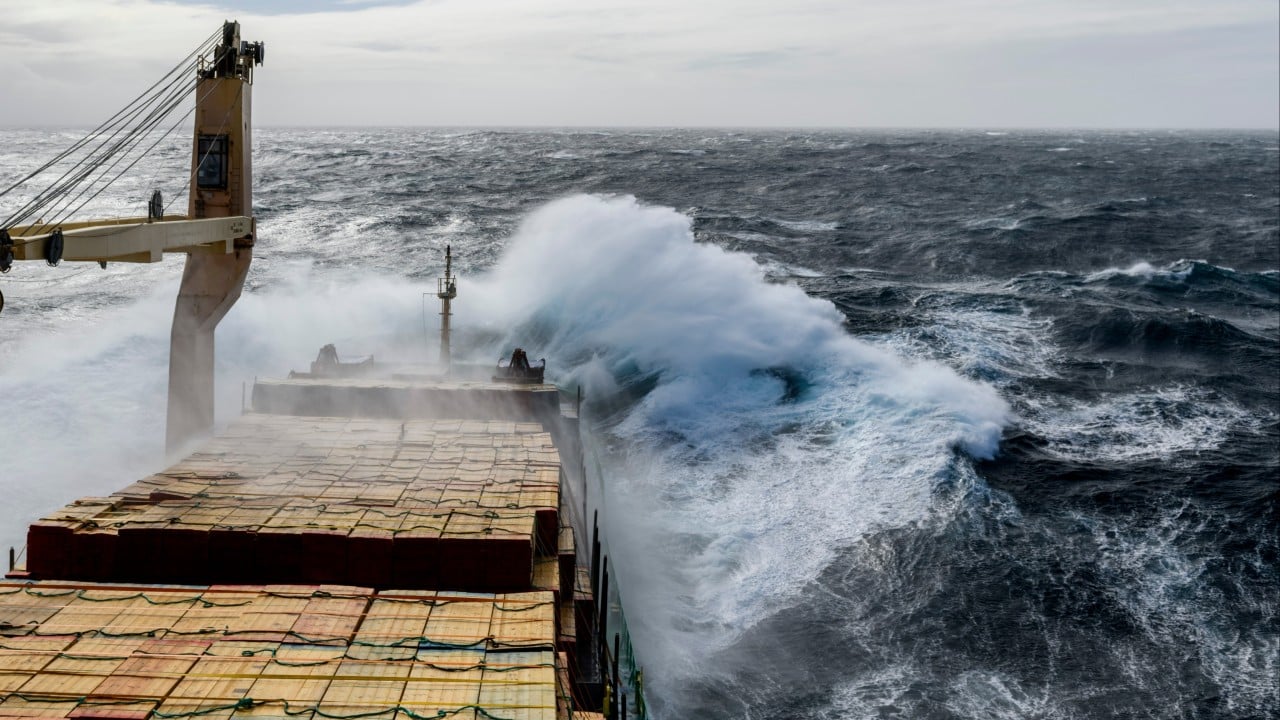
The headlines are panting with predictable anxiety. China just released the world’s largest open-source dataset of maritime imagery—millions of labeled ship instances, heatmaps, and sensor coordinates. The "experts" are lining up to tell you this is the starting gun for an era of autonomous drone swarms that will make the South China Sea a no-go zone for anything flying a Western flag.
They are wrong.
In fact, they are falling for the oldest trick in the data science playbook: confusing volume with velocity.
By dumping this massive library of ship data into the public square, Beijing isn't just showing off. They are offloading the "garbage-in, garbage-out" problem onto the global research community. If you think a million static JPEGs of cargo hulls translates to tactical dominance in a contested electronic warfare environment, you haven't spent five minutes in a modern signal processing lab.
This isn't a gift to the world's developers. It's a smoke screen designed to stall genuine innovation by tethering it to legacy architectures.
The Myth of the "Infinite Dataset"
The logic of the competitor piece is simple: More data equals better AI. It’s a comforting, linear lie.
In the world of computer vision, there is a point of diminishing returns that hits much harder than most venture capitalists want to admit. This concept is often modeled by the power law of scaling. While performance increases as you add data, the cost—both in compute and in the literal physics of deployment—skyrockets.
If we look at the relationship between error rate $E$ and the number of training samples $n$, it typically follows:
$$E \approx \alpha n^{-\beta}$$
Where $\beta$ is the scaling exponent. The problem? Once you hit the "knee" of the curve, you need ten times the data to get a 1% improvement in accuracy. China’s new dataset occupies that flat, expensive tail of the curve. It provides massive amounts of redundancy—the same ships, at the same angles, in the same lighting—that offers near-zero marginal utility for a high-stakes combat drone.
I have watched defense contractors burn through $50 million budgets trying to "solve" object recognition by throwing more data at it, only to have the system fail the moment a sea spray hits the lens or a sailor hangs a laundry line off the stern. Real-world chaos doesn't care about your clean, labeled training set.
Why Open Source is a Tactical Diversion
Why would a nation known for its "Great Firewall" and obsessive data sovereignty suddenly become the Saint Francis of maritime metadata?
- Standardization as Control: By providing the primary dataset used by researchers globally, China effectively dictates the "feature set" of future maritime AI. If every PhD candidate in Stockholm, Stanford, and Singapore is training their models on the specific spectral biases of Chinese-produced sensors, those models will inherently struggle when faced with hardware they haven't seen.
- The "Honey Pot" of Weaknesses: When you release a dataset, you aren't just giving away data; you are inviting the world to show you how they process it. By monitoring which architectures (YOLOv10, Transformers, etc.) perform best on this specific data, Beijing gains a free, global R&D department that identifies exactly what their own sensors are—and aren't—capable of seeing.
- The Static Target Fallacy: A drone trained on a million images of ships is excellent at recognizing ships that want to be seen. In a real-world conflict, the first thing a target does is change its visual signature. Camouflage, dazzle painting, and simple tarping can render a "high-accuracy" model useless.
Drones Don't Need More Pictures; They Need Better Physics
The industry is obsessed with "Computer Vision," but they should be obsessed with "Physical Intelligence."
The competitor's argument assumes that a drone’s primary hurdle is knowing what a ship looks like. It isn't. The hurdle is making a life-or-death decision based on a 4-pixel blob at the edge of a horizon during a Level 6 sea state.
A drone doesn't need to know it's looking at a "Type 055 Destroyer" based on a library of 500,000 photos. It needs to calculate a vector based on the ship's wake, its displacement in the water, and its electromagnetic emission profile. None of that is in this dataset.
By focusing on visual labels, we are training "fair-weather" AI. We are building systems that are brittle. I’ve seen autonomous platforms that could identify a civilian tanker with 99.9% accuracy in a simulation, but would crash or lose tracking the moment the sun reflected off the water at a specific $45^\circ$ angle not represented in the training set.
The Cost of Compliance
There is a hidden danger in the democratization of this data. It creates a "path dependency."
When a dataset becomes the industry standard (like ImageNet did for general AI), it stops being a tool and starts being a ceiling. Researchers stop trying to invent new ways to see and start trying to beat the benchmark of the existing data.
If we continue to use China’s maritime data as the gold standard, we are effectively outsourcing the "vision" of our autonomous systems to a competitor. We are training our dogs to catch their Frisbees.
The Counter-Intuitive Path Forward
If you want to win the maritime AI race, stop downloading massive datasets. Start doing the following instead:
- Synthetic Data Generation: Stop relying on real-world photos that are already obsolete. Use high-fidelity physics engines to simulate environments that don't exist yet. Simulate the "impossible" weather, the "impossible" jamming, and the "impossible" camouflage.
- Edge-Case Prioritization: One photo of a ship obscured by smoke and fire is worth more than ten thousand photos of a ship in a harbor.
- Multi-Modal Fusion: Ship recognition should never be a "visual-first" task. If the AI can't correlate the visual pixels with acoustic signatures and RF pings, it's just a fancy camera, not a weapon system.
The "largest ship dataset" isn't a milestone in AI history. It's a graveyard of yesterday's sensor data. While the rest of the world is busy labeling China’s old photos, the real innovators are building systems that don't need labels at all.
The real threat isn't that China has more data. It's that they've convinced us that data is the only thing that matters.
Stop playing their game. Stop training your models on their terms. The ocean is too big for a library of pictures to ever map it, and the next war won't be won by the side with the biggest hard drive. It will be won by the side that can think with the least amount of information possible.
Build smaller. Build faster. Build for the noise, not the signal.