Cold.
That is the first thing you notice when you stand on Krasiński Square in Warsaw after sunset, waiting for a court ruling that could decide whether your neighbor’s marriage is recognized by the state, whether a local journalist goes to jail, or whether a judge who ruled against the government still has a job tomorrow morning. The wind comes off the Vistula River with a sharp, damp bite that slips straight through wool coats and settles into the arches of your boots.
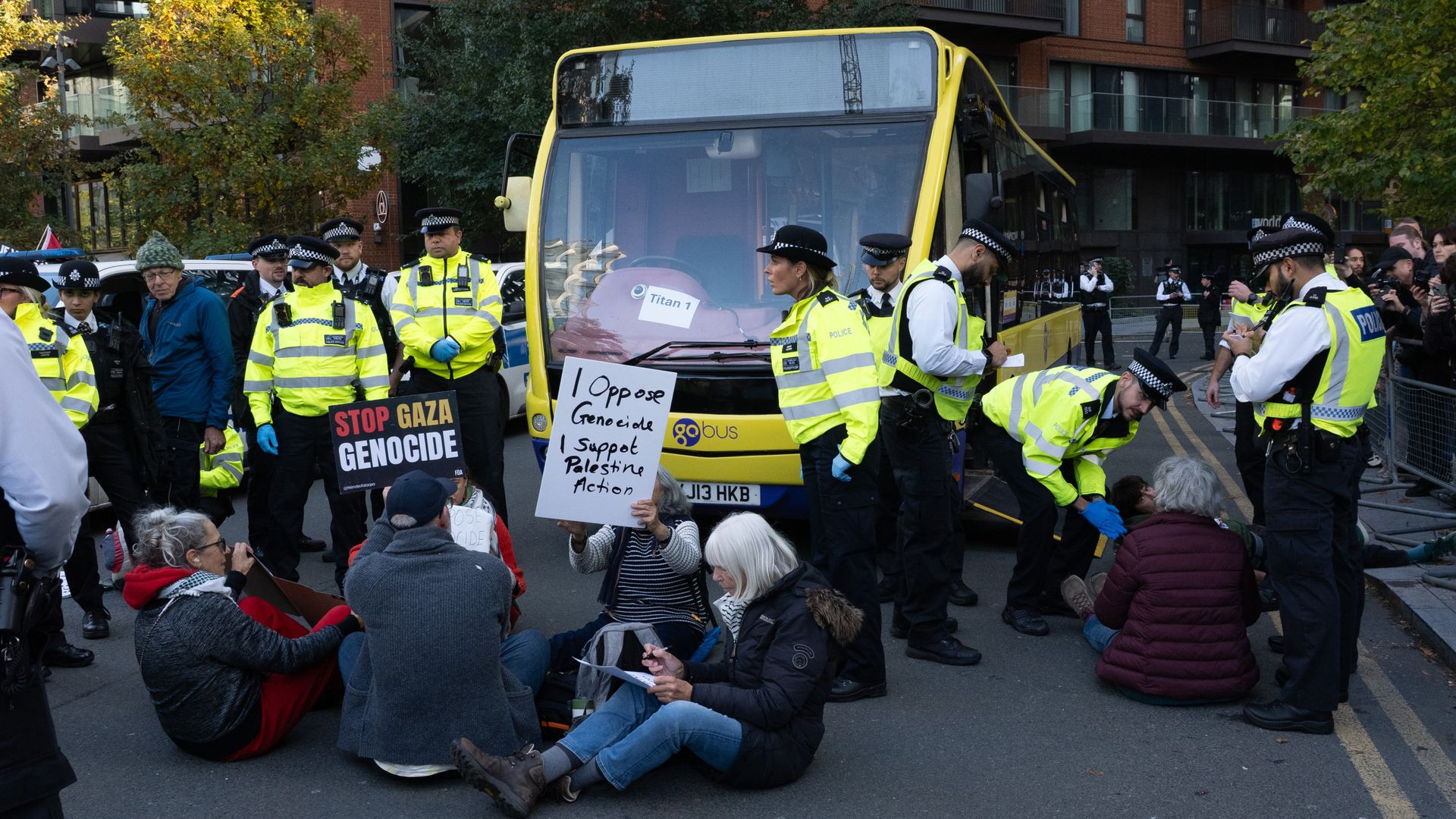
Standard news wire reports will tell you that protesters gathered outside Poland’s Supreme Court. They will count the heads, quote a spokesperson from a legal foundation, mention the European Court of Human Rights in passing, and move on to the next headline. They make it sound like a routine traffic disruption. A civic chore.
They miss the entire point.
People do not stand on freezing granite for hours holding flickering candles and laminated copies of a constitution written in 1997 because they enjoy political theater. They stand there because they have realized, often too late, that the referee in the middle of the field has been quietly replaced by one of the team captains.
The Invisible Architecture of an Ordinary Tuesday
To understand why thousands of teachers, retired engineers, university students, and small business owners keep returning to the steps of Poland's top court, you have to strip away the legal jargon. Forget words like jurisprudence, disciplinary chamber, and constitutional tribunal for a moment.
Consider a hypothetical scenario. Imagine a bakery owner in Kraków—let’s call him Marek. Marek does not care about parliamentary committees. He wakes up at three in the morning to knead dough, pays his taxes, and argues with his municipal tax office over a disputed property assessment. In a functioning democracy, Marek goes to a local administrative court. If he loses, he appeals, eventually reaching the Supreme Administrative Court or the Supreme Court. He sleeps at night because he believes the person wearing the purple-trimmed robe behind the bench owes nothing to the politician who raised his taxes.
Now, change one variable.
Imagine that the career, salary, and disciplinary fate of that judge are controlled by a council hand-picked by the very politicians who wrote the tax law Marek is fighting. Suddenly, Marek is not in a courtroom. He is in a waiting room where the outcome was drafted before he ever hired a lawyer.
That is the invisible stake at the heart of Poland’s decade-long judicial crisis. When protesters gather outside the Supreme Court building—a striking modernist structure of glass and oxidized copper columns inscribed with eighty-six Latin maxims about justice—they are not defending judges. Most of them have never met a Supreme Court justice. They are defending Marek. They are defending the fragile, unwritten agreement that when the powerful overreach, there is a locked door they cannot kick down.
How a Constitutional Crisis Actually Feels on the Ground
If you have ever walked through a crowd outside the Supreme Court on a Tuesday night in Warsaw, you know it does not feel like a riot. It feels like a vigil.
I remember standing near the monument to the Warsaw Uprising, watching an elderly woman carefully shield a small glass candle from the wind with her gloved hand. Beside her stood a twenty-two-year-old law student holding a cardboard sign with a single word written in black marker: Konstytucja. The letters were spaced out in red and white, mimicking the famous graphic design created by Luka Rayski that became the visual heartbeat of the Polish street protests.
Around them, the soundscape was strangely intimate. There were no thunderous PA systems drowning out conversation. Instead, there was the low murmur of strangers explaining procedural law to each other. A retired history teacher was breaking down how the National Council of the Judiciary—known in Poland as the KRS—had been overhauled in 2017.
"Think of it like a medical board," she told a young couple standing nearby, stamping her feet to keep the blood moving. "If doctors stop choosing who is qualified to practice medicine, and parliament starts handing out surgical licenses to loyal party members, would you get on the operating table?"
The couple nodded. No white paper from Brussels could have explained the crisis better.
According to legal scholars, the European Commission, and rulings from both the European Court of Justice and the European Court of Human Rights, the restructuring of the KRS politicized judicial appointments in Poland. Over two thousand judges appointed or promoted through that reformed body—often referred to by critics and international courts as "neo-judges"—now sit on benches across the country, including inside the Supreme Court itself.
For the people standing outside, those statistics are not abstract policy debates. Every ruling issued by a contested panel carries a ticking legal time bomb. A divorce decree, a child custody order, a multi-million-zloty commercial contract, or a criminal conviction can later be challenged as invalid because the court was not "established by law" under European human rights standards.
The Battle Inside the Glass Walls
To grasp why the tension refuses to die down—even after changes in government and promises of democratic restoration—you have to look at the sheer gridlock left behind.
Between 2015 and 2023, the Law and Justice (PiS) party argued that Poland’s judiciary was an unaccountable, self-perpetuating caste left over from the post-communist transition of 1989. To supporters of those reforms, the protests outside the Supreme Court looked like elites trying to protect their own privileges against the will of elected voters. That perspective cannot be dismissed lightly; millions of Poles genuinely felt alienated by a court system notorious for glacial delays and opaque internal promotions.
Yet the cure proved far more volatile than the disease.
By lowering the mandatory retirement age of Supreme Court justices in 2018—a move that attempted to force out nearly forty percent of the bench, including then-First President Małgorzata Gersdorf—the government triggered mass demonstrations that spilled across Krasiński Square and forced the European Court of Justice to intervene. Gersdorf famously walked into the building past cheering crowds on the morning her forced retirement was supposed to take effect, insisting that her six-year term was guaranteed by the constitution, not a parliamentary statute.
She stayed. The standoff hardened.
Even after a new pro-European coalition took power in late 2023 promising to restore the rule of law, the institutional paralysis did not vanish overnight. Laws passed by parliament to untangle the status of newly appointed judges faced presidential vetoes, constitutional challenges from the old guard still occupying the Constitutional Tribunal, and fierce debates among legal experts over how to fix a broken system without violating the very constitutional rules they swore to uphold.
That is the part that leaves ordinary citizens exhausted and deeply uncertain. When two rival chambers inside the same Supreme Court issue contradictory rulings on whether a parliamentary election is valid or whether a politician retains legal immunity, where does an ordinary citizen turn?
You stand outside. You hold a sign. You refuse to let the confusion become normal.
Why Strangers Keep Showing Up in the Dark
There is a specific psychological weight to prolonged civic resistance. In the first months of any political crisis, outrage provides its own fuel. Adrenaline keeps people warm. Chants come easily.
By year eight, nine, or ten, adrenaline is long gone. What replaces it is something quieter, heavier, and far more stubborn.
Psychologists and historians who study democratic backsliding often point out that authoritarian drift rarely arrives with tanks rolling down main street. It arrives through administrative fatigue. It relies on the hope that citizens will get bored, get cold, get overwhelmed by procedural complexity, and go home to watch television.
When you look closely at the faces gathered near the bronze figures of the Warsaw Uprising Monument—soldiers emerging from the rubble and storm drains of 1944—you realize the weight of historical memory pressing down on that specific square. Warsaw is a city that was flattened to eighty-five percent rubble and rebuilt brick by brick. In Poland, the idea that institutions are fragile is not a philosophical theory discussed in university seminars. It is family history.
A man in his fifties, a civil engineer from the Mokotów district who has attended dozens of rallies outside the court, put it simply during a late-evening gathering: "My grandfather rebuilt streets in this city with his bare hands because he believed his grandchildren would live in a normal European country where laws mean what they say. If I stay on my sofa because it’s raining, what do I tell my daughter?"
The Echo Beyond Poland’s Borders
If you are reading this from Chicago, London, Berlin, or Madrid, it is tempting to view a crowd outside Poland’s Supreme Court as a distant, regional quarrel. A local dispute in Central Europe.
That would be a mistake.
Poland became the stress test for modern constitutional democracy. Legal scholars across Washington and Brussels study Warsaw’s judicial crisis the way structural engineers study a bridge after an earthquake—looking for the exact weld points that bent under pressure. They look at how quickly an independent judiciary can be hollowed out using strictly legal mechanisms: amending appointment councils, creating special disciplinary chambers that threaten judges with suspension for asking questions to European courts, and flooding the highest court with loyalists until the old rules simply cease to function.
And they also study the antidote.
Because what happened on Krasiński Square proved that laws do not defend themselves. Parchment does not stop a decree. Ink does not block a door. Only people do.
When the crowd disperses late at night, stepping carefully over melted wax on the gray stone, the Supreme Court building stands silent behind its copper pillars. Above the entrance, carved into the facade in Latin, sits a warning that has outlasted empires, occupations, and governments: Iustitia est constans et perpetua voluntas ius suum cuique tribuendi.
Justice is the constant and perpetual will to render to every person their due.
Notice the word they chose two thousand years ago. Not a law. Not a building. A will.