Dirt does not care about your deadlines.
It waits. It settles between the treads of running shoes, cakes beneath the fingernails of a tired child, and drinks the rain without keeping score. In a culture obsessed with notifications, speed, and the relentless hum of asphalt, dirt is an act of quiet rebellion.
Most of us live our lives bounded by straight lines. We wake to the chime of an alarm, drive between painted highway lanes, sit in rectangular rooms, and stare at glowing glass rectangles until our eyes sting. We have traded the horizon for a square foot of blue light. We call this progress. But every once in a while, the body stages a mutiny. Your shoulders tighten. Your breathing shallowly catches in your chest. You catch yourself staring out an office window, watching a stray cloud drift past a power line, wondering what it feels like to stand somewhere that wasn't built by a subcontractor.
Consider what happens next: a park grows.
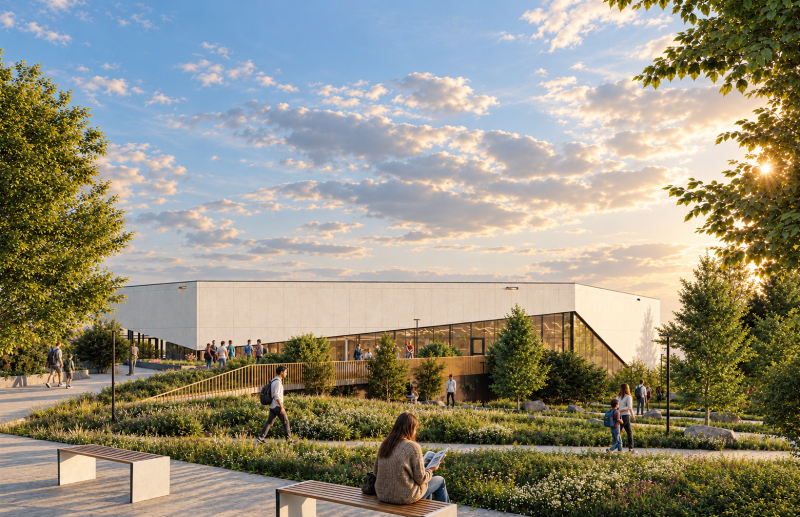
Not just a manicured patch of grass with a lonely swing set and a rusted sign, but a sprawling, breathing sanctuary. In Hilliard, Ohio, Homestead Metro Park is about to undergo a massive, lung-expanding transformation. The park, already a beloved local retreat, is adding 333 acres to its footprint, more than doubling its current size. New trails will cut through freshly claimed earth. New habitats will rise from fields that once knew only the hum of tractors or the silent pressure of crop rows.
To understand why this matters, you have to step away from the municipal zoning maps and walk the ground.
Imagine Maya. (She is a composite of the parents, the shift workers, the retirees, and the teenagers who wander these paths every weekend, though she could easily be you.) Maya lives in a subdivision where the houses sit close enough that you can hear your neighbor's television through the drywall. Her daily soundtrack is the drone of traffic on Interstate 270 and the beep of Amazon delivery vans backing up in the cul-de-sac. By Thursday afternoon, her nervous system feels like a stretched rubber band.
When Maya drives to Homestead Metro Park, she isn't just seeking recreation. She is seeking silence.
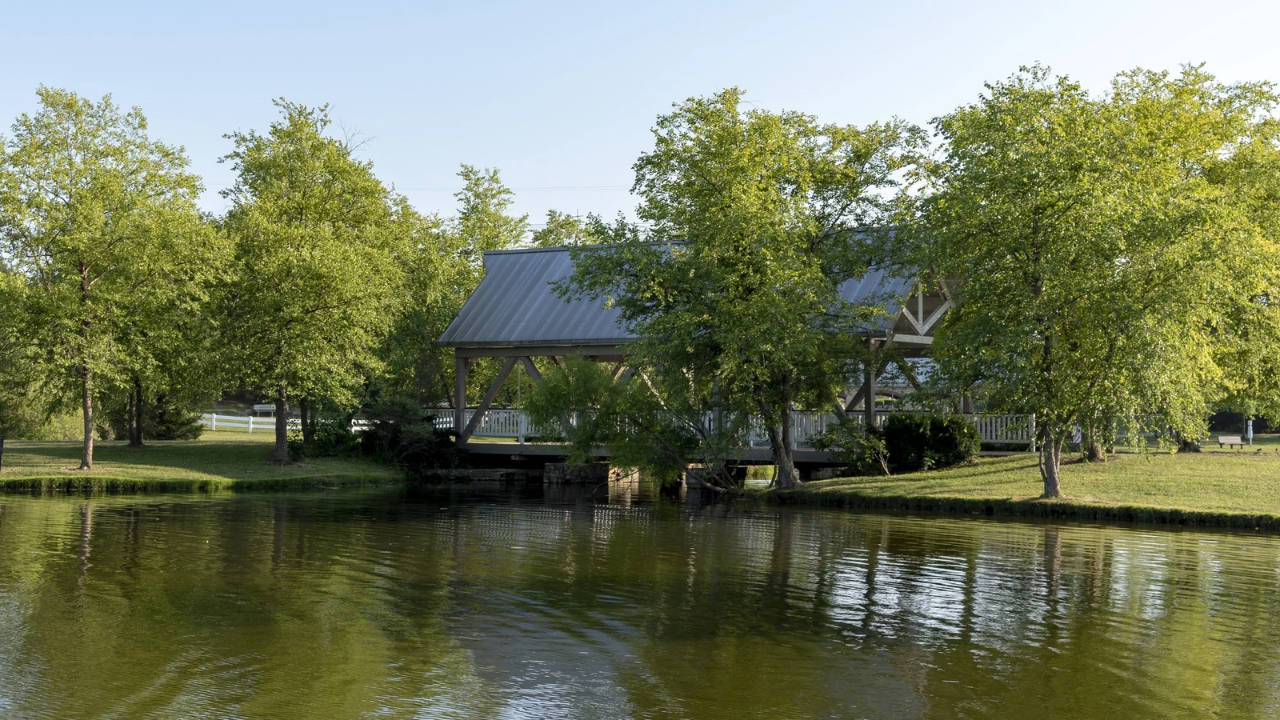
Right now, the park offers familiar comforts: the historic farmhouse, the working barn, the fishing pond where bluegills nibble at crumbs, and the paved loops where strollers and bicycles negotiate a polite dance. It is a good park. But on a crisp autumn Saturday, it is also a crowded park. The parking lot overflows. Cyclists call out warnings to pedestrians. You can rarely escape the distant rumble of rubber on highway pavement.
Now, overlay the future onto that landscape.
Three hundred and thirty-three new acres. To put that in perspective, that is roughly the equivalent of 250 football fields of uninterrupted green, marsh, woodlot, and meadow. That is space enough to lose the sound of the highway entirely. That is room for new trails that twist through thickets where red-tailed hawks hunt and great blue herons drop silently into newly restored wetlands.
The expansion is not merely an exercise in buying dirt and calling it conservation. It is an intentional stitching together of fragmented ecosystems. When developers carve up a county, they leave nature in postage-stamp isolation. Animals get trapped. Watersheds choke. People get crowded into smaller and smaller recreational pockets. By acquiring this new acreage, the park district is playing the long, patient game of healing. They are creating wildlife corridors—unbroken pathways where deer, foxes, amphibians, and migratory birds can move safely across the landscape.
Think of a watershed as a sponge. For decades, much of this newly acquired land absorbed rainwater, filtered it through root systems, and fed it quietly into local creeks. As suburban sprawl crept outward, more of that earth was paved over, turning rain into a destructive force of runoff and erosion. Expanding the park means restoring that sponge. It means giving the earth its voice back.
And it gives us our sanity back.
There is a specific kind of cognitive fatigue that comes from living entirely indoors, surrounded by artificial light and straight lines. Psychologists call it attention restoration theory. The premise is simple: your brain's executive function—the part that filters out distractions, makes decisions, and manages stress—gets exhausted by the urban environment. Nature doesn't demand focused attention. It engages what scientists call "soft fascination." The way light filters through a canopy of maples. The erratic, hypnotic flight of a dragonfly over a pond. The crunch of gravel underfoot.
These aren't luxuries. They are neurological resets.
When the new trails open at Homestead, they will offer something increasingly rare in the twenty-first century: the luxury of getting slightly, safely lost. Not lost in a dangerous way, but lost in the sense that you can walk for an hour without seeing a single billboard, a single stoplight, or a single corporate logo. You will walk past newly planted native grasses swaying in the breeze—switchgrass, big bluestem, coneflowers—drawing monarchs and bumblebees back to soil they haven't touched in generations.
Communities do not thrive on concrete alone. A city's wealth is often measured in gross domestic product, housing starts, and traffic flow. But its soul is measured in how easily a child can catch a frog, how quietly a grandfather can walk with his cane on a paved path without worrying about traffic, and how deeply a tired worker can inhale air that smells of damp earth and decaying leaves instead of exhaust fumes.
The expansion of Homestead Metro Park is a quiet victory against the relentless tide of pavement. It is a reminder that we are animals, not machines, and that we require dirt, water, and open sky to remain fully human.
The bulldozers will move in, but they will not be building houses or strip malls. They will be planting trees. They will be carving paths. They will be carving out a place where future Mayas can drive out on a Tuesday evening, lace up their worn-out sneakers, and remember what it feels like to breathe.
The sun dips below the tree line, casting long, bruised shadows across the field. Somewhere out in the newly protected acreage, a coyote stirs in the tall grass. A hawk settles onto a branch for the night. The earth holds its breath, waiting for tomorrow's footsteps.