The headlines are shouting about "restraint." They want you to believe that a last-minute reversal on a kinetic strike is a sign of a cooling fever. They are wrong. When a superpower pulls its finger off the trigger at the ten-minute mark, it isn't an olive branch. It is a psychological colonoscopy designed to map the enemy’s internal panic.
The conventional media narrative suggests that the U.S. and Iran are dancing on the edge of a localized military blunder. They frame it as a binary: either we drop the payloads or we talk. This is a fundamental misunderstanding of modern power projection. In the high-stakes theater of the Middle East, the "pause" is the most lethal weapon in the arsenal. It signals that the target's life is currently a matter of administrative whim, not tactical capability.
The Myth of the Rejection
Tehran’s public rejection of "talks" via third-party intermediaries—specifically Oman—is being treated by analysts as a diplomatic failure. This is amateur-hour observation. In the Iranian political ecosystem, the rejection is the only move available. To accept a seat at the table immediately after a near-miss strike would be a domestic death sentence for the clerical regime.
The "rejection" isn't a wall; it’s a price tag.
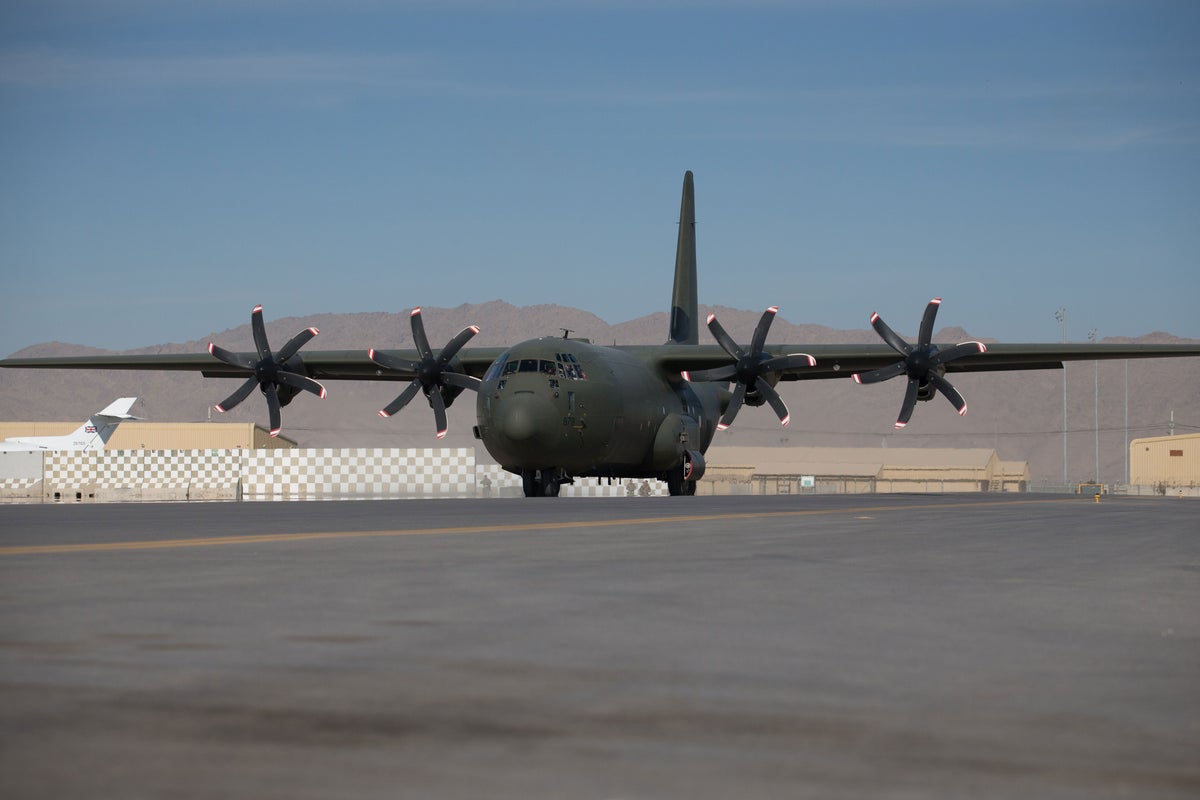
By refusing the overture, Tehran is trying to reclaim the agency they lost the moment those B-52s or Reaper drones were fueled up. The media focuses on the "no," while the real story is the silence in the hallways of the IRGC (Islamic Revolutionary Guard Corps). I have spent years watching these cycles of escalation. When the strike doesn't happen, the internal paranoia within the target state scales exponentially. They start looking for the mole. They wonder if the "pause" happened because the U.S. realized their intel was wrong, or because the U.S. realized their intel was so perfect they didn't even need to drop the bomb to get what they wanted.
Kinetic vs. Economic Total War
Everyone is obsessed with the Tomahawk missiles. They are looking at the wrong map.
The real war is being fought in the ledgers of the Treasury Department and the insurance premiums of oil tankers in the Strait of Hormuz. We treat "sanctions" as a secondary support mechanism for military action. In reality, the military action is just the PR department for the sanctions.
Consider the "Maximum Pressure" campaign. The goal isn't to make Iran's leaders change their minds; the goal is to make it impossible for them to fund their proxies. When a bombing run is paused, the global markets react. Oil prices fluctuate. Risk assessments are rewritten. For a country like Iran, which survives on the margins of the global gray market, this volatility is more damaging than a destroyed radar installation. You can rebuild a radar dish in a month. You cannot rebuild the confidence of a Chinese oil buyer who thinks his tanker might get caught in a crossfire tomorrow.
The People Also Ask Fallacy
If you look at the common questions floating around the digital ether, you’ll see the same misguided curiosity:
- "Will there be a war with Iran?" You’re asking the wrong question. We have been in a state of "unconventional war" with Iran since 1979. Cyberattacks, maritime sabotage, and proxy skirmishes in Yemen and Syria are the war. The absence of a formal declaration doesn't mean peace; it just means the battlefield has shifted to fiber-optic cables and shadow banking.
- "Does Iran have nuclear weapons?" The obsession with the "breakout time" ignores the fact that a nuclear-capable Iran is already a geopolitical reality in terms of its leverage. They don't need the warhead to sit on a missile; they just need the world to believe the assembly line is ready to move.
- "Why did the U.S. stop the strike?" The consensus says "humanitarian concerns" or "proportionality." The insider truth? It’s often about preserving intelligence assets. If you blow up a command center, you kill the people you’ve spent five years bugging. Sometimes, the threat of the strike is more useful for flushing out communications than the strike itself.
The Cost of Uncertainty
The "proportionality" argument—the idea that 150 lives weren't worth a downed drone—is a convenient fiction for the Sunday morning talk shows. In the brutal logic of statecraft, 150 lives are a rounding error. The real calculation is about the Opportunity Cost of Escalation.
If you strike now, you lose the ability to threaten a strike later. Escalation is a ladder, but most pundits treat it like a light switch. Once you hit the top rung, the only thing left is total war, and nobody—neither Washington nor Tehran—actually wants the bill for that.
The current "standoff" is actually a stable equilibrium. Iran harasses shipping to prove they can. The U.S. moves carriers to prove they can stop it. Both sides trade "near-misses" like high-frequency traders trade stocks. It’s a high-volatility, low-yield conflict that serves the hardliners on both sides. It justifies massive defense budgets in D.C. and keeps the "Great Satan" narrative alive for the regime in Tehran.
Why the Status Quo is a Trap
If you are a business leader or an investor trying to navigate this, ignore the "breaking news" alerts. The moment a strike is canceled is the moment the real pressure begins.
- Logistics are the new frontline: If your supply chain touches the Gulf, you aren't waiting for a war; you are already paying the "war tax" in insurance and security.
- Energy independence is a misnomer: Even if the U.S. produces more oil, the global price is still tethered to the stability of the Middle East. You can't drill your way out of a geopolitical shock.
- Cyber is the only theater that matters: For every drone shot down, expect a dozen "quiet" intrusions into critical infrastructure. This is where the retaliation actually happens.
The "rejected talks" are a smokescreen. The "paused bombs" are a psychological tactic. The real conflict is the one nobody is filming: the systematic, cold-blooded dismantling of an opponent's economic and digital sovereignty.
Stop waiting for the explosion. The war is already happening, and it’s being fought with pings, not payloads.
Go back to your spreadsheets and realize that the most dangerous moment isn't when the planes take off. It's when they turn back, and the enemy is left wondering why.
Fear is a more effective blockade than any fleet of ships. Instead of tracking flight paths, start tracking the movements of the Iranian rial and the insurance premiums on VLCCs (Very Large Crude Carriers). That is where the bodies are buried.
If you’re waiting for a "diplomatic breakthrough," you’re going to be waiting until the next century. This isn't a problem to be solved; it's a tension to be managed. The "pause" wasn't a mistake or a moment of weakness. It was a cold, calculated calibration of the tension.
Now, look at your own risk profile. If you’ve built your strategy on the hope of "stability," you’ve already lost. The instability is the point. The volatility is the product.
Get used to the silence. It’s the loudest part of the explosion.