The sight of armed federal agents patrolling the terminals of John F. Kennedy International and Chicago O’Hare today marks a significant escalation in the ongoing war over American border policy. President Donald Trump has officially deployed Immigration and Customs Enforcement (ICE) agents to 13 major U.S. airports, ostensibly to fill the gap left by a hemorrhaging Transportation Security Administration (TSA). While the administration frames this as a logistical necessity to keep travel moving during a Department of Homeland Security (DHS) funding impasse, the real story lies in a calculated reversal of optics regarding the use of tactical face masks.
For months, the image of masked ICE agents conducting high-stakes raids in cities like Minneapolis has been a focal point of national outrage. Now, Trump has ordered those same agents to show their faces in the highly public corridors of American travel. This is not merely a change in dress code; it is a tactical pivot designed to neutralize a specific Democratic talking point while reinforcing a "law and order" presence in the most visible public squares in the country. You might also find this connected story interesting: Strategic Asymmetry and the Kinetic Deconstruction of Iranian Integrated Air Defense.
The Logistics of a High-Stakes Swap
The deployment follows a month-long partial government shutdown that has left TSA workers without pay. Over 400 TSA personnel have resigned, and sick-outs have spiked to 10%, causing wait times to swell to over three hours in major hubs. Into this vacuum steps ICE, an agency whose primary mission has never included baggage screening or passenger pat-downs.
White House officials, led by "border czar" Tom Homan, have been careful to state that ICE agents will not be operating X-ray machines or performing technical screenings. Instead, they are being used for "perimeter security" and "crowd management"—tasks that essentially mean standing guard at exit lanes and patrolling terminals. As highlighted in latest coverage by NBC News, the results are significant.
What ICE Agents are Doing at the Gate
- Guarding secure exits to prevent unauthorized entry back into the sterile area.
- Visual presence patrols intended to deter criminal activity in high-traffic zones.
- Administrative support for the skeleton crews of TSA agents still on the job.
The move effectively treats the airport terminal like a border zone. By placing armed immigration agents in the line of sight of every vacationing family and business traveler, the administration is making a definitive statement about the reach of federal enforcement.
The Masking Paradox
The most striking element of the Monday deployment is the absence of the tactical balaclavas and face coverings that have become synonymous with ICE’s "Enforcement and Removal Operations" (ERO) over the last year. Historically, agents have worn masks to protect their identities during dangerous raids, citing concerns over "doxing" and retaliation from activists.
Democratic leadership has spent the early part of 2026 pushing for the "Visible Act," a bill that would force federal agents to reveal their faces and badge numbers. By preemptively ordering agents to unmask at airports, Trump is attempting to strip the "lawless" label from the agency.
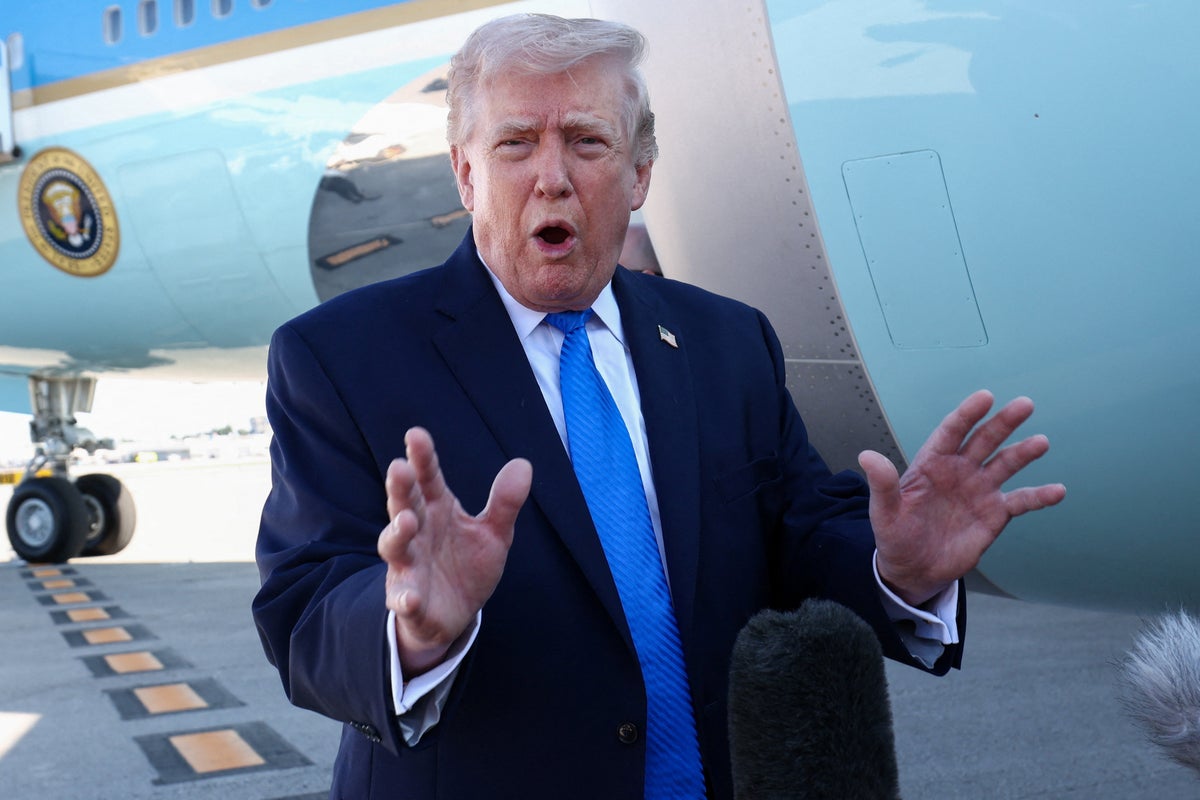
“I’m a big believer that they should be able to wear masks when they go and hunt down murderers,” Trump told reporters this morning. “But for purposes of the airport... I think it’s a very appropriate look [to have no masks].”
This distinction creates two versions of ICE. One is the masked, tactical force operating in the shadows of "sanctuary cities," and the other is the unmasked, "helpful" face of security at the airport. It is an optics play aimed directly at the middle-class traveler who might be frustrated by long lines but uneasy about a paramilitary presence.
The Training Gap and Public Safety
Critics, including the American Civil Liberties Union (ACLU) and the American Federation of Government Employees, argue that the "unmasked" look is a thin veil for a dangerous lack of expertise. TSA officers undergo rigorous training specifically focused on aviation security and civil rights in a commercial environment. ICE agents, conversely, are trained in high-intensity enforcement and detention.
The concern is not just about who is checking IDs, but about how these agents react in a high-stress, crowded environment. An airport is a pressure cooker of frustrated citizens, tired children, and complex international regulations. Introducing armed agents trained for "search and arrest" into a "service and safety" environment creates a volatile friction point.
Political Retribution and the SAVE America Act
The timing of this "airport surge" is inseparable from the legislative gridlock in Washington. The DHS remains unfunded because of a fundamental disagreement over ICE’s methods, specifically following the fatal shootings of protesters in Minneapolis earlier this year.
Trump has rejected a bipartisan deal that would have funded the TSA while keeping ICE funding separate. Instead, he has tied the entire DHS budget to the passage of the SAVE America Act, a controversial election integrity bill. By deploying ICE to airports, he is effectively using the agency as a pressure valve. If the "ICE at the airport" experiment fails or causes further chaos, he can blame Democratic refusal to fund the DHS. If it "succeeds" in reducing wait times, he can argue that ICE is a versatile, patriotic force that deserves expanded funding without the restrictions Democrats are demanding.
A New Reality for Domestic Travel
For the average traveler, the immediate takeaway is a fundamental change in the atmosphere of the terminal. The TSA has always been an agency of "blue shirts" and standardized procedures. The presence of ICE brings a different energy—one of "green vests," sidearms, and immigration enforcement.
Whether this unmasking strategy actually wins over the public remains to be seen. While the administration hopes that seeing the faces of agents will humanize the force, the reality of armed immigration officers standing over the holiday travel lines may only serve to deepen the national divide over where federal power ends and civil liberty begins.
Keep your ID ready and expect a different kind of eye contact at the checkpoint. Would you like me to look into the specific legal challenges being filed by airline unions against this deployment?