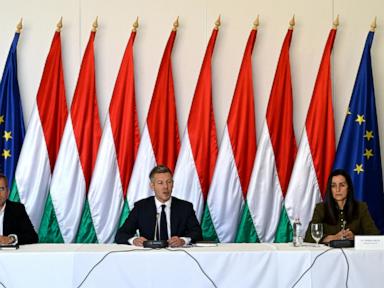
The media loves a predictable script. When a Russian missile lands anywhere near a NATO border, the headlines write themselves: "Diplomatic Tensions Flare," "Ambassador Summoned," "Sovereignty Threatened." It is a tired dance. Hungary summoning the Russian ambassador over a strike near the Transcarpathian region isn't a pivot in foreign policy. It isn't a sign that Viktor Orbán has finally found his backbone against the Kremlin.
It is a performance.
If you believe this summons indicates a fracturing of the Budapest-Moscow axis, you aren't paying attention to the plumbing of European energy and finance. While the press focuses on the optics of a sternly worded meeting in a wood-paneled room, the real story is how Hungary uses these "protests" as a pressure valve to maintain a double game that is becoming increasingly lucrative—and increasingly dangerous.
The Geography of Convenience
The strike occurred near the Ukrainian-Hungarian border, an area home to a significant ethnic Hungarian minority. The standard narrative suggests Hungary is protecting its kin. That is the "lazy consensus." The deeper reality is that Transcarpathia serves as a psychological buffer zone for Budapest to justify its unique brand of obstructionism within the EU.
Every time a kinetic event occurs near that border, Budapest gets to play the victim to two different audiences simultaneously. To the West, they say, "See? We are on the front lines, and our people are at risk." To Russia, they whisper, "We have to make this public noise to keep the EU off our backs while we continue to block your oil sanctions."
It is a masterpiece of geopolitical hedging. But hedging only works until the underlying asset—in this case, regional stability—hits zero.
The Energy Trap No One Mentions
The outrage over a border strike is a distraction from the structural reality: Hungary is more dependent on Russian energy now than it was five years ago. While the rest of the Continent scrambled to diversify, Budapest doubled down.
- The Paks II Project: Hungary is still moving forward with a Russian-built nuclear power plant.
- Gazprom Exemptions: While others cut ties, Hungary negotiated long-term deals that ensure a steady flow of Siberian gas.
- The Druzhba Pipeline: The "Friendship" pipeline remains a vital artery for Hungarian refineries, specifically MOL Group, which has seen record margins by processing discounted Russian Urals crude.
When you see a headline about an ambassador being "summoned," ask yourself: Did they talk about the missile, or did they talk about the payment schedule for the next shipment of LNG? I’ve seen diplomats handle these meetings. They are rarely the shouting matches the public imagines. They are transactional. The "summoning" is the tax Hungary pays to maintain its status as Russia's backdoor into the European market.
The Transcarpathian Shield
Critics often point to Hungary’s treatment of Ukraine—blocking aid packages, vetoing NATO integration—as proof of a pro-Kremlin bias. The counter-argument from Budapest is always the "protection of the Hungarian minority" in Ukraine.
This is a classic diversion. By framing the conflict as a bilateral dispute over language laws and minority rights in Transcarpathia, Orbán successfully moves the goalposts. He turns a global security crisis into a regional HR dispute.
The strike near the border wasn't just a military action; it was a gift to the Hungarian narrative. It allows Budapest to claim that Ukrainian instability is the primary threat to Hungarian lives, rather than Russian expansionism. It’s a subtle but vital distinction. If Ukraine is the "unstable neighbor" bringing war to the fence, then Hungary’s refusal to send weapons looks like "common sense" to a domestic audience.
The Myth of the "Summons"
Let’s dismantle the mechanics of diplomatic "summoning." In the hierarchy of international insults, a summons is the equivalent of a "per my last email" note. It is the lowest bar of formal protest.
- Level 1: The Note Verbale. A piece of paper that no one reads.
- Level 2: The Summons. The ambassador has to show up and drink tea while a mid-level bureaucrat reads a script.
- Level 3: Recalling your own ambassador. This is when things get real.
- Level 4: Expelling diplomats. This is the point of no return.
Hungary is stuck at Level 2. They have been at Level 2 for years. It is a comfortable plateau that satisfies the EU's requirement for "showing solidarity" while ensuring the gas stays on.
Imagine a scenario where a country was truly threatened by its neighbor's military actions. Would they continue to block the victim's ability to defend themselves? No. They would be the first to send air defense systems to the border. Hungary hasn't done that. Instead, they’ve used the proximity of the strikes to argue for a "peace at any cost" policy—which, in current terms, translates to a Ukrainian surrender.
The Economic Betrayal of the West
The real friction isn't between Budapest and Moscow; it’s between Budapest and Brussels. The EU has frozen billions in funding over "rule of law" concerns. Orbán knows he can’t win a direct financial war with the European Commission.
So, he uses the Russian relationship as leverage. Every time a Russian missile gets close to the border, Orbán raises the stakes. He signals to the EU that he is the only one who can talk to Putin, the only "bridge" left in Central Europe. He isn't summoning the Russian ambassador to scold him; he's summoning him to remind the West that he has a direct line to the aggressor.
It is a protection racket disguised as diplomacy.
Why the "Border Strike" Narrative is Flawed
The media focuses on the "risk of spillover." They talk about Article 5 as if it's a hair-trigger. It isn't. NATO has no intention of going to war over a stray missile in a forest. Russia knows this. Hungary knows this.
The strikes near the border are calculated. They are designed to test the sensor arrays and the political resolve of the bordering nations. By "protesting," Hungary is essentially telling Russia, "You’re making it hard for me to defend you in Brussels. Keep it a few kilometers further back next time."
This isn't an escalation. It's a calibration.
The Business of Being the Outlier
From a cold, hard business perspective, Hungary’s position is logical. If you are a small, landlocked nation with zero natural resources, you have two choices:
- Be a loyal, quiet member of a large bloc (and get ignored).
- Be the squeaky wheel that everyone has to bribe to keep the machine running.
Hungary has chosen the latter. By maintaining a "special relationship" with Moscow while holding a seat at the table in NATO and the EU, they have created a unique form of sovereign arbitrage. They buy cheap Russian energy, sell it to their neighbors at a premium, and then demand "compensation" from the EU for the "hardships" of the war.
It is a brilliant, cynical strategy. But let's stop calling it a "protest."
The Failure of European Integration
The fact that Hungary can play both sides so effectively is a damning indictment of the EU’s foreign policy structure. The requirement for unanimity on foreign policy decisions has turned the Union into a hostage to its most opportunistic members.
When the Russian ambassador walked into the Hungarian Foreign Ministry, he wasn't worried. He knew the routine. He knew that for every "stern word" delivered for the cameras, there are ten more conversations happening behind the scenes about VAT exemptions, pipeline maintenance, and the bypass of financial sanctions.
We are watching a theater of the absurd where the actors have forgotten the audience can see the stagehands moving the props.
Stop Asking if Hungary is "Flipping"
People keep asking: "Is this the moment Hungary turns on Russia?"
That is the wrong question. Hungary isn't "on Russia's side" or "on the West's side." Hungary is on the side of the highest bidder. Right now, the highest bidder is a combination of cheap Russian hydrocarbons and the leverage gained by being the EU’s internal saboteur.
A missile landing near the border doesn't change that math. If anything, it increases the value of the "mediator" role Orbán wants to play. He wants to be the man who brokers the "deal" that ends the war—a deal that would likely involve ceding Ukrainian territory and cementing Russian influence in exchange for a return to "business as usual."
The Actionable Truth
If you are an investor or a policy analyst, ignore the summons. Ignore the headlines about "diplomatic anger."
Watch the flow of money. Watch the permits for the Paks II nuclear site. Watch the volume of gas moving through the TurkStream pipeline. That is where the real policy is written. The rest is just smoke and mirrors for a public that still believes in the sanctity of borders and the sincerity of diplomatic protests.
Hungary isn't a victim of the war's proximity. It is a beneficiary of its complexity.
The "protest" wasn't a warning to Moscow. It was a signal to the market that the double game is still very much alive. As long as the missiles miss the actual pipelines, the "special relationship" remains intact. Everything else is just noise.
The ambassador probably enjoyed his tea.
Stop looking for a moral awakening in a counting house.