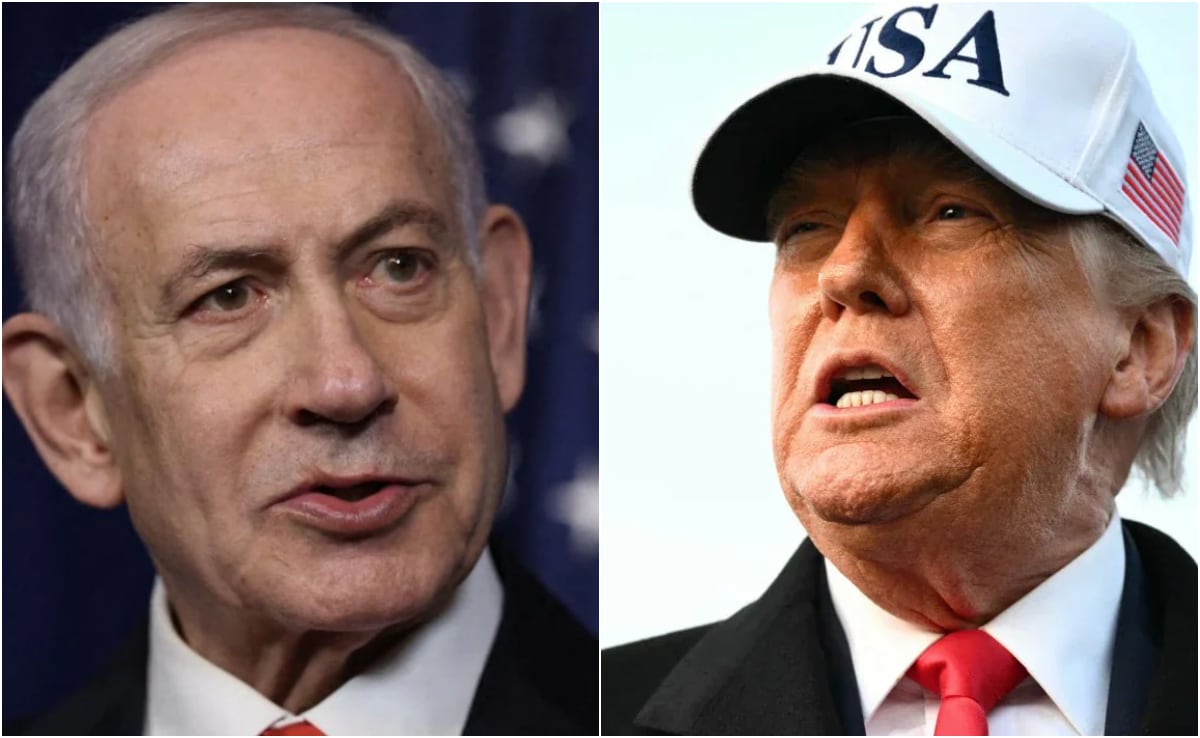
External endorsements in proportional parliamentary systems do not manufacture majorities out of thin air; they alter coalition bargaining weights inside an already fractured seat matrix. When U.S. President Donald Trump backed Israeli Prime Minister Benjamin Netanyahu ahead of Israel's October 27, 2026 national election, conventional coverage treated the move as a straightforward boost to a beleaguered incumbent. That framing misses the structural reality of a 120-seat Knesset where a governing majority requires 61 seats and neither major camp cleared the threshold in preliminary counts.
To evaluate what an external endorsement actually does in a tight Israeli election, analysts must separate signal value (how voters and party leaders read Washington's alignment) from coalition math (who has enough Knesset seats to govern without triggering another deadlock).
Why Conventional Coverage Misreads External Endorsements
Standard reporting on foreign endorsements in Israeli elections typically relies on three shortcuts:
- Treating a personal endorsement as a seat transfer: A high-profile backing from a U.S. president can energize loyalists or shape media narratives, yet Israeli voters choose among party lists under a 3.25% electoral threshold, not in a single head-to-head national ballot.
- Equating largest-party status with a governing mandate: Even when Likud emerges as the single largest party, the prime minister's seat goes to the lawmaker who can assemble a working Knesset majority, not merely the one who leads the first-place faction.
- Ignoring post-election coalition friction: An endorsement aimed at helping a leader win votes on election day can collide with post-election bargaining over portfolios, military draft exemptions, Gaza policy, and regional diplomacy.
A clearer analytical model breaks the dynamic into three interlocking mechanisms: the Credence & Alignment Function, the Coalition Arithmetic Constraint, and the Strategic Leverage Trade-off.
The Credence and Alignment Function
In campaign strategy, an external endorsement acts as a credibility transfer only when the endorser holds high salience with the target electorate and shares a visible strategic project with the candidate. Ahead of the October 27, 2026 vote, Trump publicly praised Netanyahu as an ally in the war against Iran and delivered a full endorsement while defending their joint confrontation with Tehran.
That alignment operates through two distinct channels:
- Base validation and defensive framing: For Netanyahu and Likud, Trump's backing reinforces a narrative of indispensable U.S.-Israel wartime coordination, counteracting domestic criticism over war fatigue, security failures, or diplomatic strain.
- Conditional hedging in Washington: Public enthusiasm on social media does not equal unconditional post-election carte blanche. When pressed on whether he could work with another Israeli leader if Netanyahu fell short, Trump left room for ambiguity rather than binding himself exclusively to one outcome.
What is a verified fact versus an educated hypothesis? It is a known fact that Trump issued the endorsement ahead of the October 27 election, framed it around the war with Iran, and later claimed it improved Netanyahu's showing. By contrast, claiming that the endorsement "turned the whole tide" or caused a specific seat gain remains an unverified causal claim, because turnout shifts (up to roughly 77.7% preliminarily from 70.6% in 2022), ultra-Orthodox seat losses, and Arab party gains all operated simultaneously.
The Coalition Arithmetic Constraint
In a parliamentary system with fragmented blocs, vote share only matters insofar as it crosses—or fails to cross—the 61-seat threshold. Preliminary tallies following the October 27, 2026 election illustrated how narrow the margin for error remained:
- Netanyahu's right-wing and religious bloc—comprising Likud alongside Shas, United Torah Judaism, Otzma Yehudit, and Religious Zionism—landed in the low-to-mid 50s in preliminary counts, short of 61.
- The opposition bloc led by Gadi Eisenkot (Yashar), uniting centrist, secular right-wing, and center-left factions such as B'Yachad, The Democrats, and Yisrael Beiteinu, clustered just behind in preliminary projections.
- Arab-led parties (Joint List and Ra'am) held a substantial bloc of roughly 19 seats, creating a structural arithmetic puzzle that neither traditional camp could simply wish away.
Consider a simple conceptual example of parliamentary bottlenecks. Suppose Bloc A holds 54 seats, Bloc B holds 49 seats, and smaller or Arab factions hold 17 seats. Even if an external endorsement lifts Bloc A by two or three seats compared to pre-election polling, Bloc A still sits at 56 or 57—five to four seats shy of a majority. Adding a few seats without a viable partner to reach 61 changes bargaining leverage inside the bloc, yet it still leaves the leader short of governing control.
Moreover, smaller coalition partners have their own non-negotiable demands. Ultra-Orthodox parties entering negotiations face pressure over military conscription exemptions amid IDF manpower needs, while far-right factions push hardline nationalist demands and opposition leaders press on issues such as an independent inquiry into October 7 failures. An endorsement from Washington cannot resolve domestic coalition vetoes inside Jerusalem.
The Strategic Leverage Trade-off
Every high-profile foreign endorsement carries a hidden cost function for both sides:
- For the endorsed leader: Leaning heavily on a foreign patron can boost short-term rally-around-the-flag appeal among core supporters, but it also ties domestic political survival to external expectations—such as Washington's preferences on Gaza implementation or regional alignments—that may clash with internal coalition partners.
- For the endorsing leader: Claiming credit for an ally's performance is low-cost when results look competitive, yet tying one's prestige too tightly to a deadlocked coalition creates exposure if talks stall, another election looms, or a rival bloc consolidates procedural control in the Knesset (as seen when opposition and Arab lawmakers combined to elect Matan Kahana as Knesset speaker).
A key limitation of this analytical framework is that coalition bargaining in Israel is dynamic and non-linear. Parliamentary math shifts as final official counts settle, double-envelope ballots are tabulated, and party leaders test whether a narrow bloc, a unity arrangement, or a repeat election offers the least painful path. No single external variable—endorsement, poll, or diplomatic message—determines the outcome in isolation.
Strategic Recommendation for Decision-Makers
Track coalition assembly mechanics and procedural Knesset votes rather than endorsement headlines as the primary predictor of who actually governs. Specifically, monitor three concrete indicators during post-election negotiations:
- First-round mandate and speaker/committee votes, which reveal whether an anti-Netanyahu or alternative majority can coordinate across ideological lines before a full cabinet is formed.
- Conscription and portfolio concessions demanded by religious and nationalist factions, which test whether Netanyahu's bloc can bridge its seat deficit without alienating swing partners or broad-coalition options.
- Policy friction with Washington over Gaza and regional security, which will show whether Trump's pre-election backing translates into sustained political cover or transactional pressure once government formation begins.