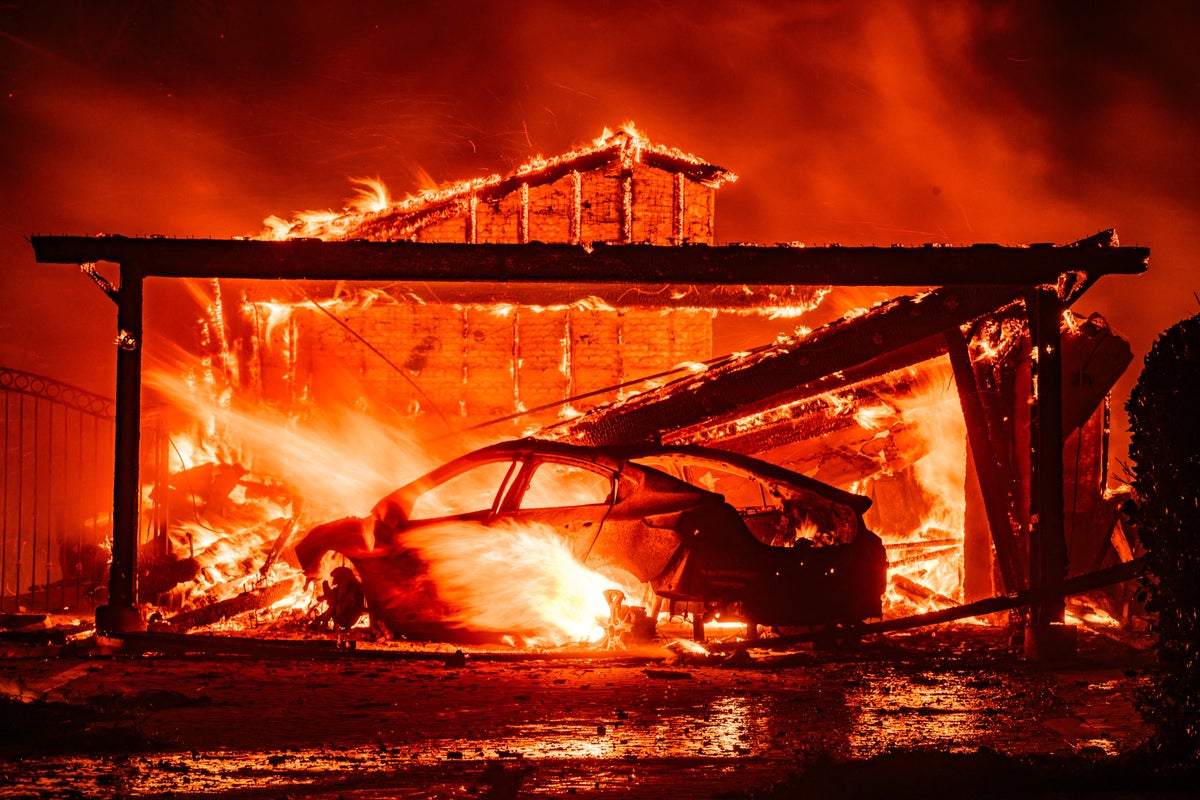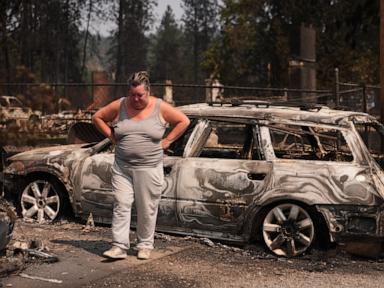
Every single fire season follows the exact same script. Smoke fills the valleys, the local news anchors put on their most grave, concerned expressions, and officials order tens of thousands of residents to pack their bags and flee. The media heralds it as a triumph of coordination when the highways gridlock with escaping citizens. They praise the swift mobilization. They applaud the sheer volume of people displaced in the name of safety.
It is all a comforting theater of failure. Discover more on a similar topic: this related article.
When firefighters finally get a handle on Spokane wildfires while tens of thousands remain evacuated, the headline should not be a sigh of relief. It should be an indictment. Mass evacuations have become the default panic button for emergency management, a lazy reflex born from liability fears rather than tactical sense. We treat human displacement like a badge of honor, proof that we are taking things seriously, while ignoring the catastrophic secondary costs and the fundamental flaws of running people off their own land.
Let us look past the smoke and dismantle the lazy consensus. Further analysis by Reuters delves into similar perspectives on the subject.
The Liability Trap of Mass Displacement
Emergency management has a dirty secret. Evacuation orders are rarely issued because a fire is barreling down on every single neighborhood within a fifty-mile radius. They are issued because of legal exposure.
If a county sheriff or an incident commander leaves residents in place and the wind shifts, they face career-ending blowback, lawsuits, and political crucifixion. But if they order a mandatory evacuation of thirty thousand people? Nobody gets sued for being overly cautious. They are hailed as heroes who prioritized human life, even if the actual fire was safely contained behind a ridge and a four-lane interstate.
I have spent years watching emergency response teams operate behind the scenes. I have seen the frantic phone calls where local officials weigh public safety against public relations. The default setting is always to clear the board. Get everyone out. Empty the grid. That way, if a house burns down, it is an abandoned structure rather than a tragedy tied to a negligent order to stay.
The cost of this risk-averse bureaucracy is astronomical. We herd tens of thousands of people onto bottlenecked highways, creating manufactured traffic nightmares that stall actual emergency vehicles. We separate families from their properties at the exact moment those properties have the highest chance of survival if someone stays behind with a garden hose, a rake, and a working generator.
The Myth of the Passive Citizen
The underlying premise of the modern evacuation order is that the civilian population is completely helpless. The script assumes that the moment an ember flies overhead, every resident transforms into a panicking tourist who will either freeze in terror or burn down the block.
This is condescending nonsense.
Look at what actually happens during these events. Thousands of able-bodied property owners are barred from returning to neighborhoods where the active fire front has already passed, sitting idle in hotel parking lots hours away while their homes sit intact, vulnerable only to minor spot fires that a single human with a shovel could extinguish.
By treating citizens as liabilities rather than assets, we create a self-fulfilling prophecy. When you force everyone to leave, you strip the landscape of its defenders. You leave millions of dollars worth of private infrastructure completely unattended, waiting for an overextended fire crew to wander by.
Defensible space is not just about clearing brush; it is about human presence. A home with an active owner on-site has an exponentially higher survival rate than an identical home locked up tight while the owners watch live-streamed drone footage thirty miles away.
+-----------------------------------+-----------------------------------+
| Traditional Evacuation Model      | Active Defense Model              |
+-----------------------------------+-----------------------------------+
| Blanket orders for entire regions | Targeted alerts for active fronts |
| Residents treated as liabilities  | Residents deployed as assets      |
| Highways gridlocked with flight   | Clear roads for tactical units    |
| Unattended homes burn from sparks | Present owners suppress spot fires|
+-----------------------------------+-----------------------------------+
The Economics of Panic
Let us talk about the financial hemorrhage that the media conveniently leaves out of the heartwarming coverage of fire containment.
Displacing tens of thousands of people for days or weeks is an economic earthquake. Multiply thousands of families by hotel rates, lost wages, ruined food supplies, and the strain on local social services. The bill runs into the tens of millions of dollars per incident. And for what? In many cases, the evacuation zone spans three times the actual geographic footprint of the fire hazard.
Insurance companies quietly love this panic. It normalizes widespread disruption and reinforces the narrative that these regions are fundamentally unlivable, driving up premiums and giving carriers an excuse to drop coverage across the entire Pacific Northwest.
When officials celebrate getting a handle on the flames while the camps are still full of displaced locals, they are celebrating the completion of a logistical exercise that should never have happened on that scale in the first place. They managed the evacuation successfully because they set the threshold for fleeing so absurdly low that they cleared the board before the fire even reached the suburbs.
What Selective Defense Looks Like
If we want to fix how we handle Spokane wildfires and blazes across the West, we have to stop treating evacuation as a binary choice between total doom and total flight.
Imagine a scenario where emergency services ditch the blanket mandate in favor of zoned, conditional retention.
In this model, communities are categorized not by municipal boundaries, but by structural hardening and access routes. If a home meets strict ignition-resistant standards—class-A roofs, cleared defensible perimeters, independent water reserves—the owner is given a choice: shelter in place with specialized local units or evacuate voluntarily.
This requires a massive shift in trust. It requires emergency responders to view locals as partners rather than obstacles. It requires investing in community-level training programs long before fire season ignites, turning neighborhood associations into auxiliary response units.
We already do this with winter storms. We do not evacuate entire cities when a blizzard hits; we tell people to stock up, stay off the roads, and manage their own immediate surroundings until the plows get through. Fire should be treated with the same pragmatic, decentralized logic.
Instead, we double down on the panic model. We issue broader alerts. We lock down larger perimeters. We make the traffic jams longer and the hotel bills higher.
The Real Question
People love to ask: "How do we get everyone out safely when a fire moves this fast?"
It is the wrong question. It accepts the premise that massive, panicked displacement is the only viable outcome.
The question we should be asking is: "Why are we designing communities and emergency protocols that require mass displacement to begin with?"
Until we answer that honestly, we will keep running the same script. The smoke will clear, the politicians will praise the unity of the response, and thousands of people will return to homes they never should have been forced to abandon, footing a bill paid in lost time, wasted money, and eroded self-reliance.
Stop cheering for the gridlock. Stop celebrating the empty towns. A successful fire season is one where the fire goes out and the residents are already home, standing on their own porches, watching the embers die.