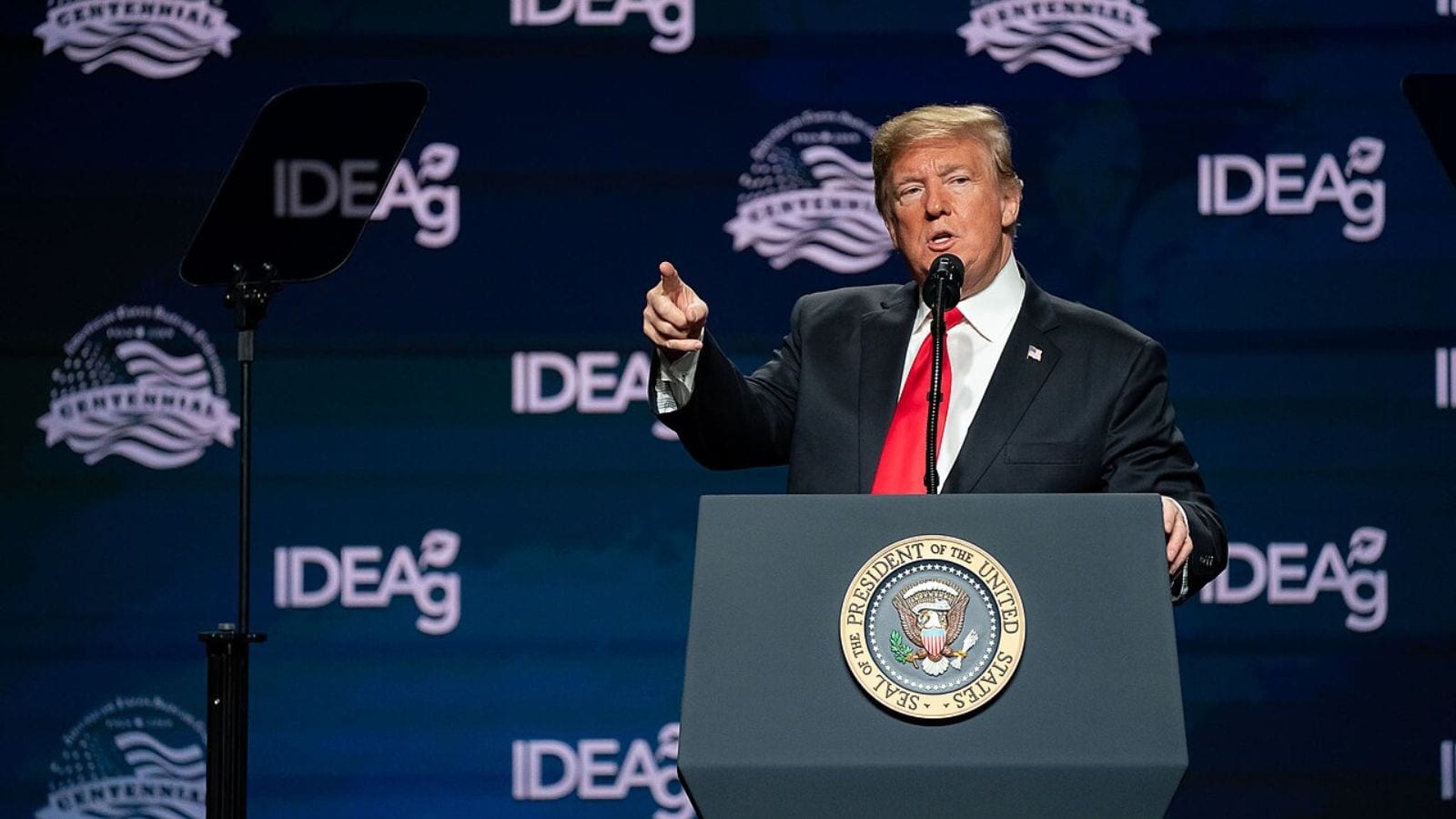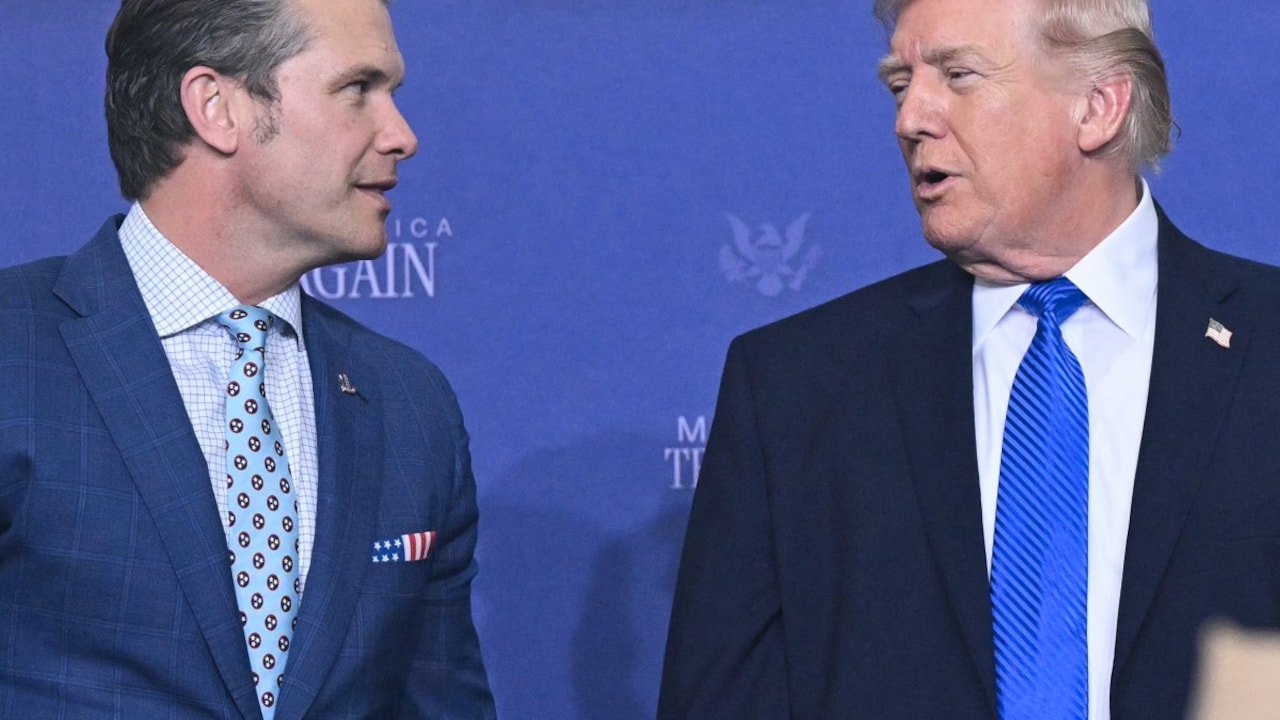
The political media is having another collective hallucination. Watch any cable panel or read any Washington dispatch, and you will find analysts obsessing over who Donald Trump will anoint as his heir for 2028, treating the next presidential cycle like an orderly corporate succession plan. The latest obsession fixates on Defense Secretary Pete Hegseth, spurred by anonymous reports of private presidential ambitions and Trump’s own characteristic dismissal that while Hegseth is doing a fantastic job, it is far too early to talk about it.
This entire framing is backwards.
Analyses focusing on whether Hegseth, JD Vance, Marco Rubio, or Ted Cruz hold the inside track miss the core reality of modern political gravity. They assume the Republican nomination is a prize to be inherited through current cabinet positioning or institutional alignment. History proves the exact opposite. Treating a post-Trump primary as a predictable continuation of today's cabinet roster ignores how violently political movements rewrite themselves over a span of thirty-six months.
Stop looking at the current bench as if it operates on a fixed chessboard.
The Fallacy of the Cabinet Crown
The lazy consensus in modern political commentary assumes that executive branch visibility equates to enduring electoral leverage. Pundits look at high-profile cabinet portfolios—running the Pentagon or the State Department—and map out a straight line to primary dominance.
I have watched countless political campaigns implode because strategists confuse temporary operational prominence with permanent constituent ownership. Managing a massive government agency under a high-octane administration does not build a primary coalition; it makes you a target for every structural crisis that hits the news cycle.
Consider the mechanics. Pete Hegseth’s mandate at the Pentagon is explicitly operational: shake up military bureaucracy, pivot procurement, and manage active friction points abroad. That is a demolition job, not a campaign strategy. When a leader is tasked with tearing down institutional bloat, every structural correction alienates entrenched factions. The institutional friction generated inside the beltway rarely translates into the kind of grassroots populist enthusiasm required to win a multi-state primary brawl.
When reporters ambushed the Oval Office to ask about a Hegseth 2028 run, Trump gave the only accurate answer available: it is far too early, and the upcoming midterms matter infinitely more than a speculative race years away. Yet the media ecosystem immediately pivoted back to ranking potential successors on a hypothetical depth chart.
Why the 2028 Primary Will Break the Mold
Imagine a scenario where the primary electorate three years from now cares very little about the institutional alliances being brokered today. Political movements led by singular figures do not pass the torch smoothly. They undergo radical reorganizations based on whatever economic or geopolitical shocks occur between now and then.
To understand why current polling and prognostications are noise, look at three fundamental miscalculations driving the 2028 chatter:
- The Portfolioless Outsider Advantage: Traditional analysts believe administrative experience is a prerequisite. Modern populist electorates view Washington experience with deep suspicion. The candidate who captures imaginations in 2028 might not even be in federal government today.
- The Midterm Reality Check: Control of Congress hangs in the balance during the upcoming midterms. Any cabinet official or sitting senator tied to a legislative or administrative stumble over the next twenty-four months will see their trajectory reset overnight.
- The Ideological Realignment: The friction between traditional conservative orthodoxy and populist nationalism is not resolved; it is actively evolving. Figures like Ted Cruz pointing toward necessary party soul-searching highlight that the internal vocabulary of the right is still shifting.
The Real Question You Should Be Asking
Instead of asking who Trump will back or whether a specific cabinet secretary is eyeing Iowa, ask how the underlying economic and security landscape will fracture the current coalition. Parties do not choose successors based on loyalty alone; they choose them based on who appears best equipped to handle the immediate crisis of the moment.
The obsession with an anointed heir misunderstands the nature of populist politics. Power in this movement is not handed down through a memo or a casual endorsement; it is seized by whoever accurately diagnoses the grievance of the current hour.
Until the midterms clear and the next wave of macroeconomic realities sets in, every pundit ranking the 2028 field is simply guessing in the dark. Ignore the parlor games, disregard the anonymous sources, and watch how the structural fights on the ground actually unfold.
Trump Asked If He Would Support Pete Hegseth for President in 2028
Watch this footage to see how the administration sidesteps premature succession narratives in favor of immediate operational focus.