.png)
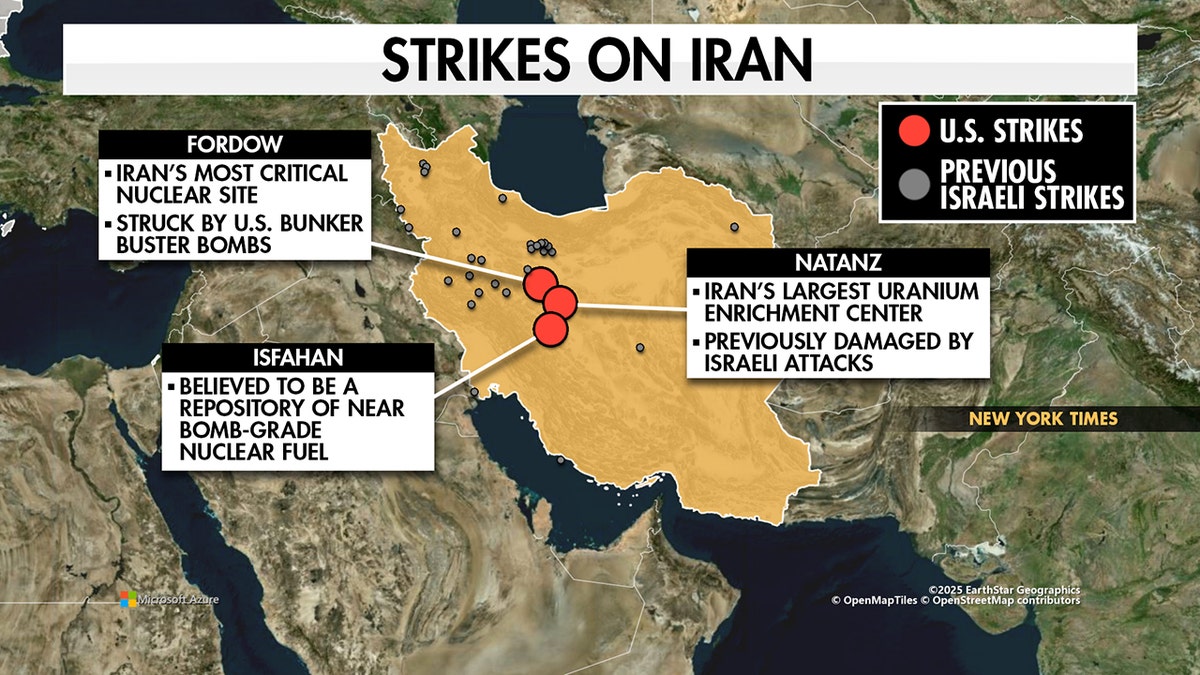
The internal cohesion of Europe’s hard-right bloc is currently undergoing a structural failure as the escalation of the US-Israel-Iran conflict forces a choice between two incompatible ideological foundations: civilizational Atlanticism and ethno-nationalist non-interventionism. While these parties previously maintained a unified front on domestic issues like migration and border security, the regional volatility in the Middle East has acted as a centrifuge, separating those who view Israel as a tactical and cultural bulwark against Islamism from those who view US-led military entanglements as a threat to European sovereignty and internal stability.
The Bifurcation of European Right-Wing Geopolitics
The fractures within the European right are not random; they follow a predictable divergence between the "New Right" Atlanticists and the "Sovereigntist" Non-Interventionists. This split can be categorized into three primary structural pressures.
The Civilizational Security Model
Parties like the Fratelli d’Italia (FdI) and the Dutch PVV have pivoted toward a Civilizational Security Model. This framework treats Israel as a frontline state in a broader conflict against radical Islam. For Giorgia Meloni and Geert Wilders, the defense of Israel is an extension of their domestic anti-Islamization platforms. By aligning with the US and Israel against Iran, these parties gain significant "mainstream" legitimacy in Washington and Brussels, shedding the "pariah" status that often plagues radical right-wing groups.
The PVV’s position is particularly rigid. Wilders views the conflict through a lens of existential cultural defense, where any concession to Iranian influence is seen as a direct threat to European secularism and Judeo-Christian values. This alignment creates a strategic bridge to the US Republican party, ensuring that if a Trump-led administration returns to power, these European parties have a direct line of communication based on shared hawkishness toward Tehran.
The Sovereigntist Non-Interventionist Model
In contrast, the Alternative für Deutschland (AfD) in Germany and Marine Le Pen’s Rassemblement National (RN) are grappling with an internal "Sovereigntist" faction that views US military action against Iran as a destabilizing force for Europe. Their logic is rooted in two specific risks:
- Energy Disruption: A full-scale war involving Iran would likely lead to the closure of the Strait of Hormuz. For energy-sensitive economies like Germany, which is already reeling from the loss of cheap Russian gas, a spike in oil prices is an existential economic threat.
- Migration Externalities: The RN and AfD are acutely aware that conflict in the Middle East triggers mass migration events. Their primary domestic promise is the reduction of migration; supporting a war that creates millions of new refugees is logically inconsistent with their core value proposition to voters.
The Cost Function of Regional Escalation
To quantify the impact of this fracture, we must look at the cost-benefit analysis these parties perform when deciding whether to support a US-led strike on Iran.
The Refugee Flow Variable
History dictates that regional wars in the Middle East produce immediate demographic pressures on Europe. The 2015 migration crisis remains the baseline for this anxiety. For the AfD, the "cost" of a war on Iran includes the potential for a new wave of asylum seekers, which they believe would further strain German infrastructure. While this would normally provide the AfD with political ammunition against the current government, the internal risk is that their support for an Israeli-led strike would make them complicit in the cause of the migration.
The Economic Volatility Variable
The European right has traditionally courted the small-to-medium enterprise (SME) sector. These businesses are hyper-sensitive to energy costs. If the hard right supports a hawkish stance that leads to $150-per-barrel oil, they risk alienating their core economic base. This creates a bottleneck in their policy platform: they want the prestige of being "strong on defense" without the inflationary consequences of actual conflict.
The Iran-Russia Nexus as a Complicating Factor
The most significant logical tension arises from the deepening military cooperation between Tehran and Moscow. This creates a "triangular dilemma" for parties like Hungary’s Fidesz or the AfD, who have historically maintained a pragmatic, if not friendly, relationship with Vladimir Putin.
- The Atlanticist Hardline: Support Israel/US to counter Iran, which indirectly weakens Russia’s primary military supplier (Iranian drones).
- The Kremlin Realist Position: Avoid antagonizing Iran to maintain a backdoor to Moscow, even if it means appearing soft on the "Islamist threat" they claim to oppose domestically.
This creates a scenario where the "enemy of my enemy" logic fails. If a party supports Israel, they are effectively supporting the degradation of Russia's strategic partner. For the pro-Russian wings of the European right, this is a bridge too far. The result is a paralyzed foreign policy that relies on vague calls for "de-escalation," which satisfies neither the Atlanticists nor the hardline nationalists.
The Strategic Decentralization of the ID and ECR Groups
The European Parliament's two main right-wing blocs—the European Conservatives and Reformists (ECR) and Identity and Democracy (ID)—are the primary theaters for this friction.
The ECR, led by Meloni, is trending toward the Atlanticist pole. They are positioning themselves as the "responsible" right that can be trusted with the keys to European defense. Their support for Israel is a signaling mechanism to the US State Department that they are not "pro-Russian" disruptors.
The ID group, however, is fracturing. Without a centralizing figure like Meloni, the ID parties are drifting toward localized populist interests. The RN in France must balance its support for Israel (to distance itself from its anti-Semitic past) with its "France First" non-interventionism. This lack of a unified stance on Iran prevents the ID group from forming a coherent alternative to the centrist EPP's foreign policy.
Structural Constraints on Unified Action
The inability of the European hard right to form a monolithic bloc on the Iran-Israel issue stems from three structural constraints:
- Geography of Risk: A Southern European party (Spain’s Vox) views Middle Eastern stability through the lens of Mediterranean security and Moroccan relations. A Northern European party (Sweden Democrats) views it through the lens of domestic integration and urban crime.
- Historical Guilt vs. Strategic Interest: German and Austrian parties face a unique historical burden that often forces an ultra-pro-Israel stance to maintain domestic viability, regardless of the strategic cost.
- Dependency Ratios: Countries with high dependency on Middle Eastern energy imports cannot afford the hawkishness that energy-independent or nuclear-heavy nations might entertain.
The Demographic Paradox
A secondary fracture exists in the way these parties interact with their own domestic Muslim populations. While the "civilizational" wing views the Middle East conflict as a way to galvanize their base against an external "enemy," the "pragmatic" wing recognizes that their countries now contain significant voting blocs or restive populations that are fiercely pro-Palestinian.
Parties like the RN have seen an influx of working-class voters who may be anti-immigration but are also deeply skeptical of "Zionist" influence or US imperialism. For Le Pen, leaning too hard into a pro-Israel/anti-Iran war stance risks alienating the very "disenfranchised" voters she spent a decade courting. This creates a policy of strategic ambiguity.
Failure of the "Strongman" Archetype
The "strongman" leadership style favored by Orbán, Meloni, and Salvini is being tested by the complexity of the Iran-Israel proxy war. The archetype requires clear, decisive enemies and friends. However, when the "friend" (Israel) is fighting the "partner" (Iran) of your other "friend" (Russia), the strongman narrative collapses into a series of tactical contradictions.
This collapse is visible in the voting records of the European Parliament, where right-wing parties are increasingly splitting on resolutions concerning Iranian sanctions and Middle Eastern aid. The lack of a "Cost Function" for these votes—meaning they have no immediate impact on their domestic power—allows the fracture to widen without immediate consequence, but it signals a massive weakness should they ever attempt to form a unified European "Supergroup."
The Strategic Pivot to "Armed Neutrality"
The most likely evolution for the non-Atlanticist wing of the European right is a move toward a doctrine of "Armed Neutrality." This framework allows them to:
- Demand massive increases in domestic military spending (appeasing the nationalist base).
- Refuse participation in US-led "adventures" in the Middle East.
- Focus exclusively on border "defense" rather than regional "stabilization."
This shift would effectively end the dream of a unified Western conservative front. It would create a "European Fortress" faction that is fundamentally at odds with the "Global West" faction led by Washington.
The strategic play for any European hard-right party seeking long-term dominance is to decouple their anti-Islamization domestic policy from Middle Eastern foreign policy. Those who successfully frame their opposition to Iran not as a defense of Israel, but as a defense of European energy and demographic security, will likely consolidate the "Sovereigntist" vote. Conversely, those who remain tethered to the US-Israel security apparatus will find themselves increasingly isolated from the populist-nationalist core that values "Our Country First" above all civilizational allegiances. The fracture is not a temporary disagreement; it is the beginning of a permanent divergence in the European right-wing identity.