The Panic Factory
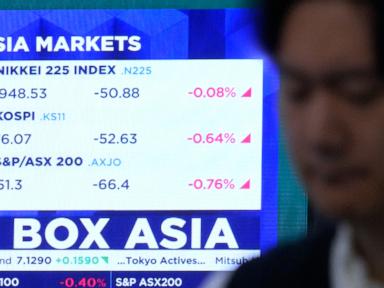
Every time a missile launches in the Middle East, a predictable ritual plays out on trading floors and news desks. The headlines scream about escalating conflict. Oil spikes two percent. Asian markets dip in panic selling. Analysts rush to televisions to warn about systemic shocks and the end of the global supply chain.
It is a beautiful, synchronized performance. It is also completely wrong.
The lazy consensus insists that military strikes create market instability. The narrative tells you to flee to safety, hoard cash, and dump equities until the dust settles. But twenty years of watching institutional money handle kinetic conflict reveals a different reality.
Military escalations do not destroy market value. They reprice asset velocity.
When US strikes hit Iran-backed targets and Asian shares slide, it is not a structural collapse. It is a liquidity event masquerading as a geopolitical crisis. Smart capital does not run for the hills. It buys the dip from the panicked retail investors who still believe headlines dictate long-term corporate earnings.
The Flawed Premise of the Crude Oil Spike
Let us dismantle the obsession with the one-dollar jump in crude.
The immediate reaction to Middle Eastern instability is always a knee-jerk bid on Brent and WTI futures. The underlying assumption is that conflict automatically chokes supply. This is a 1970s mindset trapped in a 2026 energy infrastructure.
The global energy map has fundamentally transformed. The obsession with the Strait of Hormuz ignores massive structural shifts in production capacity.
- The Americas Buffer: Non-OPEC production, led by the US, Brazil, and Guyana, acts as a permanent supply ceiling.
- Strategic Reserves: State-level reserves are no longer just emergency stockpiles; they are active tools of economic warfare used to damp volatility.
- Spare Capacity: Saudi Arabia and the UAE maintain millions of barrels per day of offline capacity specifically to offset sudden disruptions.
When oil jumps two or three percent on a headline, it is almost entirely driven by algorithmic trading systems scraping news feeds for keywords like "strike," "explosion," or "Iran." It is momentum, not mechanics.
The data shows these headline-driven spikes have a decay rate of roughly 72 hours. Unless infrastructure is physically turned to ash—which rarely happens because no state actor actually wants total economic mutually assured destruction—the premium evaporates. Buying oil on the initial strike headline is a guaranteed way to catch a falling knife once the algorithms turn short.
Why Asian Markets Are Actually Flashing a Buy Signal
The standard interpretation of a drop in the Nikkei or Hang Seng during a Western-led military operation is simple: fear of global trade disruption. Asia manufactures the world's goods; if shipping lanes freeze, Asia suffers first.
This view completely misinterprets how regional liquidity operates.
International asset managers use Asian indexes as highly liquid proxies for global risk sentiment. When a shock occurs overnight in Washington or Tehran, managers do not have time to reallocate complex domestic portfolios. They short liquid index futures in Tokyo and Hong Kong to hedge their macro exposure.
The drop in Asian equities is a mechanical hedging reaction, not a fundamental reassessment of corporate health.
"Volatility is the price you pay for performance. Geopolitical volatility is simply that price discounted for quick compliance."
Think about the actual operational reality of a semiconductor giant in Taiwan or an automotive titan in South Korea. Does a localized drone strike on a command center thousands of miles away alter their three-year capital expenditure plan? Does it reduce the global demand for advanced computing architecture? No. It creates a temporary arbitrage opportunity where premium companies go on sale for a 3% discount because a hedge fund manager needed to balance his risk budget before going to sleep in New York.
The Myth of the Safe Haven
During these flash panics, capital flees into traditional safe havens: gold, Swiss francs, and short-term US Treasuries. This is the financial equivalent of hiding under a mattress.
Let us look at the math of the safe-haven trade during short-term geopolitical shocks. If you buy gold at the peak of the panic headline, you are buying an asset with zero yield at its highest short-term valuation. The moment diplomatic channels open—even if only for posturing—the safe-haven premium collapses faster than the oil spike.
I have watched portfolio managers incinerate millions trying to timing these rotations. They sell high-quality, dividend-paying equities at a discount to buy overvalued sovereign debt yielding less than inflation, all to survive a news cycle that the public forgets by next Tuesday.
True risk mitigation is not about avoiding volatility; it is about exploiting the mispricing that volatility creates.
Dismantling the "What If" Escalation Theory
The pushback against this contrarian view is always the same: But what if this time is different? What if this sparks World War III?
Let us play out that scenario using brutal economic logic. If a conflict escalates to a level that genuinely halts global commerce, collapses major state institutions, and ends the modern financial system, your asset allocation strategy does not matter anyway. Gold bars and treasury bonds will not save a portfolio if the underlying global grid goes dark.
Therefore, hedging for the absolute apocalypse is an asymmetric losing bet. If the world ends, your hedge is worthless because the counterparty cannot pay. If the world does not end—which it historically avoids doing—your hedge bleeds alpha and drags down your long-term compounding.
You must trade for the 99% probability of continuity, not the 1% probability of total collapse.
The Actionable Playbook for Geopolitical Volatility
Stop reading the geopolitical analysis written by political scientists who have never managed a P&L. They view the world through ideological lenses. You must view it through liquidity flows.
When the next headline breaks and the market panics, follow this protocol:
- Ignore the Oil Futures: Do not chase the energy rally. If you hold energy equities, use the headline spike to trim positions that have hit structural resistance.
- Target the Liquid Proxies: Look directly at high-quality export engines in Japan and South Korea that are being dragged down by index-level shorting. Identify firms with strong balance sheets and zero direct supply chain exposure to the conflict zone.
- Deploy Capital in Tranches: The algorithmic panic usually bottoms out within 48 to 72 hours of the initial event. Divide your available dry powder into three blocks and deploy them systematically over three days as the news cycle shifts from shock to analysis.
The system is designed to generate fear because fear creates trading volume, and volume creates fees. The institutional consensus wants you to believe the world is fragile so you keep paying them to manage your anxiety.
The world is not fragile. It is hyper-adaptive. Corporations route around conflict zones. Supply chains redraw overnight. Energy markets rebalance with ruthless efficiency.
The next time you see a headline about military strikes driving market declines, do not open your news app. Open your brokerage account. The market is giving you a gift wrapped in panic. Take it.