The earth remembers everything. Every winter bite, every forgotten season, every microscopic entity that once roamed a colder world gets tucked away into the deep freeze of the Siberian tundra. For centuries, we believed that permafrost was a permanent vault—a biological lockbox buried beneath meters of frozen soil and ice, keeping the ghosts of ancient history safely out of reach.
We were wrong.
When regional officials in Siberia confirmed that a life had been claimed by the plague—bubonic plague, a disease whose very name conjures medieval horrors and empty European villages—it did not arrive as an invading army. It arrived as a whisper from the past. A reminder that nature does not negotiate with our timelines, and that the ice is melting.
To understand the weight of that single death, you have to look beyond the cold statistics of regional bulletins. You have to picture the Altai Mountains or the vast stretches of the Russian steppes, where the air is sharp enough to freeze the inside of your nostrils and the horizon stretches out into an endless, blinding white. Here, life moves to the rhythm of survival. Herders guide their flocks across ancient grazing routes, reading the subtle shifts in the weather the way a sailor reads the ocean.
Imagine Nikolai, a hypothetical herder whose life mirrors those who live at the absolute edge of habitation. Nikolai does not care about geopolitical borders or epidemiological models. He cares about his livestock, the health of his family, and the creeping thaw that has begun to soften the ground beneath his boots—ground that has stayed frozen since the time of the tsars.
When the frost begins to retreat, it does not just release water. It releases time.
The bacterium responsible for this ancient terror, Yersinia pestis, is not a stranger to these regions. It circulates quietly among wild rodent populations, slumbering in burrows and subterranean nests. But the permafrost holds deeper archives. As rising global temperatures thaw layers of earth long thought sealed forever, organic matter trapped for generations begins to thaw. Pathogens, spores, and bacteria that have rested in cryogenic suspension find themselves waking up to a modern world.
When the news broke of the woman's death, the initial reaction from the outside world was clinical. Headlines flashed across international news feeds. Experts issued measured statements. Containment protocols were enacted. Borders were watched. But numbers on a screen fail to capture the visceral shock of a disease once relegated to history books suddenly appearing in a hospital bed.
It starts with a fever. A sudden, violent spike that turns the blood heavy and the limbs leaden. Then come the buboes—the agonizing swelling of the lymph nodes as the body fights a losing battle against an organism that has had millennia to refine its lethality. In the span of days, what begins as a mild malaise can transform into a systemic catastrophe.
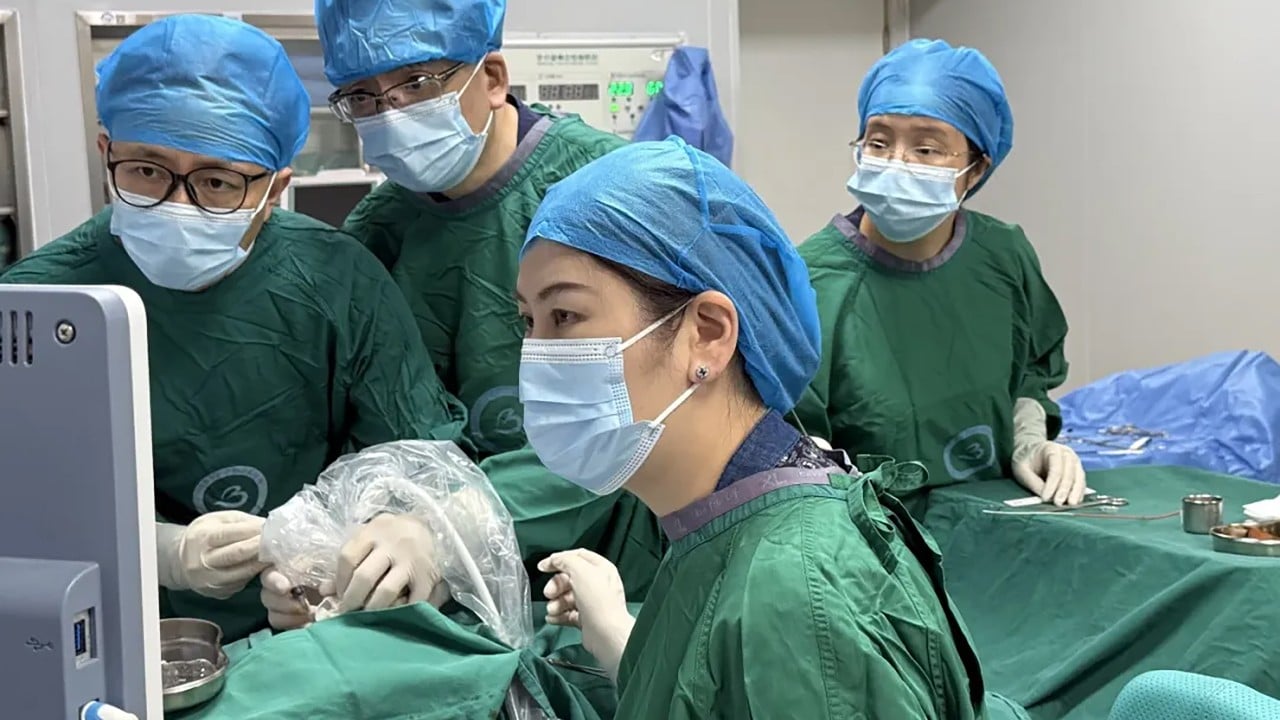
For the medical staff in those remote regional clinics, there is a chilling familiarity mixed with modern dread. They have the tools now—antibiotics like streptomycin and gentamicin that can halt the march of the infection if caught in time. We are no longer living in the fourteenth century. We understand the vector; we know that fleas riding on infected rodents are the primary couriers, and that direct contact with contaminated tissues can bridge the gap between animal and human.
Yet, knowing the mechanics of a threat does not entirely remove its terror.
The real story isn't just about a single tragic loss in the vastness of Siberia. It is about the warming margins of our planet. As the Arctic and sub-Arctic regions warm at rates far exceeding the global average, the permafrost is losing its grip. Scientists have warned for years that ancient pathogens could emerge from the thawing soil, finding new hosts in a world entirely immunologically naive to their specific strains.
Consider what happens when a natural barrier fails. For thousands of years, the cold was our shield. It locked away biological debris, trapping ancient viruses and bacteria in a deep, dark stasis. Now, the shield is fraying. The permafrost is slumping, forming thermokarst depressions where ancient soils collapse into muddy swamps. In these churned-up layers of earth, long-buried organic remains are exposed to the open air for the first time in human history.
It is a slow-motion unboxing of Pandora's freezer.
We like to think of humanity as the authors of our own era, safely insulated by technology, medicine, and steel. We chart our progress in terabytes and rocket launches, assuming the earth is a static stage upon which our drama unfolds. But events like this pull back the curtain on a sobering truth. We share this planet with forces that predate us by millions of years and will likely outlast us by just as many.
The woman who lost her life in Siberia is a tragic casualty of a shifting world. Her death is a data point, yes, but it is also a human story of sudden grief, of a family shattered in a place where isolation is both a shield and a vulnerability. It reminds us that public health is not merely an urban concern, tied to crowded subway cars and sprawling mega-cities. It extends to the frozen periphery, to the lonely outposts where man and wilderness rub shoulders against the backdrop of a changing climate.
As the ground continues to soften and the shadows of the past stretch into our present, we are forced to confront an uncomfortable reality. The threats of tomorrow may not come from outer space or newly synthesized laboratories. They may simply be waking up from a very long sleep, shaking off the ice of a colder era, and stepping out into the light to see what has changed while they were gone.
The frost is receding. The ancient earth is speaking. And we are only just beginning to listen.