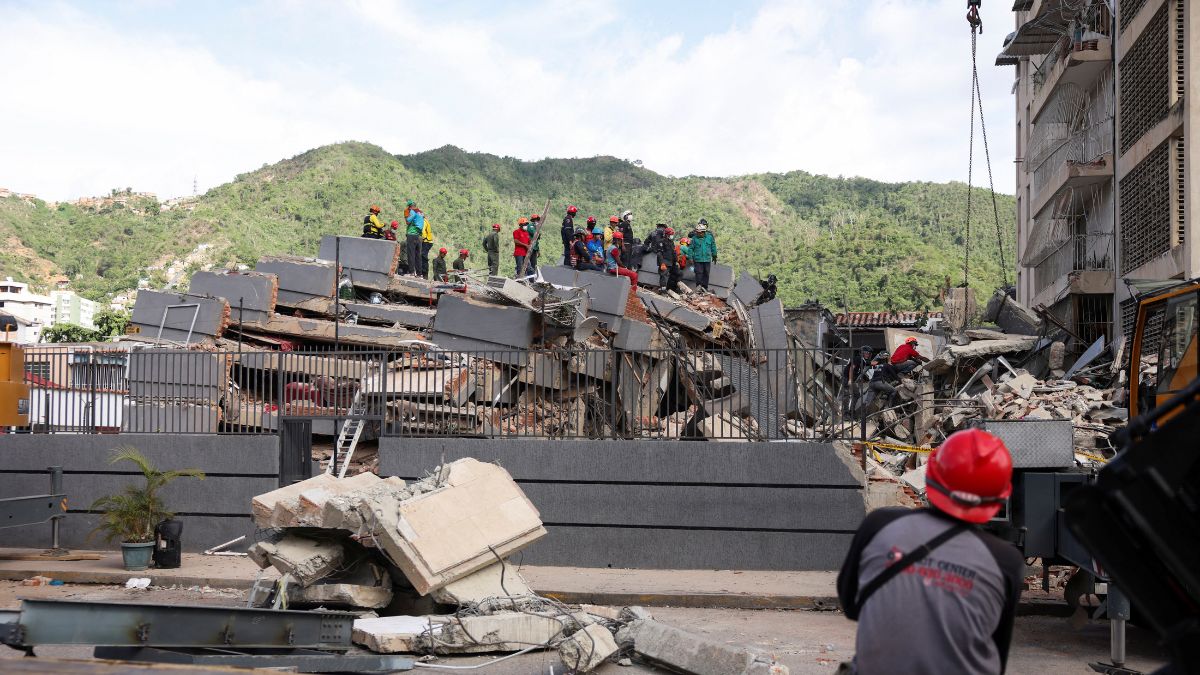
When twin earthquakes measuring 7.2 and 7.5 magnitude tore through northern Venezuela, they did not just shatter concrete in La Guaira and send panic through the streets of Caracas. They exposed a truth that international aid agencies and state media have spent years attempting to gloss over with bureaucratic rhetoric. The disaster, which has left hundreds dead and thousands injured, did not cause the collapse of Venezuela's medical infrastructure. It merely pulled back the curtain on a ruin that was already complete.
For over a decade, observers have watched Venezuela's public health apparatus decay under the weight of economic mismanagement, hyperinflation, and structural neglect. When the ground shook, it met a network of hospitals that were already functionally dead. The sudden influx of trauma patients requiring immediate surgical intervention collided head-on with an environment devoid of running water, basic antibiotics, and reliable electricity. The resulting mortality rate is not an act of God. It is the predictable outcome of state failure.
The Myth of the Sudden Shock
To understand the current disaster, one must look past the immediate imagery of collapsed buildings and search teams digging through rubble. The common narrative frames this as a sudden, overwhelming natural disaster hitting a fragile system. That frame is entirely wrong.
The public healthcare network was systematically dismantled long before the first tremor. During the oil boom of the early 2000s, the state established populist medical programs that bypassed existing institutional frameworks. When oil revenues plummeted and foreign investment fled, these underfunded parallel structures evaporated. Data indicates that upwards of 80 percent of the localized neighborhood clinics built during that era have been closed for years.
This left the population entirely dependent on a centralized network of major public hospitals. Yet, these regional hubs have been operating in conditions that resemble active war zones rather than modern medical facilities.
A standard surgical ward in any developed nation relies on a highly predictable supply chain. In Venezuela, that chain broke years ago. Surgeons regularly ask patients to bring their own scalpels, sterile gloves, and anesthetic agents purchased on the black market. When the earthquakes struck, there were no emergency reserves to draw from. The baseline was already zero.
Running Clean Water on Empty Promises
The most immediate bottleneck in treating earthquake survivors is not a lack of specialized surgical talent, but a lack of fundamental utility infrastructure.
Hospital Operational Realities (Pre-Disaster Baseline)
------------------------------------------------------
Regular Running Water Availability:   Less than 10%
Severe Medicine & Supply Shortages:   Exceeds 85%
Active Medical Personnel Flight:      Estimated 50%+ loss
Consider the logistics of managing severe crush injuries. These patients require massive fluid resuscitation, immediate surgical debridement to prevent sepsis, and highly sterile environments. However, national surveys of Venezuelan hospitals prior to the disaster revealed that fewer than 10 percent of public facilities had consistent access to running water.
Medical staff have spent years hauling plastic jugs up flights of stairs just to wash their hands between procedures. When an earthquake disrupts the broader municipal water grids, even that meager workaround stops.
The state has announced a 200 million dollar reconstruction fund to address the damage. In a hyperinflationary environment managed by a government with a history of diverting humanitarian resources, such figures are meaningless. Money cannot instantly conjure the specialized medical equipment or the sterile environments required to treat thousands of acute trauma cases.
The Human Drain
The physical decay of the buildings is only surpassed by the exodus of the people who worked inside them. Over the past decade, a massive wave of migration has seen tens of thousands of trained doctors, nurses, and laboratory technicians flee the country. They left because a monthly hospital salary could no longer buy a week's worth of groceries.
- Understaffed Emergency Rooms: Public ERs are frequently managed by unsupervised medical students or overextended residents.
- Specialist Deficits: Neurosurgeons, orthopedic specialists, and trauma anesthesiologists are virtually nonexistent in provincial hospitals.
- Logistical Paralysis: Without administrative and maintenance staff, even functional equipment quickly falls into disrepair.
When multi-system trauma patients arrived at triage centers following the quakes, they found facilities staffed by skeletons. The expertise required to navigate complex crush syndromes or severe traumatic brain injuries was simply not in the room.
The Geopolitical Aid Bottleneck
International relief organizations like the Pan American Health Organization (PAHO) have mobilized emergency mechanisms, setting up supply lines from regional hubs in Panama and coordinating with neighboring countries. But international aid is not a seamless plug-and-play solution. It must pass through a highly politicized bottleneck.
For years, the ruling regime viewed foreign medical assistance as a tacit admission of domestic failure. While the government has become more permissive of international aid agencies out of sheer necessity, structural barriers remain. The closure of main airport infrastructures due to earthquake damage complicates the physical entry of cargo planes.
More importantly, distributing these supplies to the interior of the country requires navigating a fractured internal security landscape where fuel shortages are rampant and local distribution networks are heavily militarized. Aid sitting on a tarmac in Caracas does nothing for a patient bleeding out in a collapsed coastal town.
The Reality of Localized Responses
In the immediate aftermath of the tremors, state television broadcasted highly coordinated rescue operations in central districts. These heavily curated images show a functional state apparatus responding with precision.
The reality on the ground in peripheral regions like La Guaira tells a different story. In these communities, search and rescue operations are largely crowdsourced. Citizens use bare hands and makeshift tools to clear slabs of concrete. The state's presence is often limited to security forces securing perimeters rather than specialized disaster response units extracting survivors.
This disconnect between official pronouncements and geographical reality is a defining feature of the crisis. While the executive branch declares states of emergency and signs decrees, the actual burden of survival is shifted entirely onto the individual.
Beyond the Immediate Debris
The long-term public health fallout of these earthquakes will likely eclipse the immediate death toll from structural collapses.
When water infrastructure breaks completely in an overcrowded subtropical environment, waterborne diseases follow swiftly. Venezuela was already struggling with the resurgence of previously eradicated infectious diseases, including malaria, measles, and diphtheria, driven by the collapse of national vaccination programs.
The displacement of thousands of families into temporary, unsanitary shelters creates the exact environment needed for explosive outbreaks of diarrheal illnesses and respiratory infections. A medical system that cannot provide clean gauze for a fracture has no capacity to contain an epidemiological outbreak.
The tragedy unfolding across the country is not a narrative of a nation caught off guard by the volatile movements of the earth. It is an indictment of an ideological project that gutted the foundational systems of a society, leaving its people entirely defenseless against the inevitable forces of nature. The crumbling walls are merely a physical manifestation of a state that had already collapsed from within.