When Yemen's Houthi movement launches ballistic missiles toward the King Abdullah Financial District in Riyadh or targets key Saudi oil installations, the shockwaves do not stop at the Red Sea. They ripple directly through Islamabad. Pakistan finds itself executing one of the most perilous diplomatic and military balancing acts in contemporary geopolitics, trying to honor mutual defense architecture with Saudi Arabia while avoiding a catastrophic rupture with its volatile, contiguous neighbor, Iran.
This high-stakes tightrope walk has turned Pakistani military and foreign policy channels into a revolving door of crisis management. Foreign Minister Ishaq Dar and military leadership have had to field intense pressure from Riyadh and Washington to help shut down Iran-backed proxy threats, all while dispatching high-level delegations to Tehran to beg off total escalation. But the structural contradictions of Pakistan's position are catching up. Islamabad cannot be an effective neutral mediator while simultaneously bound by trilateral defense pacts that treat an attack on Saudi soil as an urgent security concern for its own armed forces.
The Anatomy of the Mecca Alliance Trap
To understand why Islamabad is sweating, look at the architecture of the security commitments signed over the past year. Under arrangements often dubbed the Mecca alliance framework—involving Saudi Arabia, Pakistan, and Turkey—Islamabad formalized its historical pledge to protect the kingdom's territorial integrity. For decades, this arrangement was largely transactional and financial, backed by the deployment of Pakistani training missions and brigade-level security details stationed away from active combat zones.
The Houthi escalation has changed the math entirely. When Houthi missiles cross into Saudi airspace, Riyadh expects more than diplomatic sympathy from its nuclear-armed security partner. Saudi officials under intense pressure have looked to Pakistan and Turkey to help squeeze Iran's regional proxy networks, potentially even utilizing trade routes and border leverage.
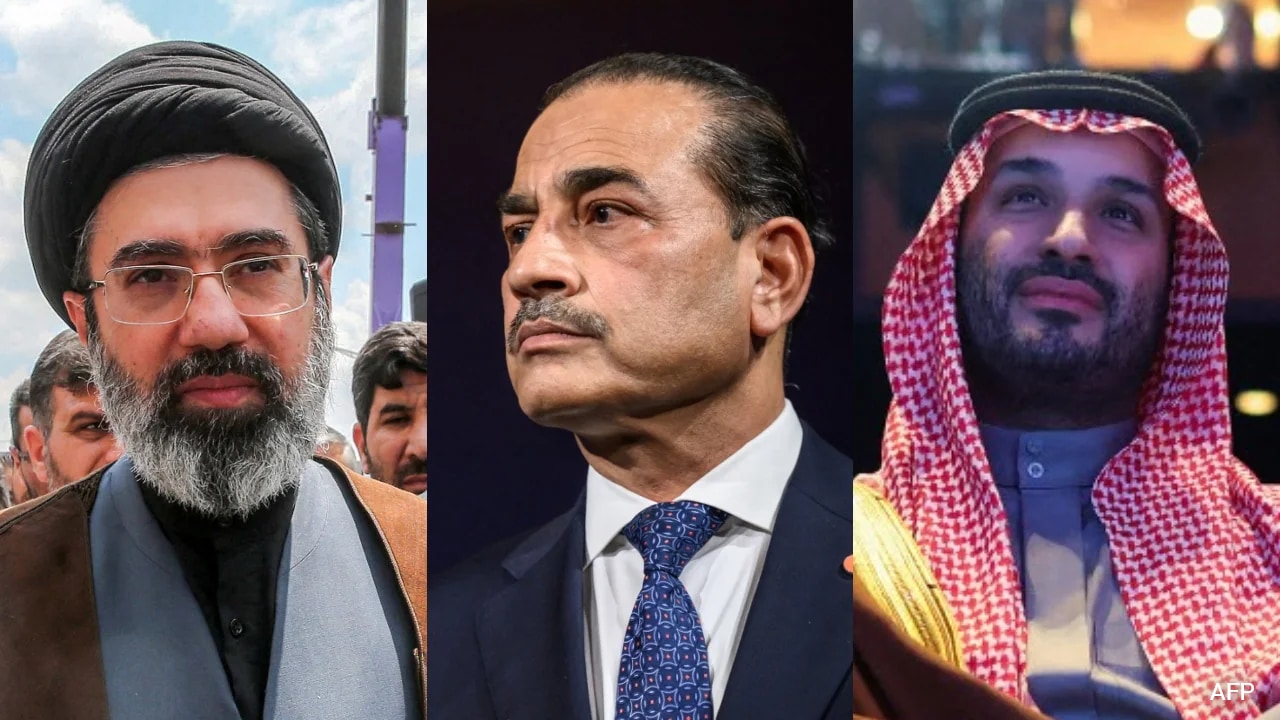
Yet Iran is not a distant adversary that Islamabad can safely antagonize. Sharing a long, porous, and frequently volatile border in Balochistan, Pakistan lives under the constant threat of Iranian retaliation or domestic blowback from its own restive populations if it openly joins a military campaign against Tehran's allies. When Iranian Foreign Minister Abbas Araghchi engages in late-night phone diplomacy with Pakistani Chief of Defence Forces Field Marshal Asim Munir, the subtext is heavy with warning. Tehran views any active military participation against the Houthis as a direct crossing of its strategic red lines.
Strategic Ambiguity and the Cost of Double-Talk
Islamabad's public communications have devolved into an exercise in semantic gymnastics. During routine press briefings at the Foreign Office in Islamabad, spokespersons routinely deny that Saudi Arabia has requested direct military strikes in Yemen, labeling such reports as purely hypothetical. At the same time, officials refuse to clarify whether they are actively passing warnings from Riyadh to Tehran.
This calculated ambiguity is wearing thin. Iranian state-aligned media and security commentators have begun characterizing Pakistan's posture not as mediation, but as uncomfortably close alignment with western and Gulf containment strategies. Accusations of "begging for security" and acting as an unwelcome regional intervenor have started appearing in Tehran's political discourse.
For a nation grappling with severe domestic economic fragility and internal security challenges along its western frontier, alienating Iran carries immense costs. Conversely, turning a blind eye to escalating drone and missile barrages against Riyadh risks alienating the financial lifeblood of Pakistan's stabilization programs. Saudi monetary support has historically cushioned Pakistan from default; turning away from Riyadh during an existential security crisis is simply not an option for civilian or military planners in Rawalpindi.
The Mediator's Dilemma
Pakistan fancies itself as the premier diplomatic bridge between Washington, Riyadh, and Tehran. Islamabad has repeatedly attempted to revive stalled back-channels, pointing to past efforts like the Islamabad Memorandum that temporarily cooled regional temperatures.
However, mediation requires leverage and perceived impartiality. When a mediator is legally or politically tied to one side of a regional conflict through a mutual defense framework, its credibility in Tehran evaporates. Iran's calculus is straightforward: any state that partners with its primary regional rivals to counter the "Axis of Resistance" cannot simultaneously sit at the head of the table as an honest broker.
As long as Houthi projectiles continue to test Saudi air defenses and Washington demands a harder line against Iranian supply lines, Pakistan's dual messaging will face a hard expiration date. Islamabad can no longer pretend it can indefinitely walk the line between a defensive pact that draws it toward the Gulf theater and a geographic reality that roots it firmly next to Iran. Eventually, the luxury of strategic silence will collapse under the weight of the next missile impact.