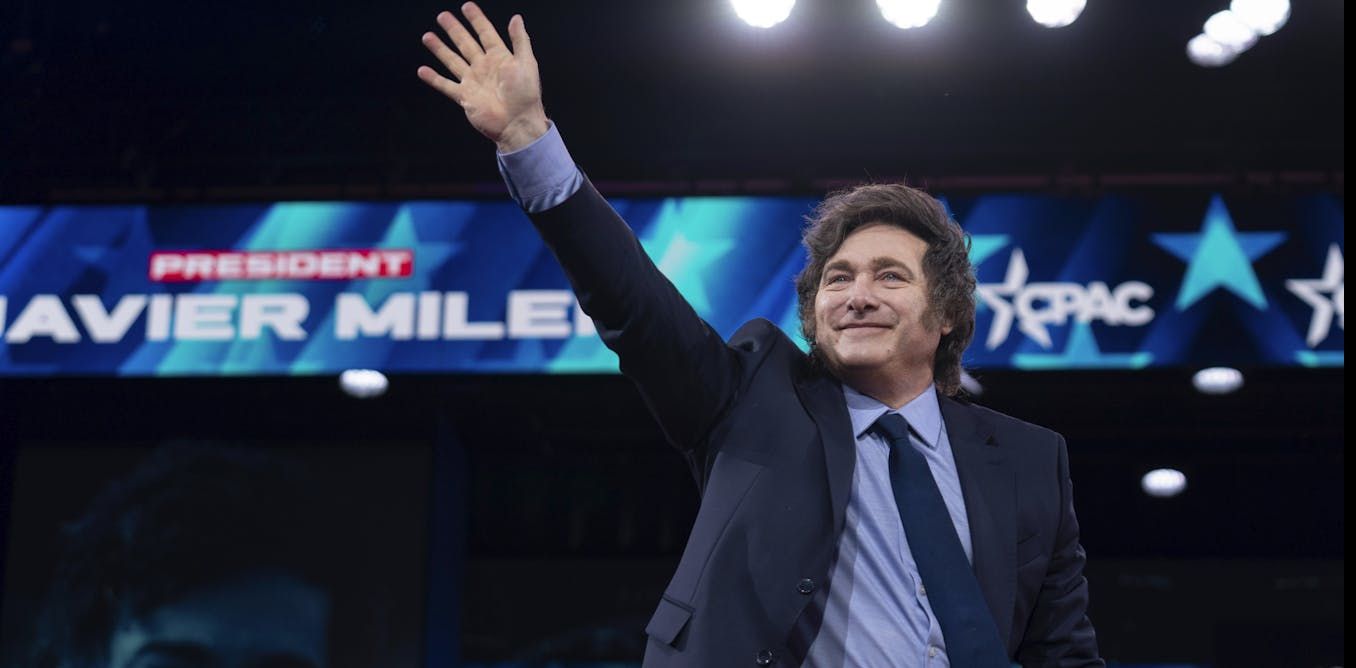
Javier Milei isn't looking for a repeat of 1982. If you think the chainsaw-wielding economist is about to launch a naval task force toward the South Atlantic, you're misreading the room. He's doing something much more calculated. He's leveraging his "bromance" with Donald Trump to squeeze a distracted and economically fragile United Kingdom.
The old script for Argentine presidents was simple. When the economy tanks, scream about the "Malvinas" to distract the masses. Milei is flipping that. He's fixing the economy—or trying to—while framing the island dispute as a "mature" diplomatic mission. He isn't yelling at the British. He's whispering in Washington's ear.
The Trump Factor Changes Everything
For decades, the US has played the role of the neutral arbiter that secretly backs the UK. But it's 2026, and the geopolitical floor is shifting. Donald Trump’s return to the White House has fractured the old "Special Relationship" with London.
Keir Starmer’s refusal to follow the US into a broader conflict with Iran has left a mark. In Washington, loyalty is the only currency that matters. Milei has plenty of it. By positioning himself as Trump’s top ally in Latin America, Milei is betting that the US will stop seeing the Falklands as a "British" issue and start seeing it as a "colonial" liability.
Leaked Pentagon memos from April 2026 suggest this isn't just a theory. There’s serious talk in the State Department about reviewing support for "imperial possessions." If Trump decides to trade British sovereignty for Argentine loyalty, the UK loses its most powerful diplomatic shield.
Why the Chagos Islands Set a Dangerous Precedent
You can't talk about the Falklands without talking about the Chagos Islands. Last year, the UK agreed to hand over the Chagos archipelago to Mauritius. It was supposed to be a one-off deal to secure a military base, but it sent a clear message to Buenos Aires: British sovereignty is negotiable.
Milei saw the opening. If London can "surrender" territory in the Indian Ocean to satisfy international pressure, why should the South Atlantic be any different? He’s used this "surrender" to mock the idea that the UK’s position is "steadfast."
The logic is simple.
- The UK is tired of being called a colonial power.
- The UK is currently lead by a government that prioritizes international law over "old school" empire-building.
- Therefore, if you push hard enough at the United Nations, the UK might just fold.
The Oil Bonanza Under the Waves
This isn't just about flags and history. It's about what's under the sea. The Falklands are sitting on a potential oil and gas goldmine. For a man like Milei, who wants to turn Argentina into an energy superpower, those resources are the ultimate prize.
He’s already issued warnings about offshore exploration. His administration isn't just filing protests; they're looking at ways to penalize energy firms that operate in the disputed waters. By making it too expensive or legally risky for companies to drill, Milei hopes to starve the islands of the very income that makes them self-sufficient.
Winning Hearts by Winning the Economy
Milei’s most radical idea is also his most "libertarian" one. He’s told the Argentine public that the only way to get the islands back is to make Argentina so prosperous that the islanders want to be part of it.
"We hope for the Malvinenses to one day decide to vote for us with their feet," he said during a recent memorial. It’s a long-shot strategy. The 3,600 people living on the islands are fiercely British. They drive on the left, speak English, and in 2013, 99.8% of them voted to stay British.
But Milei’s betting on the long game. If he can kill inflation and turn Argentina into a free-market haven while the UK struggles with sluggish growth and high taxes, the "soft power" dynamic changes. He wants to end the "us vs. them" rhetoric and replace it with an economic gravity that pulls the islands toward the mainland.
The Military Reality Check
Let's be honest. Argentina’s military isn't in a state to challenge the Royal Navy. The UK’s "Fortress Falklands" is beefier than it’s been in years. We're talking about FPV drones, Type 45 destroyers, and a garrison that can be reinforced in days.
Milei knows this. That’s why he’s taking 10% of the cash from his state privatizations and dumping it back into the defense budget. He’s not planning an invasion for tomorrow. He’s rebuilding a "national defense system" that commands respect. He understands that you don't get a seat at the negotiating table if you don't have a stick, even if you don't plan on using it.
What to Watch for in the Coming Months
If you're following this story, stop looking at the military movements. Look at the diplomatic cables.
- Watch the UN General Assembly: Milei will use this platform to hammer the "colonialism" angle, specifically targeting the Chagos precedent.
- Watch the Trump-Milei Meetings: Any joint statement that mentions "bilateral dialogue" or "self-determination" is a win for Argentina.
- Watch the Oil Tenders: If a major US energy firm gets involved in Argentine waters, it's a sign that the US is picking a side.
Basically, Milei is playing a game of geopolitical chess while everyone else is looking for a boxing match. He’s using the friction between the US and the UK to carve out a path that didn't exist three years ago. It’s smart, it’s risky, and it’s driving London crazy.
If you're an investor or just a casual observer of international relations, don't ignore the South Atlantic. The "frozen conflict" is thawing, and the heat is coming from Washington D.C., not just Buenos Aires.
Start tracking the movement of US diplomatic memos. If the State Department officially shifts its language from "the islands are British" to "the islands are a matter for bilateral discussion," the game is over for the status quo. Keep your eye on the energy sector and the 2026 NATO summits. The Falklands aren't just a relic of the 80s anymore; they're the new frontline of the America First foreign policy.


