Headline-driven reporting around the Oleshky ceasefire treats a short-term humanitarian pause as a diplomatic breakthrough, yet local ceasefires in contested riverine zones operate under strict military and logistical constraints that prevent them from scaling into durable peace.
When an official announcement frames a localized truce as a broader diplomatic milestone, readers often misinterpret operational mechanics as political momentum. In southern Ukraine, Oleshky sits directly across from the Dnipro River in Kherson Oblast, an area heavily affected by frontline attrition and the flooding that followed the destruction of the Kakhovka Dam. Treating a temporary cessation of hostilities in a single settlement as proof of strategic convergence ignores how combatants use humanitarian windows to manage tactical friction, evacuate vulnerable civilians, and protect supply lines.
A rigorous examination of the Oleshky truce requires separating verified operational facts from diplomatic messaging and educated hypotheses. The sections below map the underlying logic of headline coverage, break down the strategic mechanics of a localized ceasefire, examine the questions surrounding spillover and civilian safety, and define a disciplined analytical approach for evaluating future humanitarian pauses.
Deconstructing Headline Diplomacy Around Oleshky
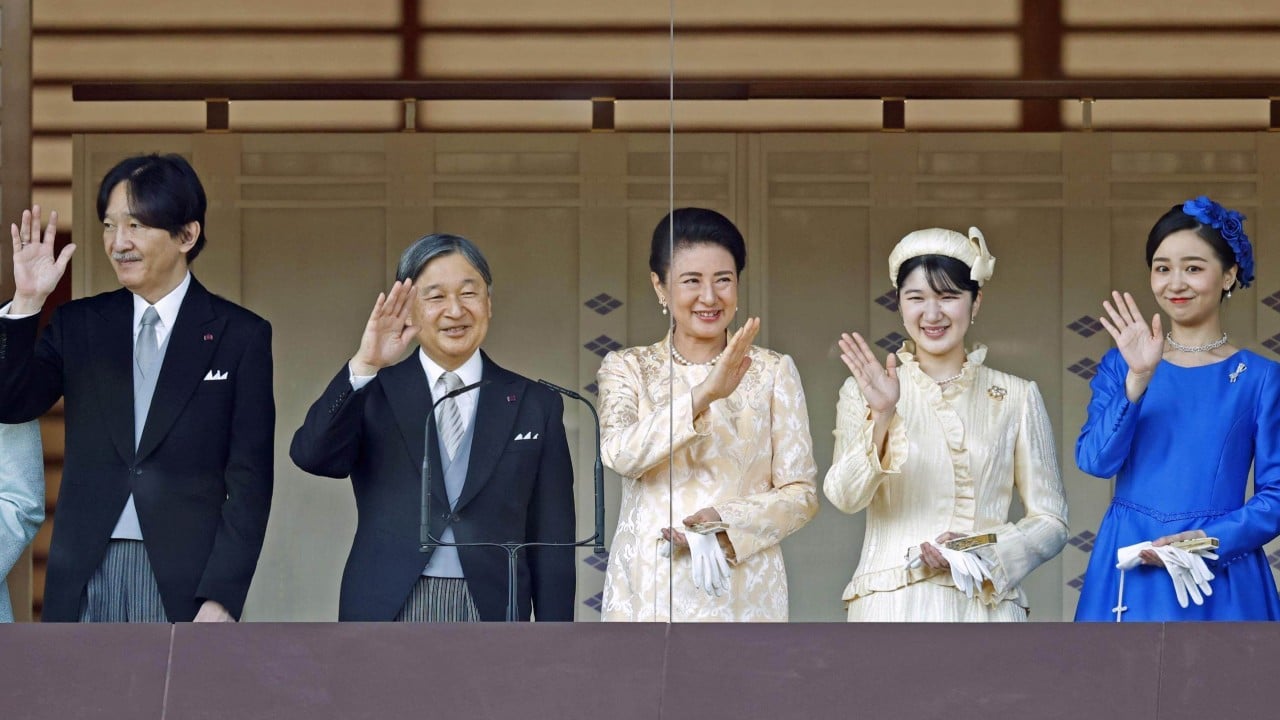
Standard news framing around localized truces tends to follow a predictable narrative arc. A high-profile intermediary or political office announces a truce, highlights immediate humanitarian relief—such as food deliveries, medical access, or civilian evacuations—and invites readers to view the pause as a potential template for wider negotiations. In the case of Oleshky, White House statements emphasized First Lady Melania Trump's involvement, the coordination of demining and aid logistics, the evacuation of roughly 800 individuals, and a subsequent White House gathering involving Russian and Ukrainian representatives.
That narrative structure contains three analytical blind spots that obscure what actually happened on the ground:
- Conflating humanitarian access with political alignment: Cooperation on a narrow evacuation or aid corridor does not signal shared war aims or territorial compromise. Belligerents frequently negotiate narrow tactical pauses while maintaining maximalist strategic positions elsewhere.
- Treating a bounded ceasefire as a self-sustaining regime: A truce restricted to a single occupied town along an active riverfront has narrow geographic and temporal boundaries. Once the agreed window closes, underlying force posture and frontline incentives reassert themselves.
- Underweighting transit routing and post-truce conditions: Headline summaries rarely trace the multi-leg logistics required to move evacuees out of an active war zone or examine how local conditions evolve after observers and convoys depart.
Analysts should treat official announcements as primary inputs about signaling and diplomatic framing, not as complete accounts of battlefield reality. Separating diplomatic theater from ground-level execution is the first step in evaluating whether a truce changes anything beyond the immediate days of the pause.
The Cost Function of a Localized Truce
To understand why combatants agree to a localized ceasefire without agreeing to a broader settlement, it helps to evaluate the decision through a cost-function framework. For both military commands and political actors, a temporary pause is viable only when the expected operational and reputational gains exceed the risks of exposing positions or conceding local advantage.
Battlefield Friction and Logistical Thresholds
Along the Dnipro River sector, sustained artillery, drone activity, and post-flooding terrain constraints raise the cost of both offensive movement and routine resupply. Prior to the truce window, Ukrainian forces had relied on small-scale humanitarian drone deliveries to move essentials such as flour, yeast, and insulin into Oleshky over an extended period, illustrating how constrained physical access had become. A time-bound pause lowers immediate kinetic risk long enough to move aid and evacuate civilians through designated channels without requiring either side to surrender its broader operational doctrine.
Evacuee Transit and Asymmetric Friction
Even when a ceasefire holds within the immediate settlement, moving civilians out of Russian-occupied territory introduces complex transit trade-offs. Reporting on the Oleshky evacuation indicates that departing residents traveled via a convoy through occupied Crimea toward southern Russia before routing through Belarus to reach Ukrainian-controlled territory. That multi-leg route highlights a core operational reality: humanitarian corridors in occupied zones often require traversing territory controlled by the occupying force or third-party states, creating verification challenges and political sensitivities for every party involved.
Signaling Value Versus Strategic Concessions
From a diplomatic standpoint, a localized truce allows participating officials to claim tangible humanitarian output—such as civilian departures or family and child reunification efforts—without resolving core disputes over sovereignty, security guarantees, or occupation governance. That asymmetry explains why parties can cooperate on a narrow humanitarian mechanism while continuing to harden administrative control in occupied areas or contest adjacent sectors.
Distinguishing Verified Facts from Analytical Hypotheses
Rigorous analysis requires drawing a sharp line between documented developments and educated hypotheses. Conflating the two leads to overconfident forecasts about peace talks or premature conclusions about battlefield collapse.
Known facts established by public reporting and official statements include the localized nature of the Oleshky ceasefire in late October 2026, the involvement of First Lady Melania Trump and subsequent White House engagement with Russian and Ukrainian figures, the severe pre-existing destruction and flooding damage in Oleshky tied to the Kakhovka Dam disaster, the evacuation of roughly 800 people along a multi-stage transit route, and subsequent reports from Ukrainian officials and analysts noting worsening conditions and renewed military presence in the town after the truce ended.
Educated hypotheses go beyond confirmed events to explain incentives and likely trajectories:
- Hypothesis on tactical reset: Combatants may use short humanitarian windows to clear non-combatants from high-risk zones, reduce incidental civilian casualties during renewed operations, or reposition forces once the pause expires.
- Hypothesis on diplomatic testing: High-visibility humanitarian initiatives may serve as low-commitment channels to test whether counterparts can execute basic technical coordination—such as demining pauses or convoy schedules—before attempting broader talks.
- Hypothesis on post-truce vulnerability: Civilians who remain behind after a localized evacuation may face heightened security pressure or constrained aid access once formal truce monitoring ends.
Treating these hypotheses as testable propositions rather than settled truths keeps assessments grounded as new field reports emerge.
Why Truces Rarely Scale Without Structural Guarantees
A recurring question around any localized ceasefire is whether it can expand into a wider regional truce or a durable political settlement. Historically and structurally, localized humanitarian pauses rarely scale automatically for three operational reasons.
First, verification and enforcement do not scale linearly. A truce covering one town with a defined evacuation window is far easier to deconflict than a multi-hundred-kilometer front where reconnaissance drones, electronic warfare, and indirect fire interact continuously. Without an independent, credible monitoring mechanism across wider sectors, minor violations or miscalculations on one flank can rapidly collapse trust.
Second, tactical incentives diverge across sectors. A truce may serve local humanitarian or logistical goals in one riverine settlement while either side views an adjacent sector as decisive for defensive depth or offensive leverage. Extending a pause across heterogeneous terrain requires trading off concrete military advantages that neither command may be willing to forfeit.
Third, humanitarian outcomes do not resolve political core issues. Even when officials discuss repeating an Oleshky-style model in additional settlements across Kherson or Zaporizhzhia oblasts, evacuating residents or delivering supplies does not settle control over occupied territory, demilitarization terms, or long-term governance. A series of localized pauses can reduce acute suffering in specific pockets without altering the underlying trajectory of the war.
Practical Framework for Assessing Future Humanitarian Pauses
Decision-makers, researchers, and media consumers can evaluate future localized truce announcements using a disciplined four-step framework rather than relying on initial diplomatic rhetoric:
- Define exact spatial and temporal boundaries: Identify the precise geographic scope, start and end times, and authorized activities (such as demining, aid entry, or civilian exit) rather than treating a local pause as a general ceasefire.
- Audit the logistics chain end-to-end: Trace how aid enters and how evacuees travel from point of departure to final destination, noting every transfer point, medical or demining component, and third-party transit leg.
- Separate diplomatic messaging from force posture: Compare official statements about goodwill or momentum against independent reporting on troop movements, fortification activity, and conditions inside the settlement after the truce closes.
- Account for structural limitations: Recognize that humanitarian corridors are operational tools with real limits—they can save lives and move supplies in narrow windows, but they do not substitute for enforceable security arrangements or political settlements.
This framework has clear limitations. In active conflict zones, real-time verification is difficult, casualty and movement figures may be contested, and diplomatic channels often operate out of public view. Even with those constraints, disciplined tracking prevents analysts from mistaking a temporary tactical pause for a structural turning point.
Strategic Play for Tracking Follow-On Missions
Track follow-on humanitarian proposals across Kherson and Zaporizhzhia oblasts by measuring concrete execution metrics—number of settlements covered, duration of deconfliction windows, verified aid tonnage delivered, and post-truce civilian conditions—rather than summit rhetoric or one-off diplomatic announcements. If subsequent operations expand geographically while maintaining clear deconfliction rules and safe civilian transit, treat them as repeatable humanitarian mechanisms capable of relieving acute local crises; if they stall or give way to renewed pressure immediately after expiration, treat the Oleshky model as a bounded tactical instrument rather than a pathway to broader peace.