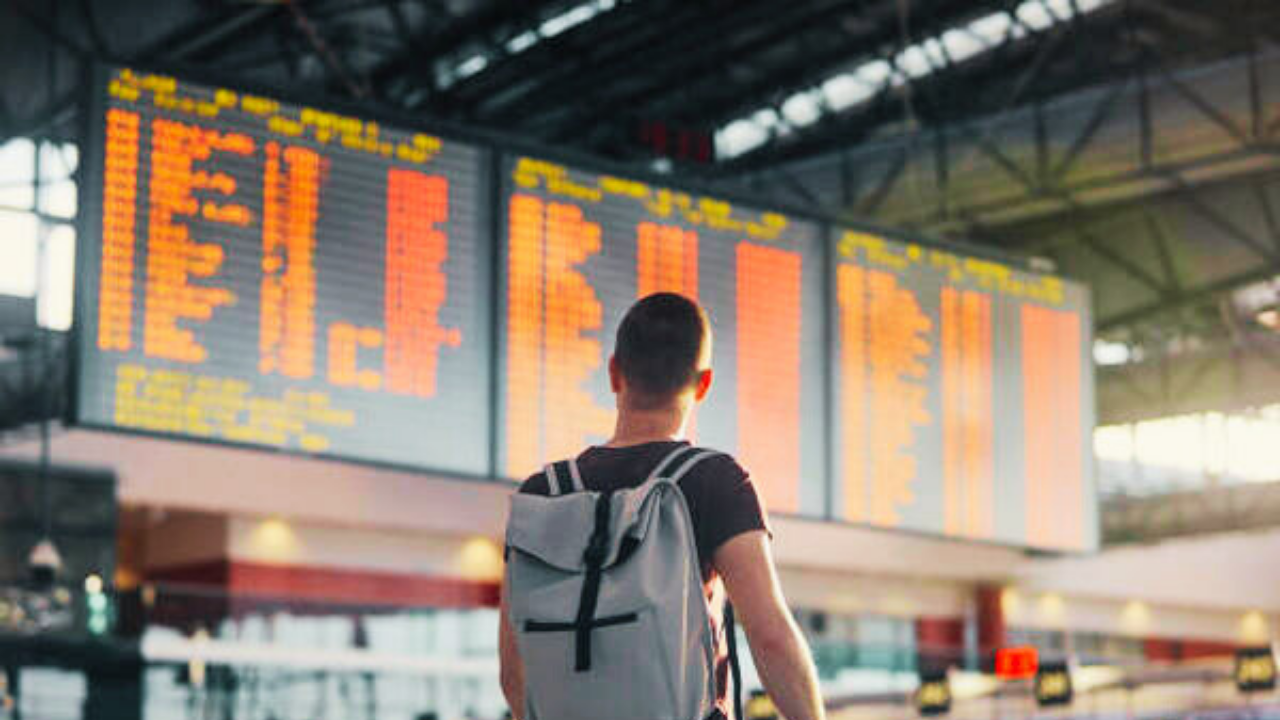
The air in Jeddah doesn't just sit; it weighs. It is a heavy, humid blanket that smells of salt from the Red Sea and the metallic tang of an airport stretched far beyond its breathing room. For the thousands of travelers gathered within the King Abdulaziz International Airport, time had stopped being a measurement of minutes and had become a measurement of endurance.
They were mothers holding children whose cries had turned into soft, exhausted whimpers. They were workers whose hands were calloused from years of labor, clutching passports that represented their only way back to the soil of home. When an airline’s schedule collapses, it isn't just a logistical "hiccup" or a "technical delay." It is a suspension of lives.
The Silence of the Departures Board
Imagine a woman named Meera. She is a hypothetical composite of the many souls waiting in that terminal, but her exhaustion is real. She has been sitting on her suitcase for fourteen hours. Her phone battery is at four percent. Every time she looks at the departures board, the red text remains mocking and static.
When international flight operations grind to a halt—whether due to technical failures, weather, or the complex domino effect of global aviation—the passenger is the last to know and the first to suffer. The "why" matters very little when you are sleeping on a linoleum floor. The "when" is the only currency that has any value.
For those stranded in Jeddah, the stakes were high. Many were returning from pilgrimage; others were finishing work contracts. Their resources were dwindling. In the high-stakes world of aviation, a stranded passenger is a ghost in the machine, a statistic waiting for a seat.
The Midnight Surge
The breakthrough didn't come with a whisper, but with the roar of engines. IndiGo, facing a crisis of stranded passengers, didn't just send a plane. They sent a fleet.
Ten flights.
To the casual observer reading a business headline, "ten flights" is a capacity metric. To the person on the ground, it is a rescue mission. Moving ten aircraft into a congested international hub like Jeddah requires more than just fuel and pilots. It requires a brute-force negotiation with time and international air traffic control.
Consider the sheer physics of the operation. Each Airbus A321 or A320 has to be fueled, catered, and crewed. Pilots have "duty hours"—strict legal limits on how long they can fly before they become a safety risk. Bringing back thousands of people in a single 24-hour window is less like a bus route and more like an evacuation in a conflict zone.
The airline had to pivot. The logistics chain, usually a rigid sequence of events, had to become fluid. Maintenance teams in India worked under floodlights to ensure every bird was airworthy. Ground staff in Jeddah, likely as exhausted as the passengers, became the face of a desperate promise: We are getting you out today.
The Geometry of the Rescue
The math of mercy is precise. Ten flights mean roughly 1,800 to 2,200 seats, depending on the aircraft configuration. When you have a backlog of travelers, every seat is a heartbeat.
- Flight 1 through 4: The Priority Clear. These flights target those with medical needs, families with infants, and those whose visas are ticking toward expiration.
- Flight 5 through 8: The Bulk Movement. This is where the terminal finally begins to look empty. The tension in the air starts to dissipate, replaced by the smell of airplane coffee and the sound of boarding passes being scanned in a rapid, rhythmic staccato.
- Flight 9 and 10: The Sweep. These are the flights that pick up the stragglers, the ones who had lost hope and wandered to the far corners of the terminal.
This isn't just about moving bodies from Point A to Point B. It is about restoring the social contract between an airline and its passengers. When you buy a ticket, you aren't just buying a seat; you are buying the certainty that you won't be abandoned in a foreign land.
Why Jeddah is Different
Jeddah is not just another city. It is a gateway. The passenger demographic here is unique. Unlike the business hubs of London or Singapore, where travelers might have corporate credit cards to book a last-minute hotel, many travelers in Jeddah are on razor-thin margins.
A delay in Jeddah hits harder. The emotional weight of the city, often tied to religious significance, means that the journey home is the final chapter of a deeply personal story. Interrupting that story is a special kind of cruelty.
The decision to operate ten additional "relief" flights is a massive financial hit for any carrier. Landing fees, fuel costs, and the "opportunity cost" of pulling those planes from other profitable routes add up to millions. But the cost of not acting is higher. It is the cost of a brand’s soul.
The Sound of the Cabin Door Closing
There is a specific sound that signifies the end of a crisis. It isn't a cheer or a shout. It is the heavy, vacuum-sealed thud of the aircraft door being locked.
Inside the cabin, the atmosphere changes instantly. The humidity of Jeddah is replaced by the recycled, chilled air of the jet. The chaos of the terminal is shut out. Meera—our traveler—finally sits down. The seat is narrow, the legroom is minimal, but to her, it feels like a throne.
The pilot’s voice comes over the intercom. It isn't the standard, bored monotone. There is an edge of urgency in it, a recognition of the day’s struggle. He doesn't just give the flight time; he welcomes them "home" before the wheels have even left the tarmac.
As the first of the ten flights lined up on the runway, the lights of Jeddah began to shrink. Below, the remaining thousands watched the blinking red and green lights of the wings disappear into the blackness of the sky. Each departure was a signal to those still waiting: Your turn is coming.
Aviation is often criticized for being cold and mechanical. We complain about the bags, the food, and the lack of space. But in moments like these, the industry reveals its true nature. It is the only thing that makes the world small enough to manage. It is the bridge over the gap of despair.
The sun rose over the Indian subcontinent as the first of the rescue fleet touched down. The passengers didn't just walk off the plane; they exhaled. They moved through immigration not as "stranded passengers," but as people who had been reclaimed.
The desert was behind them. The wait was over. The planes were already turning around, heading back into the heat to find the rest.
The final aircraft eventually taxied to its gate in the quiet hours of the night. The terminal in Jeddah was finally quiet, the ghost-echoes of the crowd replaced by the soft hum of cleaning crews. The mission wasn't measured in profit, but in the silence of an empty waiting area.