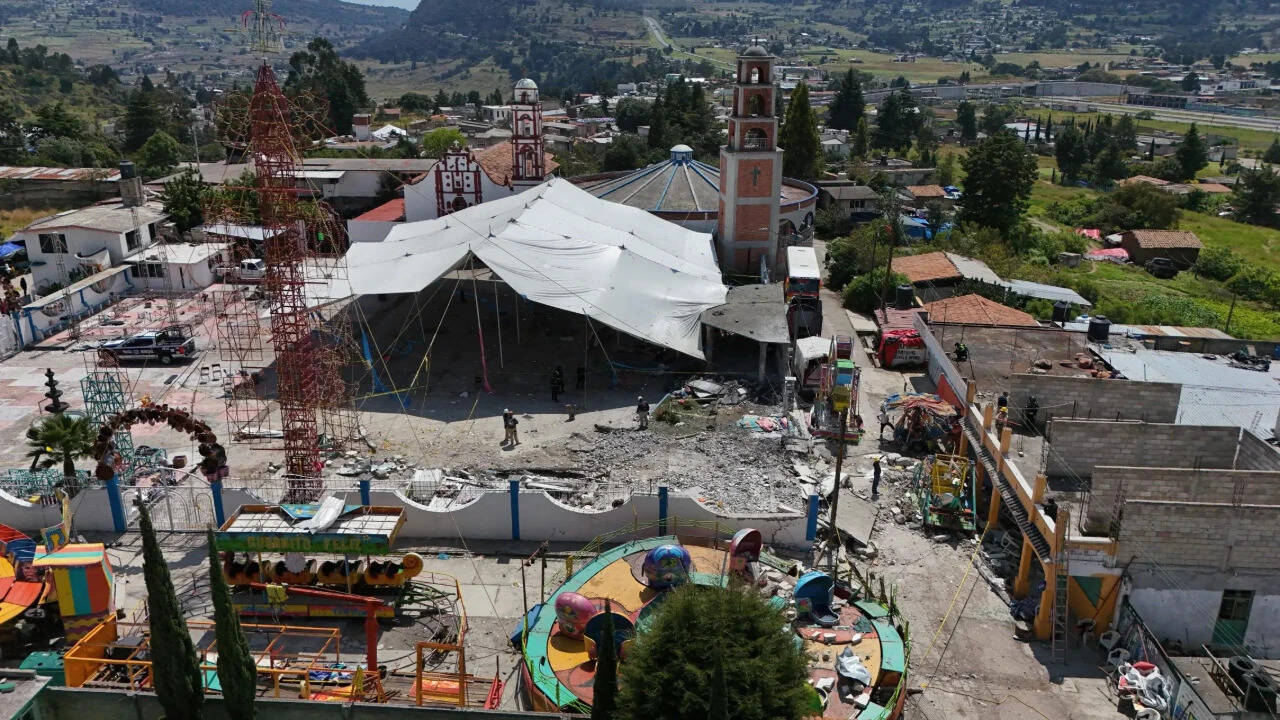
A festive night in central Mexico turned into an absolute nightmare when a massive pyrotechnic explosion ripped through a church celebration, leaving at least 10 people dead and dozens more hospitalized.
The disaster struck around nine o'clock on a Saturday evening in Santa María Canchesdá, a community in the Temascalcingo municipality of the State of Mexico. Hundreds of residents had gathered near the Nuestra Señora de la Luz church to watch traditional festivities, which prominently featured a torito—a straw-and-wood bull effigy packed with fireworks.
Instead of a standard display, sparks from the burning bull ignited a nearby room used to warehouse extra pyrotechnic supplies. The secondary blast was catastrophic. It tore through the area, caused structural walls to collapse, and trapped panicked attendees under heavy debris.
The Toll on the Community
Emergency services rushed to the scene, working through the night under harsh conditions. State authorities confirmed that at least 64 people sustained injuries ranging from severe trauma to critical burns. Among the wounded were multiple children and two local priests from the parish, who are thankfully expected to survive.
Joint command posts involving military forces, federal authorities, and regional medical personnel were immediately established to manage the crisis. Yet, the immediate rescue efforts underscore a recurring, grim reality in the region. Festivals that celebrate deep-rooted cultural traditions routinely collide with dangerously lax safety controls regarding explosives.
A History of Preventable Tragedies
If you follow safety records in Mexico, this disaster feels hauntingly familiar. Fireworks are woven into the cultural fabric of Mexican religious and national celebrations, but regulatory enforcement often lags far behind public enthusiasm.
Consider the catastrophic events of past years:
- In July 2018, a massive blast at a fireworks facility in Tultepec killed 24 people.
- Just two years prior, a devastating explosion tore through an open-air fireworks market in the same city, claiming 42 lives.
- Smaller-scale mishaps happen constantly, rarely making international headlines until a body count forces the issue.
The problem isn't the tradition itself. The danger lies in how raw pyrotechnic materials are stored. Stashing bulk explosives in rooms adjacent to crowded public gatherings or inside parish storage lockers without thermal insulation or blast barriers is a disaster waiting to happen. When sparks fly from festive props like the traditional burning bull, they routinely find exposed gunpowder.
Where Safety Protocols Fall Short
Local organizers often operate on tight budgets with minimal oversight from federal regulatory bodies like the Secretariat of National Defense (SEDENA), which technically oversees explosives. Communities want vibrant, loud, and memorable festivals. They prioritize visual spectacle over distance regulations and fire-resistant storage.
When you store large quantities of black powder or finished rockets in makeshift village rooms, you throw away any margin for error. A single rogue spark changes everything in milliseconds.
The Attorney General's Office has opened a formal investigation into the Temascalcingo blast to determine accountability. While investigations will look at negligence, systemic change requires a total overhaul of how small towns manage festival explosives. Authorities need to mandate professional pyrotechnic handlers for public events, ban the storage of bulk gunpowder near crowds, and enforce strict perimeter zones. Until those rules become non-negotiable standards, these celebrations will remain inherently risky for everyone involved.